I had been waiting for No Other Choice for a long time, partly because Lee Byung-hun carries almost the entire film. I still hadn’t managed to write anything coherent about it afterward, because my feelings about it are tangled in a way that feels both personal and hard to untie. The script is extremely refined. It belongs to exactly the kind of odd-family story I love most. It’s mocking and sad at the same time, and it very clearly contains a streak of mischievous cruelty directed at Lee Byung-hun himself. But it is also the kind of film that leaves you confused after a first viewing. I ended up talking about it until dawn.
Part of that confusion is why the film lingers. It keeps cutting off just when it seems ready to become something more recognizable—more conventionally tragic, more erotic, more psychologically transparent, more socially legible. It repeatedly swerves away from those expected peaks. That refusal is one of the things that fascinates me most about it, and also one of the reasons it feels so difficult to pin down.
Spoilers for No Other Choice follow below. “NOC” refers to the film title. Some of the discussion also touches on sex and scenes that may feel unpleasant or uncomfortable.
Love, and the problem of plants
The first question that came up afterward was deceptively simple: does the daughter actually love her father, Mansoo?
My immediate instinct had been yes, obviously she does. I didn’t even think to question it while watching. But the ending is so sad that it forces the question back open. He is the only one who never hears her music. That exclusion hurts. It feels as if he has been shut out. And when I thought about it again, what made it worse was the fact that he leaves a home where his daughter and her music exist, only to enter a workplace full of noise, so harsh that earplugs are needed, and so lonely that it feels spiritually dead. Worse still, that workplace belongs to the paper industry, which requires the destruction of the very plants he loves. That is a devastating irony.
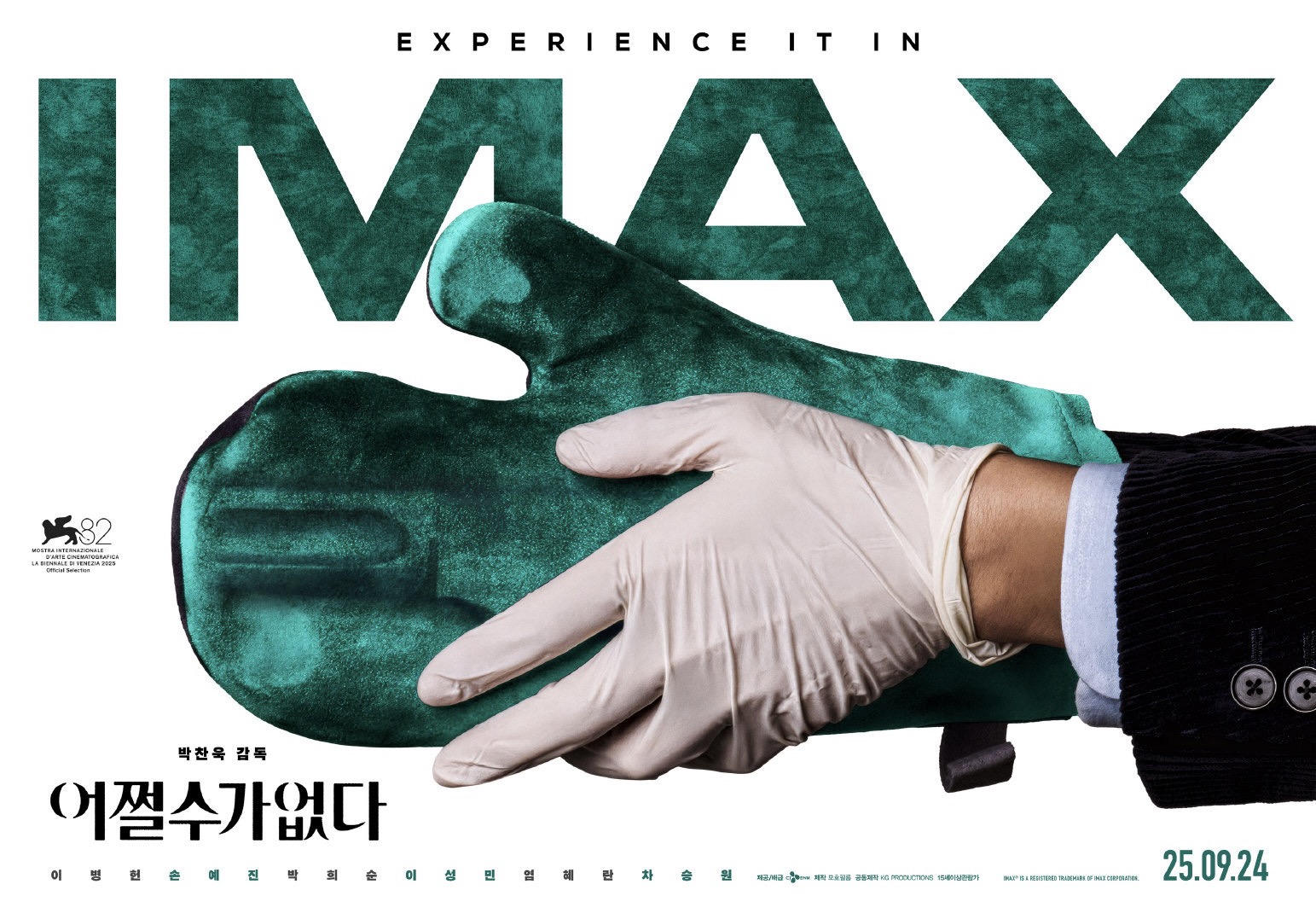
Plants are everywhere in this film, both visually and thematically. In trailers and promotional material, they occupy an unusually large amount of space. When Mansoo asks Miri what his flaw is, she tells him he loves plants too much: “You are a vegetable.” In a story about family crisis, everyone has to give up something to keep life going. Miri stops tennis and dance lessons. The son has to cancel Netflix. The daughter continues cello, because music feels less like an extracurricular activity than a condition of survival. The two dogs have to be sent away. And Mansoo gives up his gardening magazine subscription. Because of that, I can’t help reading plants as something tender and deeply human for him.
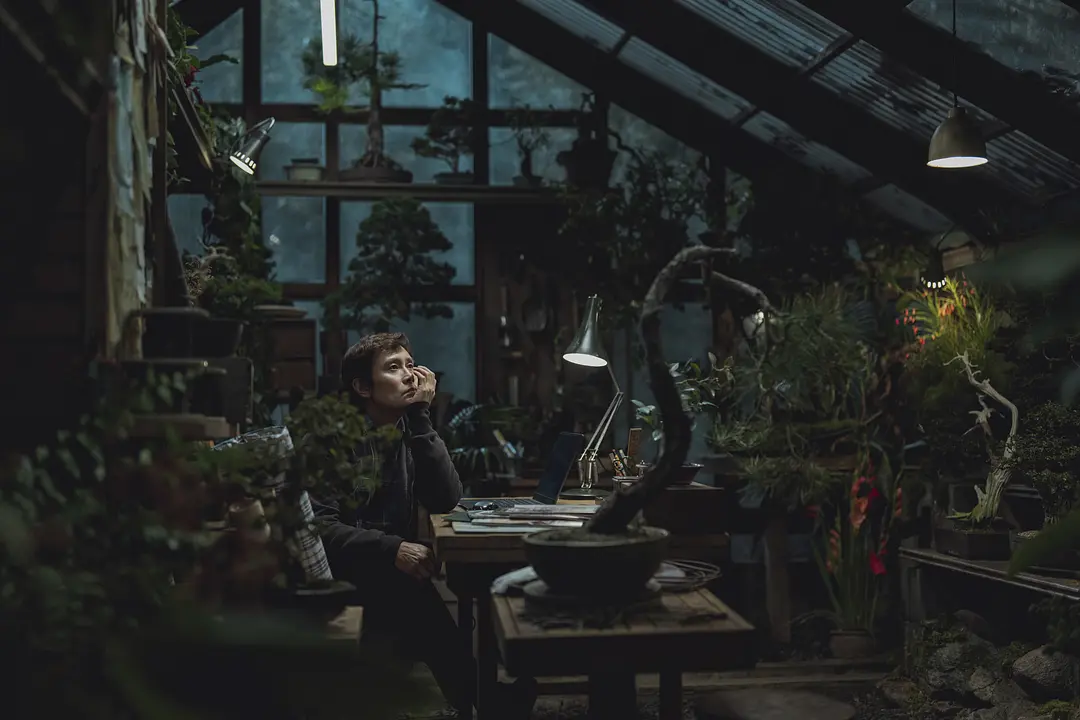
And yet the greenhouse and the plants are never presented warmly. The greenhouse is always dim and eerie. It is where he hides secrets. It becomes the place where dismemberment is contemplated. It was converted from a storage building where an older generation once hanged themselves. The plants themselves are tied to menace: red peppers lure someone toward death; the apple tree becomes a cover for crime and complicity. There is also that scene where Mansoo uses wire to shape a plant and snaps a branch through sheer force. The image is violent. It hurts.
I tried to remember whether the film gives plants a single unambiguously gentle moment. I really don’t think it does.
And that led me, very abruptly, to a much harsher thought: maybe the director does not actually love Mansoo. Not in the ordinary sense. Even in films full of perversity, there is often still some warmth somewhere, some trace of fondness. Here, that affection feels withheld or at least heavily complicated. Once I started following that line, I had to confront another possibility too: maybe the daughter doesn’t love him either. Or maybe her love has already become inseparable from distance, fear, and omission.
I find both possibilities depressing.
At the same time, the film does show Lee Byung-hun in ways that feel strikingly real and even ugly. The scene after the dance, when Mansoo suspects Miri of cheating, is shot with real danger in it. Male pride appears petty and false. The moment could easily have pushed the audience into total distrust of him, which would be risky in a story that still needs us to understand his motives, maybe even feel a little sympathy. But the film redirects the scene: Miri kicks him away, puncturing its most monstrous possibility and bending it toward something almost darkly funny.
That is part of what makes this film so difficult to read. Why make a movie so overwhelmingly centered on Lee Byung-hun if the director’s desire is not operating in the obvious way? It doesn’t feel like the same kind of fetishistic attachment that some other characters in his films have clearly received. And yet Lee Byung-hun is in almost every frame.
A friend put it well: the film keeps anti-climaxing itself. Just when the story is about to become the story, it interrupts itself. Miri, played by Son Ye-jin, is wild and forceful enough that on several occasions it feels as if she might hijack the entire film. And this is exactly the sort of material that could be taken over by a woman and turned into a completely different movie—one that would probably sit much more comfortably with current tastes. But that takeover never happens. The film resists it.
The same is true in adaptation terms. Reading the source novel The Ax, I had expected certain threads to be developed further. Instead, the film abbreviates some of them and often cuts away just where one expects expansion.
What makes this stranger is that the job-loss material itself does not seem to be the primary site of the film’s perversity. That part is filmed almost straightforwardly. Which raises the real question: if unemployment, humiliation, and murder are not the deepest engine of the director’s interest here, then what is?
This isn’t to say the film has no overtly fetishistic moments. It absolutely does. The scene that felt most deranged to me, in both viewings, is the one where the character played by Yum Hye-ran sucks snake venom out of him. Lee Byung-hun’s face there looks dazed, humiliated, violated; even the pose evokes assault. And when he later checks his phone at home and discovers she wasn’t even supposed to do that, his expression becomes weirdly comedic, like someone who has suffered a profound injustice and has no idea where to file the complaint.
Another moment is when Mansoo picks up the red pepper and gets drenched with water. The way the water runs down him is unmistakably sexual once you see it. The film has flashes like that—strong, strange, unmistakable—but they are too sparse to explain the whole project. They are seasoning, not the main dish. So again: what exactly is the film fixated on?
Heterosexuality as something almost grotesquely visible
The more I talked about the film, the more another theme became impossible to ignore: heterosexuality itself.
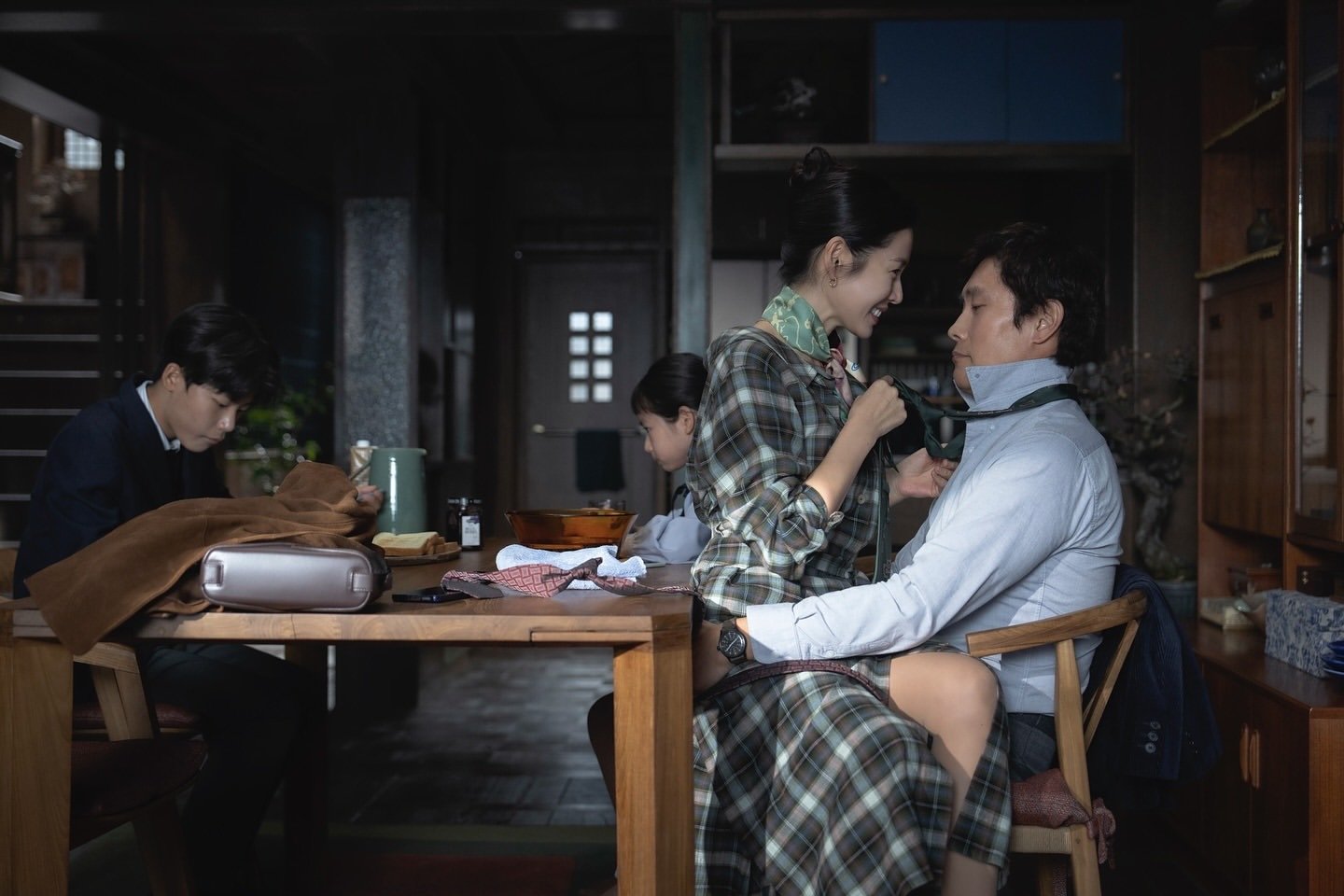
Not romance in a broad sense, but heterosexuality as a highly visible social performance, almost embarrassingly present in every corner of the film. From the very beginning, Miri’s eel remark sets a tone. There are conversations between the two married couples about lubricant. There is the line about Okamoto specialty paper. Many lines carry innuendo. In front of the children, Miri sits on her husband’s lap. During a conversation between Mansoo and Dr. Oh, Miri notices fried chicken crumbs at the corner of Mansoo’s mouth and wipes him clean with a tissue the way someone might wipe a dog’s snout, and everyone simply continues the conversation as if nothing happened. It is hilarious, but also bizarre. They gossip together. They flirt in public. They display intimacy in ways that feel improper not because the film marks them as scandalous, but because the couple themselves seem completely at ease inside them.
That, to me, is what makes them strange. On the surface they are an ordinary middle-class married couple. In essence they are deeply weird. They do a remarkable number of inappropriate heterosexual things in front of their children and in front of other people, and they do them with total naturalness. For them, these things are not awkward at all; they are part of the texture of married sweetness.
That dynamic makes me deeply uneasy, but also in a way that feels familiar. The unease is not abstract. It has the quality of recognition.
Once that clicked into place, it felt like another hidden structure of the movie had surfaced. Running parallel to unemployment is heterosexuality—loud, embodied, messy, tactile, and often filmed with a genuinely nasty sense of humor. At that point it becomes tempting to wonder whether job loss and murder are almost camouflage, while marriage, sexuality, and what happens beneath the waistline are the director’s real obsession.
This also becomes clearer when you compare the film with The Ax.
<table> <thead> <tr> <th>The Ax</th> <th>No Other Choice</th> </tr> </thead> <tbody> <tr> <td>A standard family of four; the daughter is not really developed</td> <td>A blended family; Miri is divorced and has a son who is not Mansoo’s biological child, while the daughter is his biological child, and her role is significantly expanded</td> </tr> <tr> <td>The protagonist’s wife is actively cheating</td> <td>Miri is not cheating; that affair element is transferred elsewhere, to another character</td> </tr> <tr> <td>The protagonist has cheated in the past</td> <td>Mansoo has no past affair, but the film gives him a history of drunken violence toward the son</td> </tr> </tbody> </table>Those substitutions matter. The adaptation does not simply update details; it redistributes sexual guilt, biological lineage, and domestic instability in a way that changes the moral atmosphere of the whole story.
There is a point beyond which dwelling on the actors’ off-screen lives or public images would feel too nasty even for me, so I’ll stop short of that. But the film itself makes total avoidance impossible. Even when heterosexuality is not presented in its most exaggerated form, it still flashes brightly enough that you keep noticing it.
The son, and the film’s queer afterimage
One of the most unexpectedly romantic stretches in the whole film comes on the rainy night when Mansoo drives home with a corpse while his son and the neighbor boy, Dongho, go out to steal phones together. The music over that sequence is startlingly romantic. It gives the entire passage an almost queer charge.
There are ghosts of previous generations all over this story. Family histories, inherited grudges, old wounds, ancestral repetition—these keep surfacing. Against that background, the fact that the son is not biologically Mansoo’s may matter more than it first appears. It may break something in the line of inheritance, interrupting a family curse rather than extending it.
The two households are linked by history. Their fathers did not get along. Dongho’s father wants to buy Mansoo’s house. Everything about the setup suggests inherited conflict. And yet the boys get along beautifully.
There is a scene in the doghouse where Dongho says something like, “Where are you moving? Don’t move too far away.” Then shortly afterward he takes his best friend to rob his own family’s phone store—judging by the shot, at least fifteen iPhones disappear. The whole thing goes so far that they end up at the police station. It’s not even hard to imagine that Dongho may also be the one who exposed his father’s affairs to his friend. Before long, the two boys are back on their bikes again, moving with the sort of physical closeness that practically reaches for hand-holding, even if it resolves as a high-five.
The mood there is unmistakable. It is queer, and also a little Romeo-and-Juliet-like.
Small details that keep echoing
After seeing the film again, certain repeated lines and scattered details stuck in my head. I probably can’t quote them perfectly, but they feel too deliberate not to mention.
“The pear tree was eaten by pests.”
This line appears three times.
First, the character played by Yum Hye-ran says it at home while complaining to her husband. Second, Mansoo is observing their house; through binoculars he sees ladybugs eating leaves and feels disturbed by it. When he gets home, he tells his daughter what he saw while she’s on the swing, but she refuses to engage and instead keeps repeating something she heard at the dinner table: “We can’t afford to feed so many mouths anymore,” referring to the decision to send the dogs away. Then near the end of the film, the daughter suddenly repeats Mansoo’s line about the pear tree. He steps outside, sits in the car, and looks as if he has just realized something.
That line makes me think the daughter may know much more than she lets on. It’s possible she knows about the murders and still wants the dogs back anyway. In some sense, maybe everyone in the family knows. Scenes of Miri digging near the apple tree, and later explaining things to the son while standing by it, are both filmed from suspiciously voyeuristic angles. Combined with the repeated pear-tree line and the film’s almost prophetic patterning, the possibility feels real.
The old company and the paper motif
The company where the older man used to work is called Nansum Paper. The name sounds suggestive, and the company produces paper used for government documents, currency, and national defense. Even setting aside extra associations, the choice makes paper feel heavier than mere office material. It ties bureaucracy, state power, and masculine prestige together.
“Your lips are as thin as Okamoto specialty paper.”
When that line first comes up, both the older man and the eavesdropping Mansoo mishear or repeat it as “Akimoto.” Later, when the woman says it again, Mansoo unconsciously touches his own lips. It’s a tiny joke, but the film is full of these tiny erotic misfires and echoes.
Mushrooms after quitting alcohol
The older man really is strange. After giving up drinking, he goes out to pick mushrooms to eat. It’s one of those details that feels absurd until you remember how often the film uses ridiculous specificity to sharpen character rather than soften it.
Recycled interview lies
When an ex-colleague calls Mansoo to tell him to hurry to an interview, the reason given is that “the boss will be leaving on a business trip later.” That exact tactic soon gets reused by Mansoo when he lures someone else: “Our boss is leaving for Zurich at five today—can you come right now?” It’s pathetic, clever, and very funny. He learns by copying.
“My face is too elastic to play a grieving widow.”
During the acting conversation, Yum Hye-ran’s character says her face is too springy to play a bereaved widow. It’s a great line, and even better because by the end she proves perfectly capable of exactly that kind of role.
Eavesdropping and domestic parroting
After spying on the older couple’s conversation, Mansoo rushes home and starts muttering snippets of what he overheard to Miri—lubricant, paper as a patriotic industry, all of it. He looks oddly innocent doing this, like a fool trying to sound informed. That whole eavesdropping passage is visually memorable too.
The shoe salesman’s murder
In the scene where Mansoo kills the shoe salesman, covering the victim’s eyes functions as an explicit visual nod. More broadly, the identities of the three people he kills are not hugely different from the novel, though the film redistributes some background traits among them. What the adaptation changes more dramatically is what comes afterward: instead of a hit-and-run and an escape, the body is brought home and buried, and a tree is planted over it. That change makes concealment feel domestic and horticultural at once.
The final embrace
In the ending, when Miri counts backward—“59, 58, 57”—while holding Mansoo, the camera slowly pulls away. When he stops her and tells her to count upward instead—“1, 2, 3”—the camera moves back in toward them. On a second viewing, that motion felt almost unbearably sad. It is a movement of drifting apart and being briefly gathered back.
The shirt
The older man’s T-shirt seems to read “Let’s rock the night.” I haven’t found any information about it, but the wording lodged in my mind because it is exactly the kind of half-ridiculous text this film knows how to weaponize.
The bathroom scene after the daughter cries
One cut in particular hurts every time I think about it: the daughter crying because the dogs have been sent away, and then immediately the film cuts to Mansoo kneeling in a bathroom, begging someone to look at his résumé. The emotional whiplash is brutal. It turns paternal helplessness into humiliation in a single edit.
And despite everything I said earlier, I still think the daughter does love him. In several dinner scenes, she is perfectly capable of feeding herself, and yet she still opens her mouth for her father to feed her. That matters to me. I want the distance suggested by the ending—the fact that he cannot hear her music—to be temporary. Maybe that hope is foolish, but it’s still there.
Notes from the Park Chan-wook and Kim Tae-ri conversation
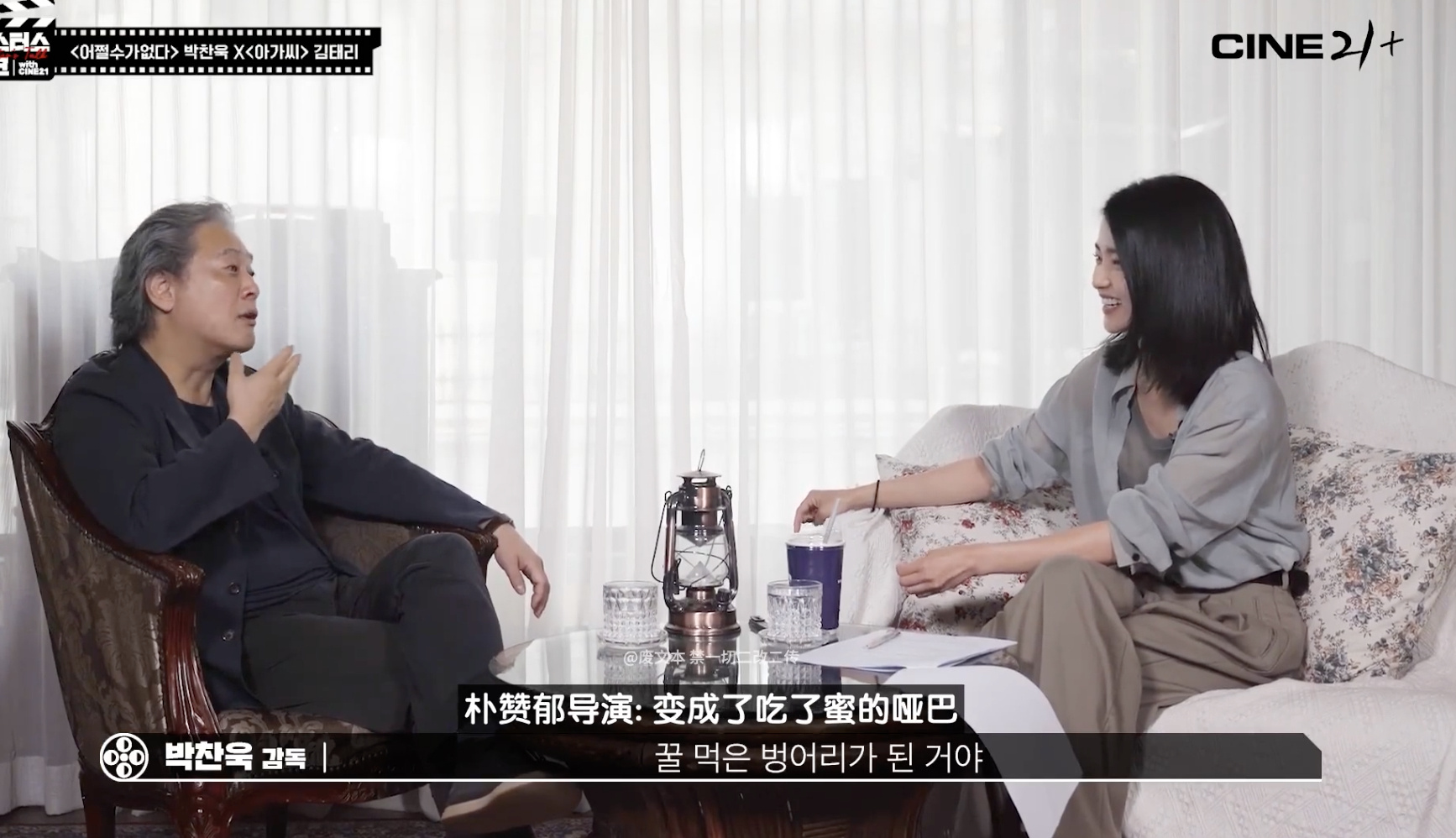
I watched a conversation between Park Chan-wook and Kim Tae-ri almost immediately after seeing the film, and Kim Tae-ri was an unusually good interlocutor for this material. She has worked with Park, so she notices practical details about filming, and she also has connections to several of the actors involved here, which makes her questions feel precise rather than generic. Just as importantly, her energy seems to relax him. The result is that he says more, and with more specificity.
One exchange especially stuck with me.
Park brings up the line from the quarrel where Mansoo, suspecting Miri of cheating, shouts something like: “Because you’re so beautiful!” Son Ye-jin’s character fires back angrily: “But you’re handsome too!”
Park then points out how funny Lee Byung-hun’s reaction is—his face suddenly turns into the expression of a man who knows he has no rebuttal, as if sweetness has jammed his mouth shut.
That reading is wonderful, because it captures exactly how the argument shifts. Mansoo has already lost the fight, yet he keeps trying to recover ground by babbling about fighting for the family, loyalty, trust, and other not-very-convincing masculine abstractions. He is sitting; she is standing. He has to tilt his head up to look at her, but still carries that stubborn male insistence on winning the argument. And she neutralizes him by praising his looks right back at him. It is both ridiculous and intimate.
Another detail from that same discussion: when Miri turns on the light, the volume of Mansoo’s lines is deliberately lowered, creating a feeling that his confidence has collapsed and he has nowhere to put his shame. That technical choice is exactly the kind of thing easy to miss in the moment and impossible to forget once pointed out.
Park also joked that Lee Byung-hun ought to know this. Kim Tae-ri asked whether he didn’t. Park replied, essentially: of course not everything gets explained.
That, in the end, may be the truest thing anyone could say about No Other Choice. Not everything gets explained. The film keeps withholding its cleanest meanings. It lets tenderness look cruel, lets comedy interrupt violence, lets heterosexual domesticity become freakish, lets plants mean love and burial at the same time. It doesn’t release Mansoo from judgment, but it doesn’t flatten him into a monster either. It keeps him suspended in a stranger, sadder place than that.
Which is exactly why it’s been so hard to stop thinking about.