A while back, I had a mole removed—one that had been with me for over forty years. The procedure itself was no big deal, but when a nurse took my blood pressure at the station, she caught me completely off guard.
"You've got slightly high blood pressure," she said.
I said that couldn't be right. She turned the display toward me.
140 over 100.
I just sat there for a moment. That number did not look like mine. Blood pressure had always been my strong suit—the last time I'd taken it seriously was seven years ago, when I was hospitalized for surgery and hooked up to a cardiac monitor for a week. The readings stayed well-behaved, not a single one over the line. I figured the seven tubes of blood they'd just drawn for tests might have had something to do with it.
My baseline is decent: I eat light, my weight is fine, routine bloodwork comes back normal, and the yearly ultrasounds and CT scans have never turned up anything beyond a touch of mild fatty liver. With that setup, how did my diastolic pressure climb to 100?
I went home and told my wife. She didn't buy it either and measured me again on the spot: 120 over 90. The systolic came down, but the diastolic was still sitting right on the warning line.
Her verdict: stick with the cycling. I'd just bought a bike anyway, so at least it wouldn't go to waste.
I looked up some background. The gist was this: elevated diastolic pressure is common in younger and middle-aged adults, usually driven by increased peripheral vascular resistance—the vessels are still elastic, but the small peripheral vessels are more tense, so blood meets more resistance on its way through, and pressure doesn't drop the way it should when the heart relaxes. Long hours sitting, lack of exercise, and mental tension all push it up. And near the top of the list of fixes is exactly regular aerobic exercise: cycling, brisk walking, jogging.
So the diagnosis handed me a prescription that matched the life I was already trying to live.
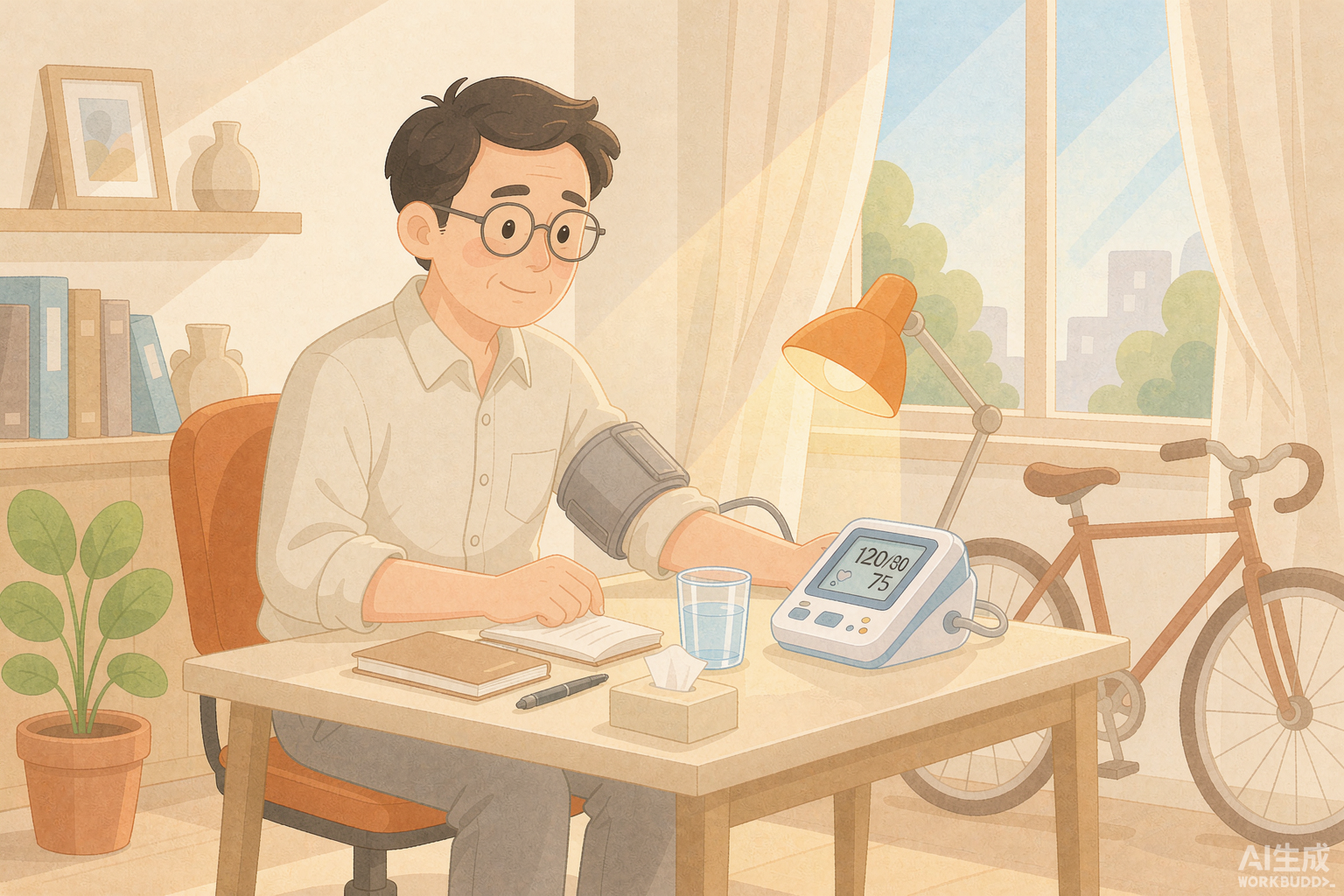
There's a mercury sphygmomanometer at home, but I don't know how to use it, and I can't manage it alone anyway. Every reading meant asking my wife for help, which was a hassle. So I just bought an electronic one online—not expensive, 90 yuan, strap it on and press a button.
It arrived today, and I tried it out:
- Right arm: 130 / 93
- Left arm: 126 / 89
The two arms were close enough, which suggested the device was reliable. But the diastolic was still hovering around 90, right on the line.
By the diagnostic standard, a diastolic of 90–99 counts as stage 1 (mild). The good news is this is the range where lifestyle changes can still win it back: less salt, regular exercise, no late nights, less anxiety. My diet was already light, so there wasn't much salt to cut—which meant taking the exercise prescription in full: a few rides a week, not just the occasional spin.
As for measuring, it needs to become routine from now on. Once in the morning and once at night, rest five minutes before each reading, log the numbers, and watch the trend over time. Something that goes bad so quietly can only be tracked with data.

At forty-something, I've added another lesson: a completely normal physical doesn't mean your blood pressure is normal. Some numbers don't hurt or itch—by the time you notice them, they've been lurking in the dark for years.
The good part is that I caught it early. And the good part is that the bike is already downstairs.