Ordering takeout for someone who hates cilantro can feel less like dinner and more like a negotiation with a very anxious lawyer. The note has to be explicit. Then repeated. Then followed by several exclamation points, just in case the kitchen misses the point: no cilantro, no cilantro, NO CILANTRO. Half an hour later, the food arrives, and the first job is not eating. It is extracting every leaf, one by one, from a dish that looked so promising a moment ago.

That is the mild version. At a work dinner, someone who dislikes cilantro can seem perfectly calm while scanning every plate for a suspicious fleck of green. If a dish passes inspection, there is still the knife that cut cilantro, the pan that cooked it, the plate that held it. The herb has a way of leaving a trace even when the leaves are gone.




Why does cilantro provoke this level of vigilance? Because to some people, it does not smell or taste like a fresh herb at all. It smells like a bug. Ask people who dislike cilantro to describe it, and the answers can get weirdly specific. Some say bedbug. Others offer a fuller tasting menu: top notes of bedbug, middle notes of soap and mud, base notes of bitterness and mold. It sounds like an exaggeration, but the language is not entirely random.


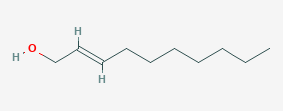
Cilantro's genus name, Coriandrum, comes from the Greek koris, which refers to a kind of bedbug. Chemically, the herb's distinctive aroma comes partly from aldehydes, including trans-2-decenal. That compound is not exclusive to cilantro; insect secretions can contain it too. So the bedbug comparison has a real basis. Cilantro can genuinely carry a note that some noses read as bug-like.
The bigger question is why the same herb can be a garnish, a craving, or a dealbreaker. The answer seems to involve genes. Taste and smell are not purely matters of preference or willpower. On chromosome 11, a gene called OR6A2 is associated with greater sensitivity to aldehydes. For people with certain versions of this gene, the bug-like compounds in cilantro are harder to ignore. Bitter-taste genes may also play a role in whether cilantro comes across as pleasant or unpleasant. In other words, someone who refuses cilantro may not be being picky. Their nose and tongue may simply be more sensitive to what is in the bowl.

The numbers add another layer. Worldwide, East Asia—including China—has one of the highest rates of cilantro dislike, at around 21%. That is roughly one in five people. Among people of Middle Eastern descent, who grow up around a wide range of herbs and spices, the dislike rate is only about 3%. So the split is not evenly distributed across the world. It follows patterns that suggest biology and culture are both involved.
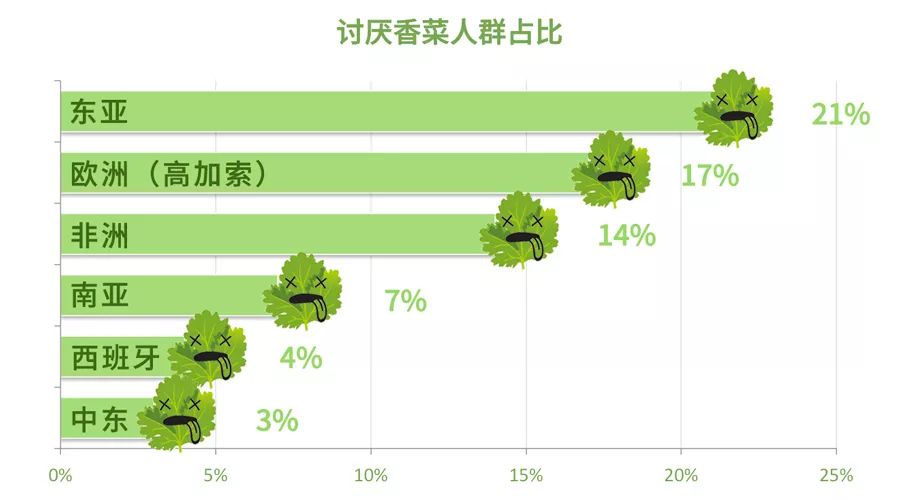
For the 21%, cilantro can inspire something close to hatred. There are memes, complaints, and entire online communities built around avoiding it. But the same figures are a shock to the other side: if 21% dislike cilantro, then about 79% do not. Cilantro lovers are the majority. They do not just tolerate the herb; they pile it on. They buy cilantro-flavored perfume, masks, and body wash. They pose for photos lying in piles of cilantro, happy as can be.






To someone who tastes bedbugs, that sounds less like a spa day and more like becoming a walking infestation. The two camps are not just disagreeing about a garnish. They are having completely different sensory experiences of the same plant.

And yet, people change. Some cilantro haters report that one day, without warning, the herb stops tasting like soap and starts tasting... good? The shift can happen for a few reasons. One is that childhood dislike may be partly a matter of expectation or repeated exposure. Another is that taste can change as people learn to enjoy bitter flavors. The third is age. Smell and taste tend to become less sharp over time. When the nose can no longer pick out every aldehyde, the bug note may fade, and cilantro may finally taste like an herb.


Until that day arrives, the practical advice for anyone in the anti-cilantro camp is simple. Order carefully. Check the plate. And when in doubt, say it clearly: no cilantro. Please. No cilantro. Absolutely no cilantro.