August 29 — Slow life in a small town
I woke to rain. Lying in bed, I listened to it hitting the ground and drifted off again. By a little after eight I was up, eating some very good zha rou, then walking the same route as the day before to see Xitang in the mist and rain.
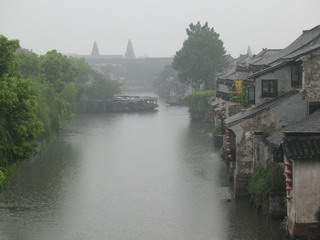
Water ran off the eaves of the painted corridor and made a fine curtain of rain.

Water, village, hills, a wine flag in the breeze—everything had an old, unhurried air.
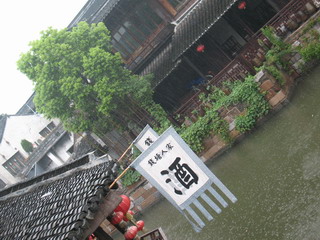
By then we had passed the postcard shop more times than I could count. The owner was teaching her child, soon to start school, a nursery rhyme, and she smiled and said hello. For a moment I felt as if I belonged to Xitang too.
The rain grew heavier, so we walked a little, stopped, and eventually went back to the guesthouse. We went online, watched TV, slept. Ordinary life, in the best way. No work or study to think about, none of the usual annoyances—just me and this easy, comfortable existence.
After a nap, toward evening, the rain stopped. X and I put on slippers and went out looking like we lived there, hunting for the quarter of Xitang we had not yet seen: Shipi Lane. East to west, south to north, walking and pausing as we went.
At night Y arrived from Nanjing, tired from the journey. So we watched TV and went to bed early. Though why we chose The Twins Effect, I still don't know.
August 30 — Growing old in Xitang
We walked the streets again and again, looked at the same views again and again, and kept saying that this really, truly was a place to grow old in. During our days here I saw very few young people—meaning those roughly between twelve or thirteen and twenty-five or twenty-six. Everything gave off a sense of ease. After meals, old people sat by the water, cooling off and chatting.
No cars run inside the town, so there is no roar of traffic. Shops do not blare loud music. If not for the wind and the flowing water, you might think time here had stopped. If everyone were not wearing modern clothes, you might think this was the Ming or Qing dynasty. It was not far from the Jiangnan I had imagined.
August 31 — Goodbye, Xitang
It was past eight when I got up. I packed, said goodbye to the kind family who ran the guesthouse, and walked down the little street we had taken so many times. On the way I ran into the woman from the postcard shop. We had stayed long enough that she remembered us; she told us to come back, and said there would be opera to hear at the weekend. I thanked her, took one more look at the beautiful town, and left the place where we had stayed for three days.
Maybe next time we come back it will be different. Maybe we will never come back. Who knows what the future holds.