Across five thousand years of history, China has produced countless warriors, rulers, and poets. Some verses are elegant, some sorrowful, and some carry a kind of confidence that feels almost untouchable. If you ask which line is the most imposing in all of Chinese poetry, there is no single answer—but if we line up a few famous candidates in chronological order, the field gets very interesting.
1. Ji Rang Ge: the earliest kind of fearless calm
Shen Deqian of the Qing dynasty believed Ji Rang Ge was the earliest poem in Chinese history.
帝尧以前,近于荒渺。虽有《皇娥》《白帝》二歌,系王嘉伪撰,其事近诬。故以《击壤歌》为始。——《古诗源》
The poem itself is remarkably plain, but that plainness is exactly what makes it so strong:
日出而作,日入而息,凿井而饮,耕田而食。帝力于我何有哉!
Roughly speaking: when the sun rises, we work; when the sun sets, we rest. We dig wells for water, we farm for food. As for the emperor’s power—what does it have to do with me?
That final line has the kind of indifference only true self-sufficiency can produce: “What do the emperor’s forces have to do with me?”
In the words of the Song poet Zhu Dunru, it sounds very much like:
我是清都山水郎,天教分付与疏狂。曾批给雨支风券,累上留云借月章。
诗万首,酒千觞。几曾着眼看侯王?玉楼金阙慵归去,且插梅花醉洛阳。
How many times did I ever bother to look at princes and kings?
2. Tang Taizong: “I once rode out on a single horse; now I return with ten thousand chariots”
Li Shimin and Yang Guang were not unlike each other in their youth: both were capable of writing and fighting, both could compose a strategy or mount a horse. The difference was that one’s arrogance led to ruin, while the other’s humility toward advice made him a great ruler.
After the reign of Taizong, and later the prosperity of Xuanzong, the An Lushan Rebellion shook the foundations of the Tang dynasty. Even though there were occasional attempts at recovery, the empire never fully regained its vitality. Emperor Zhaozong, Li Ye, came to the throne after the suppression of the Huang Chao uprising, but warlords dominated the realm and no longer respected the Son of Heaven. Though he had ambition, he had no power to reverse the decline, and in the end he was killed by Zhu Wen.
Old poetic criticism records the contrast sharply:
唐昭宗有词云:“安得有英雄,迎归大内中。”逍遥楼有太宗诗云:“昔乘匹马去,今驱万乘来。”气象不侔矣。
Zhao Zong could only sigh, “If only there were a hero to escort me back to the imperial palace.” How could that compare with Taizong’s line: “I once left on a single horse; now I return with ten thousand chariots”? The scale is simply not the same.
3. Wang Changling: frontier confidence in one line
Wang Changling earned his degree in his thirties, and his most famous poems were written before and during his journeys to the northwest frontier. He was later called the “Poet Sage of Jiangning” and also honored as the “master of seven-character quatrains.”
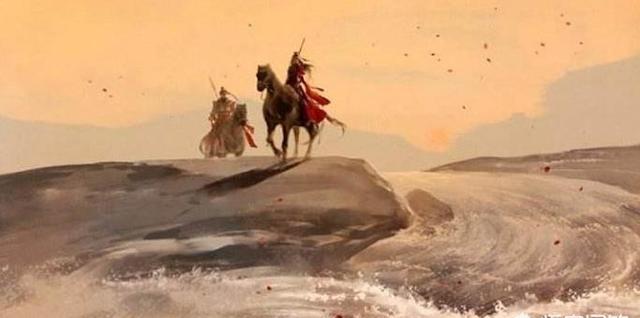
秦时明月汉时关,万里长征人未还。
但使龙城飞将在,不教胡马度阴山。
The moon is still the moon of Qin; the passes are still the passes of Han. Men march ten thousand miles and never return. But if only there were a commander like the flying general of Longcheng, then the horses of the nomads would never cross the Yin Mountains.
Ming poet Li Panlong once praised this Out to the Frontier poem as the finest seven-character quatrain of the Tang dynasty. It carries the boldness of the High Tang at full strength. Outside that age, it is hard to write with this level of confidence.
4. Huang Chao’s chrysanthemum poem: arrogance before the throne
The Guier Ji records a story from Huang Chao’s childhood. When he was five, he watched his grandfather and father composing a chained poem on chrysanthemums. Before the adults could finish, the child blurted out: “It deserves to stand at the head of all flowers, naturally bestowed with the emperor’s yellow robe.” That startled his father at once—because the yellow robe was reserved for the emperor. The boy sounded as if he were already speaking of rebellion.
黄巢五岁侍翁、父为菊花联句。翁思索未至,巢信口应曰:“堪与百花为总首,自然天赐赭黄衣。”巢之父怪,欲击巢。
His grandfather quickly intervened and asked that the child be allowed to try again. So Huang Chao composed another poem, and if the old man was not frightened the first time, he probably was the second:
飒飒西风满院栽,蕊寒香冷蝶难来。
他年我若为青帝,报与桃花一处开。
The meaning is plain enough: if I become the Green Emperor one day, I will command the peach blossoms to bloom alongside the chrysanthemums.
As an adult, Huang Chao repeatedly failed the imperial examinations and grew increasingly resentful. He later wrote the even more famous After Failing the Exam, I Compose a Chrysanthemum Poem:
待到秋来九月八,我花开后百花杀。
冲天香阵透长安,满城尽带黄金甲。
By then, the verse had turned from youthful bravado into open defiance. Huang Chao eventually led his rebel army into Chang’an and made real the dream he had once spoken as a child: “If I become the Green Emperor.” His uprising ultimately failed, but it rang the death knell for the Tang dynasty. The already exhausted empire managed to survive for only another twenty-three years, and the unfortunate Emperor Zhaozong could only cry out, “If only there were a hero to bring me back to the palace.”
According to Tao Gu’s Five Dynasties Chronicle of Turmoil and Displacement, after his defeat Huang Chao shaved his head and became a monk. One poem from that later period was said to survive:
三十年前草上飞,铁衣著尽著僧衣,天津桥上无人问,独倚危栏看落晖。
5. Song Taizu: “Not yet out of the sea, and already thousands of peaks are dark”
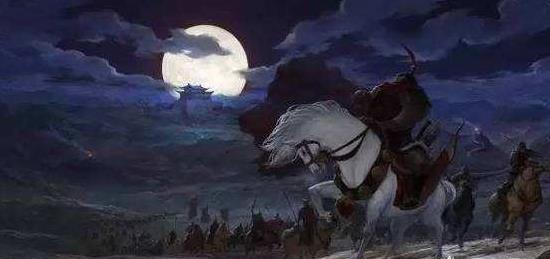
When the Southern Tang capital of Jinling was under siege, Li Yu sent Xu Xuan to negotiate with Zhao Kuangyin. Xu Xuan hoped his eloquence might save the situation. He assumed Zhao was merely a rough military man, so he praised Li Yu as a cultured ruler whose work was recited everywhere.
Zhao Kuangyin laughed and said such “poor scholar’s poetry” was not his style. Xu Xuan pressed him to write one himself. No one expected the Song emperor to answer immediately:
未离海底千山黑,才到天中万国明。
The whole hall was stunned.
The anecdote survives in Poetry Talk Compendium, Later Collection:
王师围金陵,唐使徐铉来朝,铉伐其能,欲以口舌解围,谓太祖不文,盛称其主博学多艺,有圣人之能.使诵其诗.曰:《秋月》之篇,天下传诵之,其句云云.太祖大笑曰:“寒士语尔,我不道也!”铉内不服,谓大言无实,可穷也.遂以请.殿上惊惧相目.太祖曰:“吾微时自秦中归,道华山下,醉卧田间,觉而月出,有句曰:‘未离海底千山黑,才到天中万国明.’”铉大惊,殿上称寿。《诗话总龟后集》
For context, Xu Xuan later followed Li Yu in surrendering to the Song. After Taizu died, Xu Xuan was ordered by Emperor Taizong to visit the captive Li Yu. In a moment of emotion, Li Yu let slip the fatal words: “At the time, I regret having killed Pan You and Li Ping.” Xu Xuan reported this honestly to Taizong, who flew into a rage and ordered Li Yu to take his own life.
6. Yue Fei: a warrior’s vow written into poetry
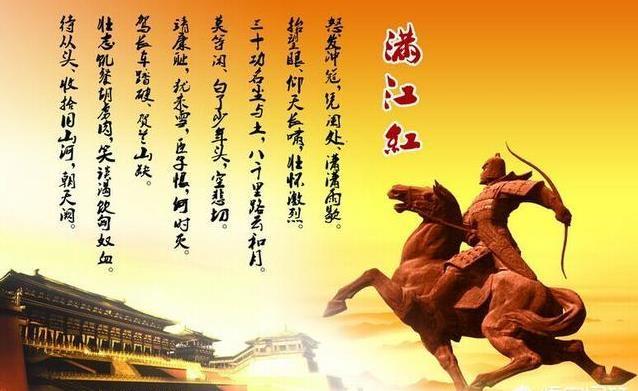
When people in China hear Man Jiang Hong, many can recite at least part of it from memory:
怒发冲冠,凭栏处,潇潇雨歇。抬望眼,仰天长啸,壮怀激烈。
三十功名尘与土,八千里路云和月。莫等闲、白了少年头,空悲切!靖康耻,犹未雪。臣子恨,何时灭!驾长车踏破贺兰山缺。
壮志饥餐胡虏肉,笑谈渴饮匈奴血。待从头、收拾旧山河,朝天阙。
The line “With lofty resolve, I would eat the flesh of the enemy when hungry, and drink their blood when thirsty” is as fierce as anything in classical poetry. Yue Fei’s spirit fills the whole poem, but fate was cruel: before he could return to the battlefield, he was already gone. That is why the poem still makes people feel both exhilarated and saddened at once.
7. Qinyuan Chun · Snow: the modern answer to an old question
北国风光,千里冰封,万里雪飘。望长城内外,惟馀莽莽;
大河上下,顿失滔滔。山舞银蛇,原驰蜡象,欲与天公试比高。
须晴日,看红妆素裹,分外妖娆。江山如此多娇,引无数英雄竞折腰。惜秦皇汉武,略输文采;
唐宗宋祖,稍逊风骚。一代天骄,成吉思汗,只识弯弓射大雕。
俱往矣,数风流人物,还看今朝。
During the Chongqing negotiations, Liu Yazi presented a poem to Mao Zedong. On October 7, Mao wrote back with this Qinyuan Chun · Snow, and it was soon published in Xinhua Daily in Chongqing, creating a stir in literary circles.
Who sounds the boldest?
If we look at the whole list, Li Shimin and Zhao Kuangyin stand out as founding emperors who combined military and literary talent. Their poetry carries a kind of majesty that ordinary ministers could hardly match. In that sense, they are in the same broad category as Liu Bang’s Great Wind Song:
大风起兮云飞扬。威加海内兮归故乡。安得猛士兮守四方!
But even so, the line “Tang Taizong and Song Taizu still fall slightly short in literary grace” has often been quoted for a reason. Times changed, the stage changed, and the standard changed too:
俱往矣,数风流人物,还看今朝。
So which one do you think is the most imposing of them all?