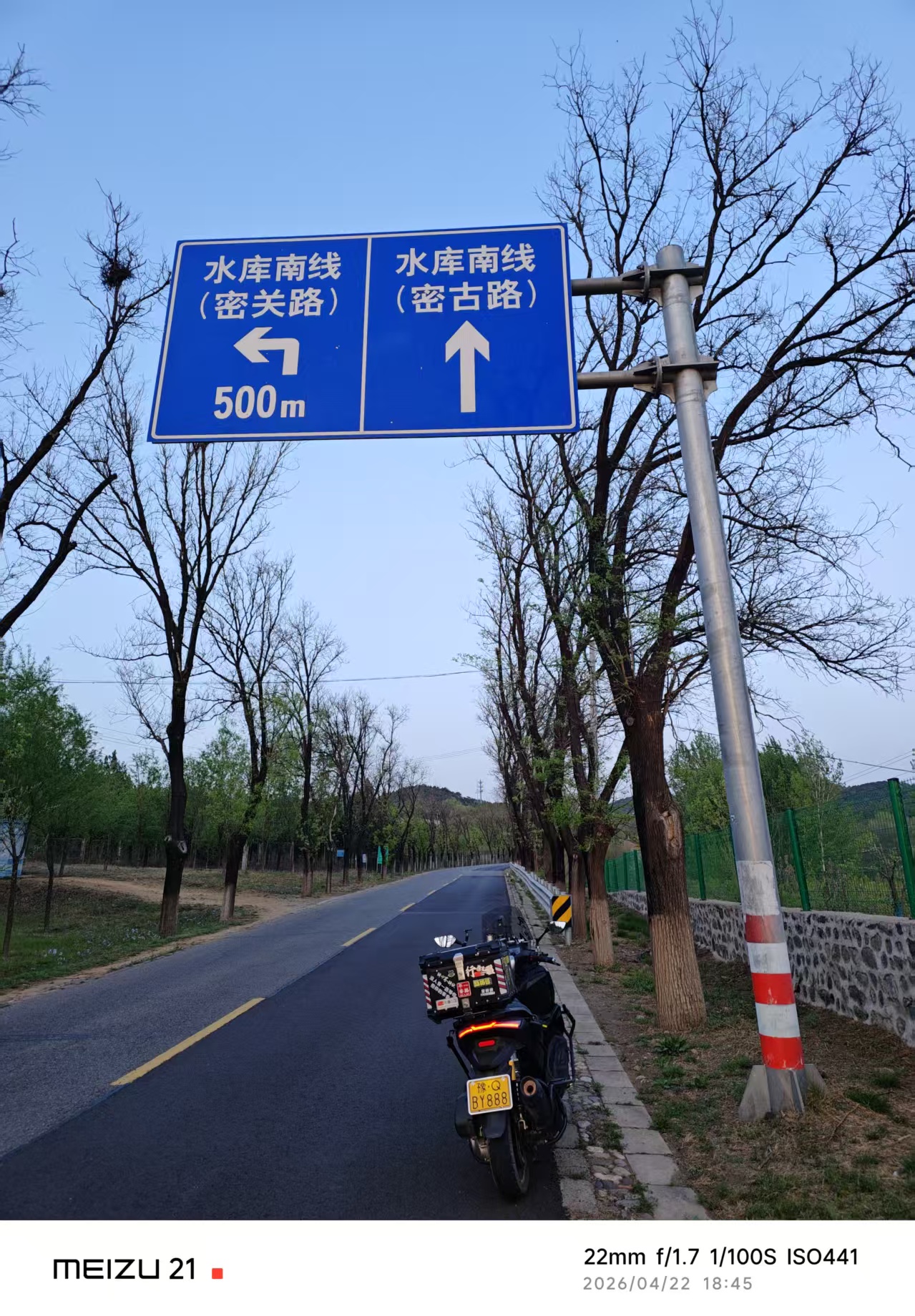
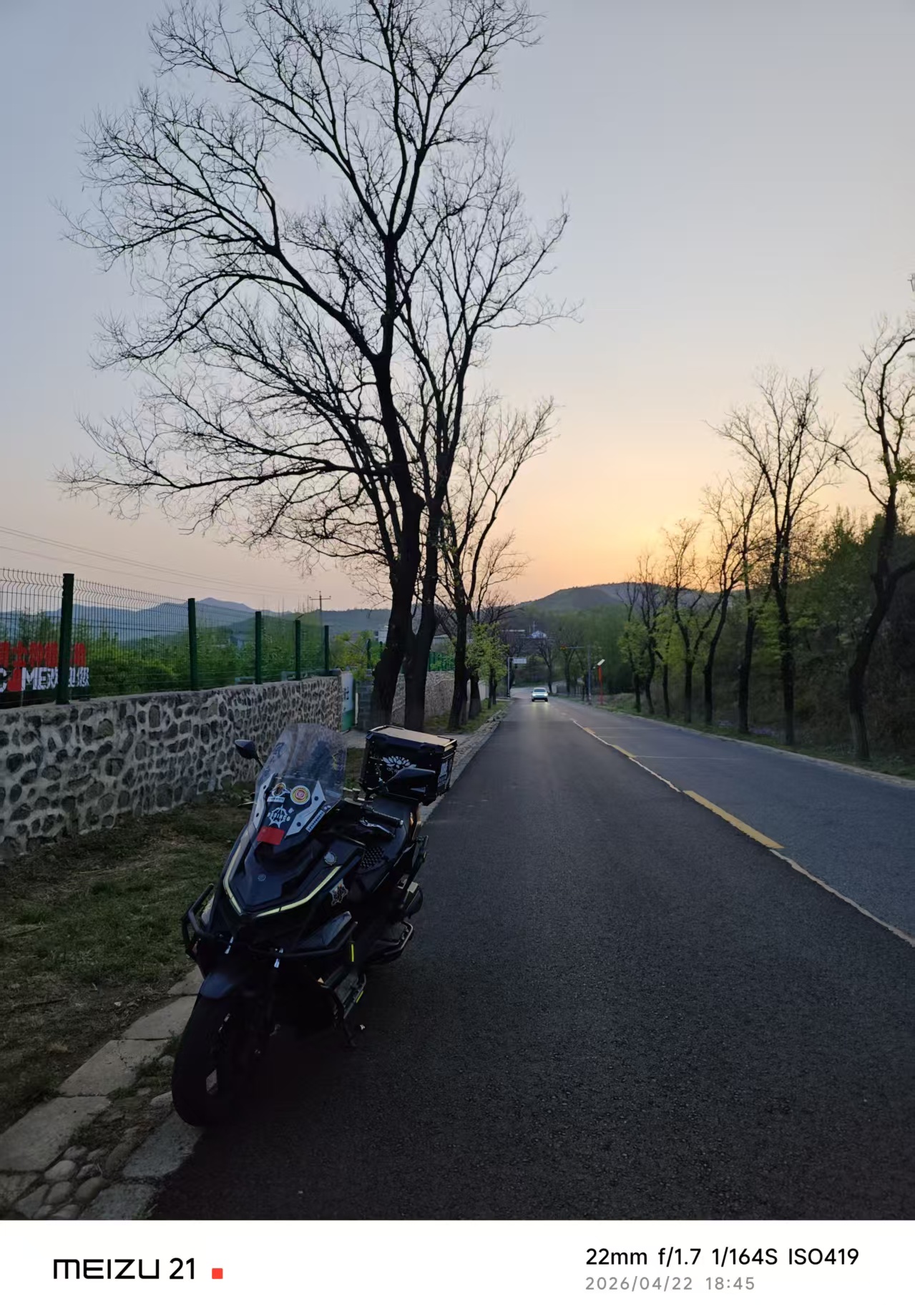
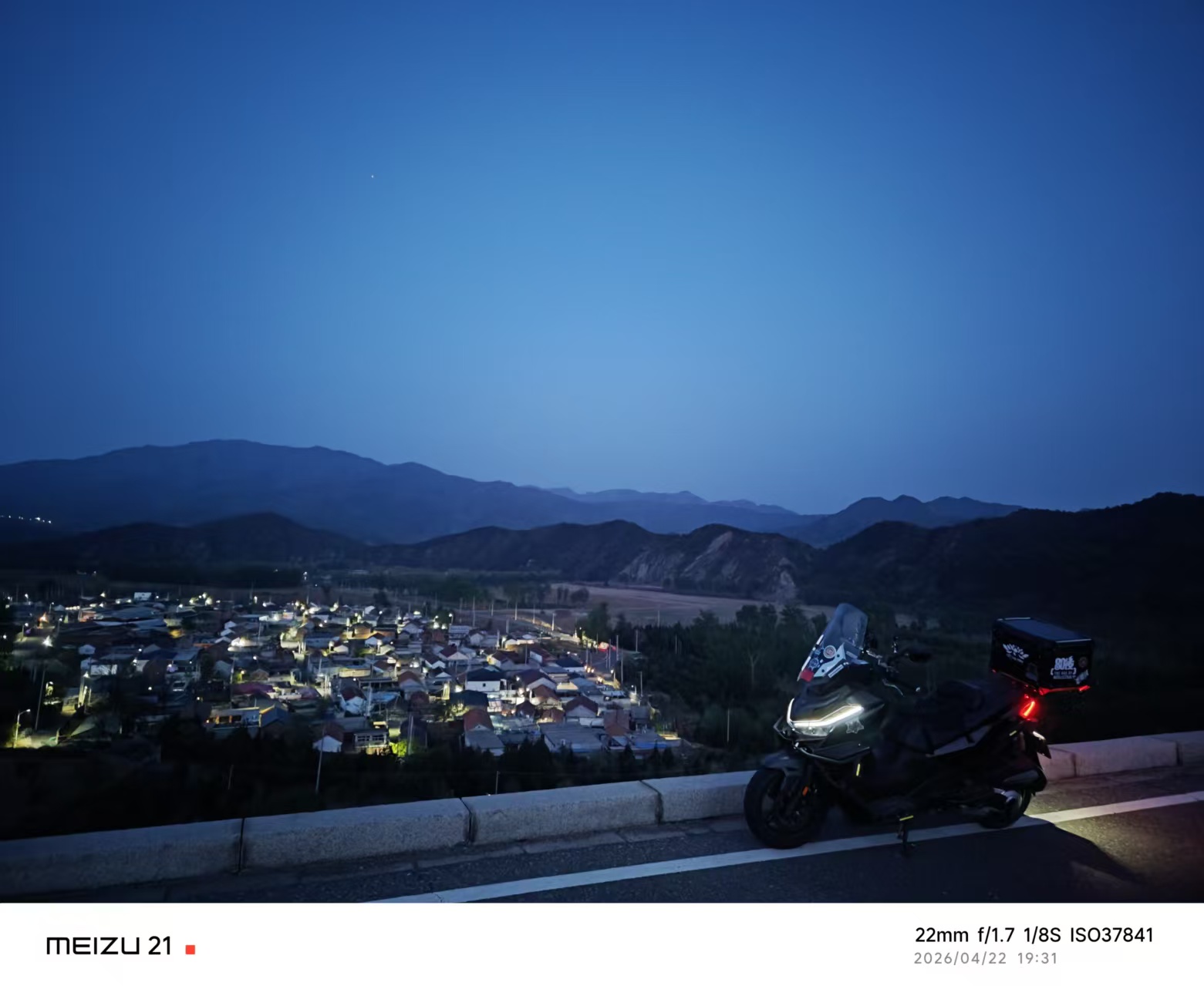
On April 22, 2026, I rode my motorcycle from NBIC in Huairou to Miyun Reservoir and back, close to 70 kilometers in total, with about two hours on the road. My top speed on the way there was 101; on the way back, 91.
Before this ride to Miyun Reservoir, I had already done five short motorcycle trips around Huairou, Beijing, and I had written a blog entry for each one. Those earlier entries were all fairly prompt—the longest delay was only seven days. This sixth short trip took much longer to write down.
It was not because I did not know what to say. Rather, I found that waiting a while before writing has its own pleasure. So much of the anxiety and heaviness in life comes from emotions that rise immediately after something happens. We are often too eager to express ourselves, and in that haste we give up reflection, and also the aftertaste of experience.
A lot of people keep diaries. Some do it out of diligence, some because they are unwilling to let even the smallest detail slip away. "A diary, a daily record"—but after enough time passes, much of it reads like nothing more than an itemized account of ordinary days.
A travel log is not the same thing. Everyday life has to settle in time and in the heart before it becomes worth recording. A log should be like the old organic fertilizer used in the countryside: it needs fermentation before its nourishment is ready, before it can feed the soil of language. Every entry is an echo that returns only after countless inward calls. Because it has rested in time, that echo carries a longer resonance.
Of course, this is easier said than done. Writing is like photography. Everyone knows that composition and light are essential to a good photograph, and there is no shortage of theory on either subject. But knowing and doing are different things. Anyone who has spent time with a camera understands that. Writing works the same way: you need language, and you need thought. Anyone who loves literature knows as much, yet truly memorable writing remains rare.
From May to June of 2025, I took a motorcycle trip along the Sichuan-Tibet route. In 28 days, I rode 7,500 kilometers and took more than 2,000 photographs. The trip ended on June 5, 2025, but I did not begin writing about it until October 18. I had assumed that after four months of distance, the words would come in the shape my heart wanted. Instead, when I looked through that enormous pile of photos, all the emotion was there, yet what I finally produced still came out as little more than one chronological record after another.
That is not hard to understand. A Sichuan-Tibet ride may look simple from a distance—just a man on a motorcycle, wind, freedom, poetry, and the far horizon—but in reality, every day is packed with incidents. Once I began looking through the photos and recovering those moments, too many emotions rose at once. My thoughts scattered, and the writing fell silent. In that state, I understood a little of the old line about having no place to speak of one's desolation.
So when I look back now on those 28 travel entries, I am not very satisfied with them. They preserve many details, but very little of what was happening inside me. That is a regret. Then again, perhaps life is full of regrets.
I am now in my forties. The years ahead are not endless, but they are not yet short either. I still want to ride much farther in the years to come. The real question is: how should I record those journeys in words?
Life already asks enough of us. If we want happiness, if we want the mind to remain steady and at ease, perhaps the only thing we can do is fill this plainly lived life with language that carries suggestion rather than mere fact. So I have tried, in these later riding notes, to write more of my moods. In this crowded world, many people live neither in the past nor in the future, but in the feeling of the present moment.
On the morning of April 21, a garbage truck hit the entry barrier arm while entering the compound of Building 4. I was on duty at the time. Later I bent the barrier arm back into shape, but a clear crease remained in the aluminum alloy. When the truck came in, I had not watched it all the way through, and at the time I did not fully understand how the barrier system worked. That night left me uneasy.
I had a dream.
It was a dream about the sea. I stood at the bow of a ship, watching it split an immense green-blue expanse and sail into a fantastical harbor. The harbor twisted all the way through in bends and curves, like leaning a motorcycle through mountain roads, except this path went only downward, spiraling again and again toward some unknown world at the earth's center. There was also a man and a woman on the ship. In the dream, the man seemed to be a friend of mine. At one turn, my body tilted slightly, and I took the chance to put an arm around the woman's waist.
Looking back on that dream many days later, I feel that beneath the surface emotions—tension, unease, loneliness—there may have been a subconscious desire to escape reality. But beneath that urge to flee, my inner state was still strangely steady. Otherwise, in such a bizarre dream, how could I possibly have been in the mood to flirt with another man's wife? The dream fused together some of my experiences in Huairou. The looping, turning motion of the ship was probably borrowed from the sensation of leaning through mountain roads on the motorcycle. But in the dream there was no climbing, only endless descent, and steep descent at that. The feelings I had suppressed in waking life seemed to find release there. Perhaps there was a sexual undercurrent as well; after all, I was living alone, far from home.
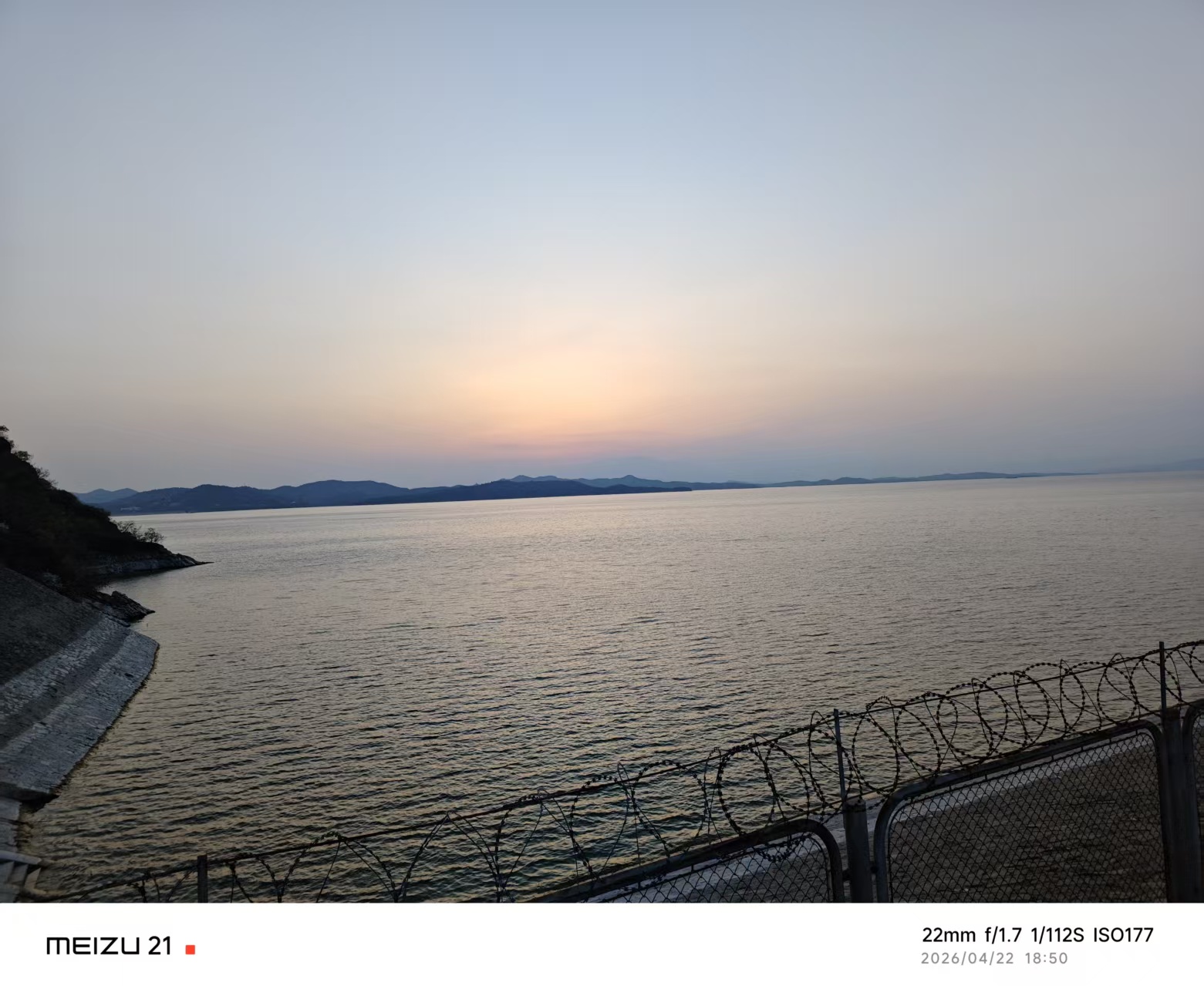
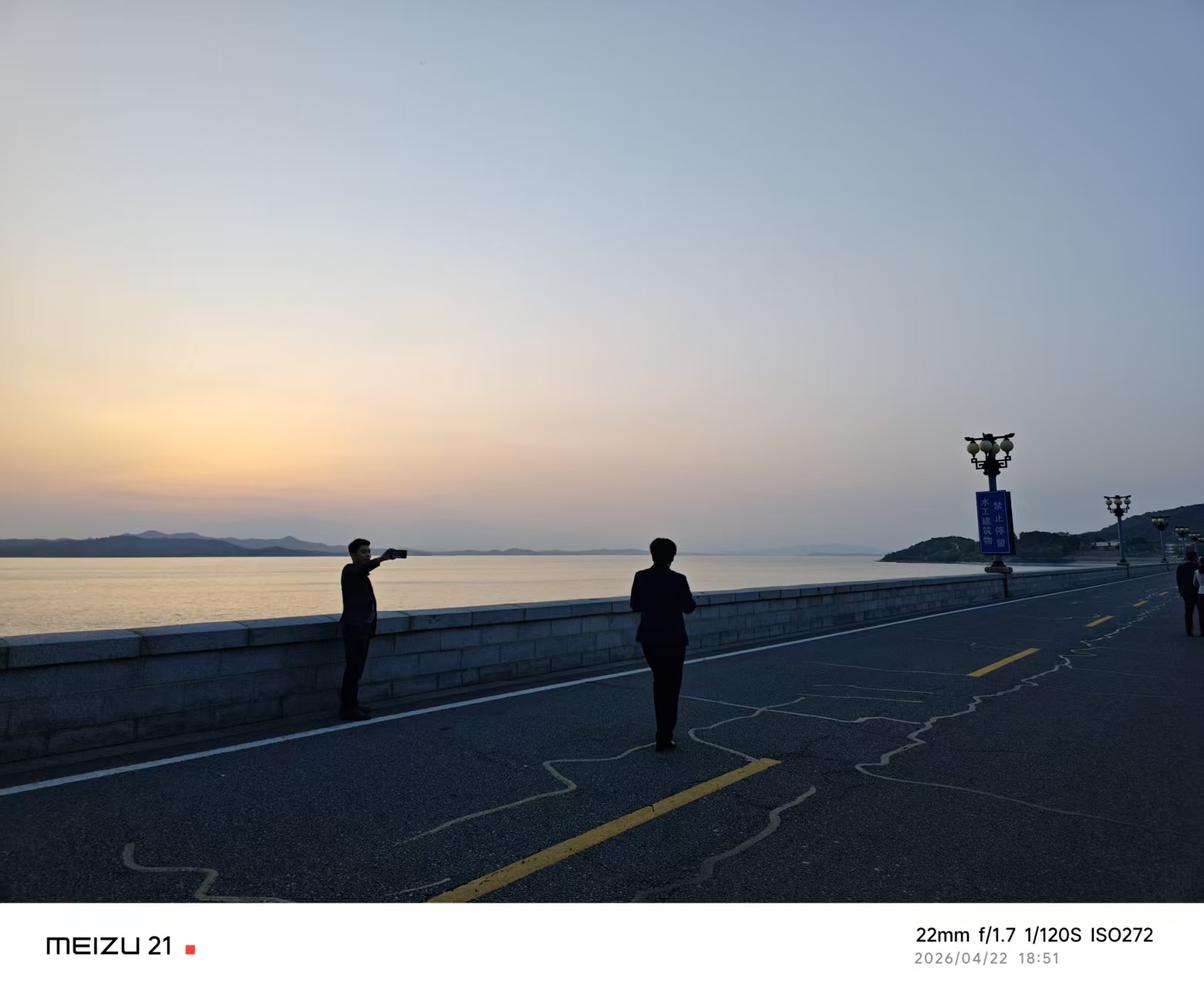
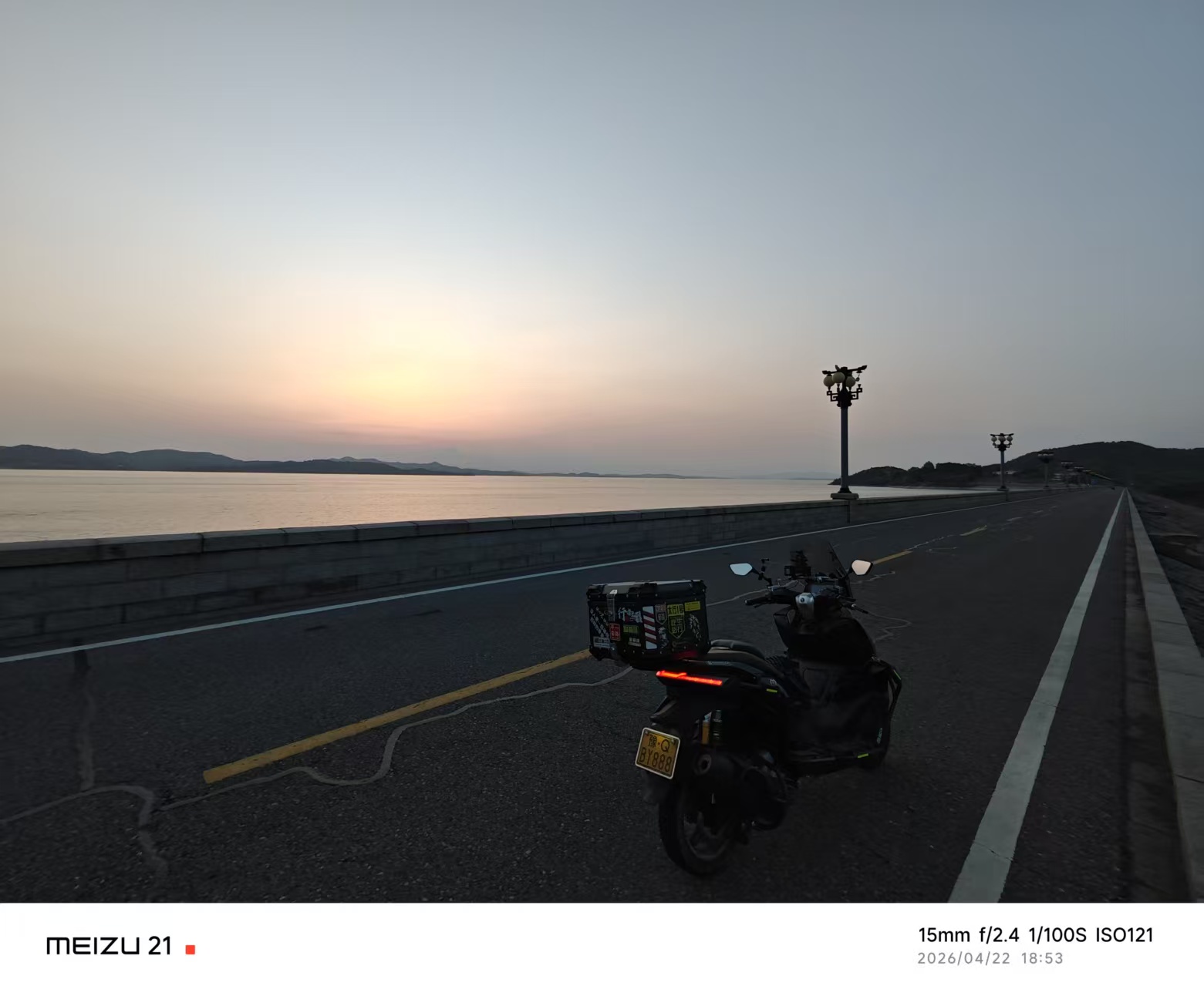
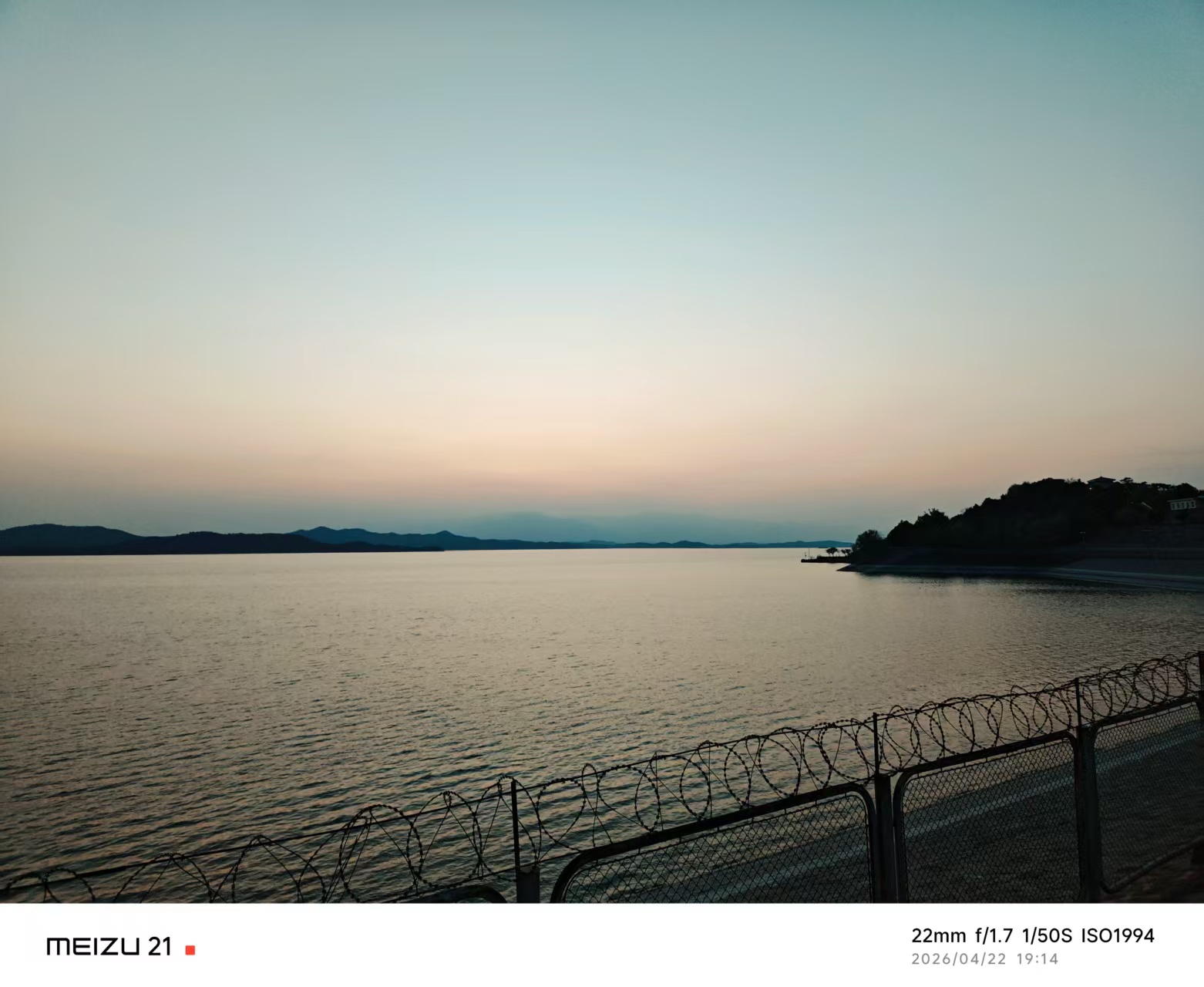
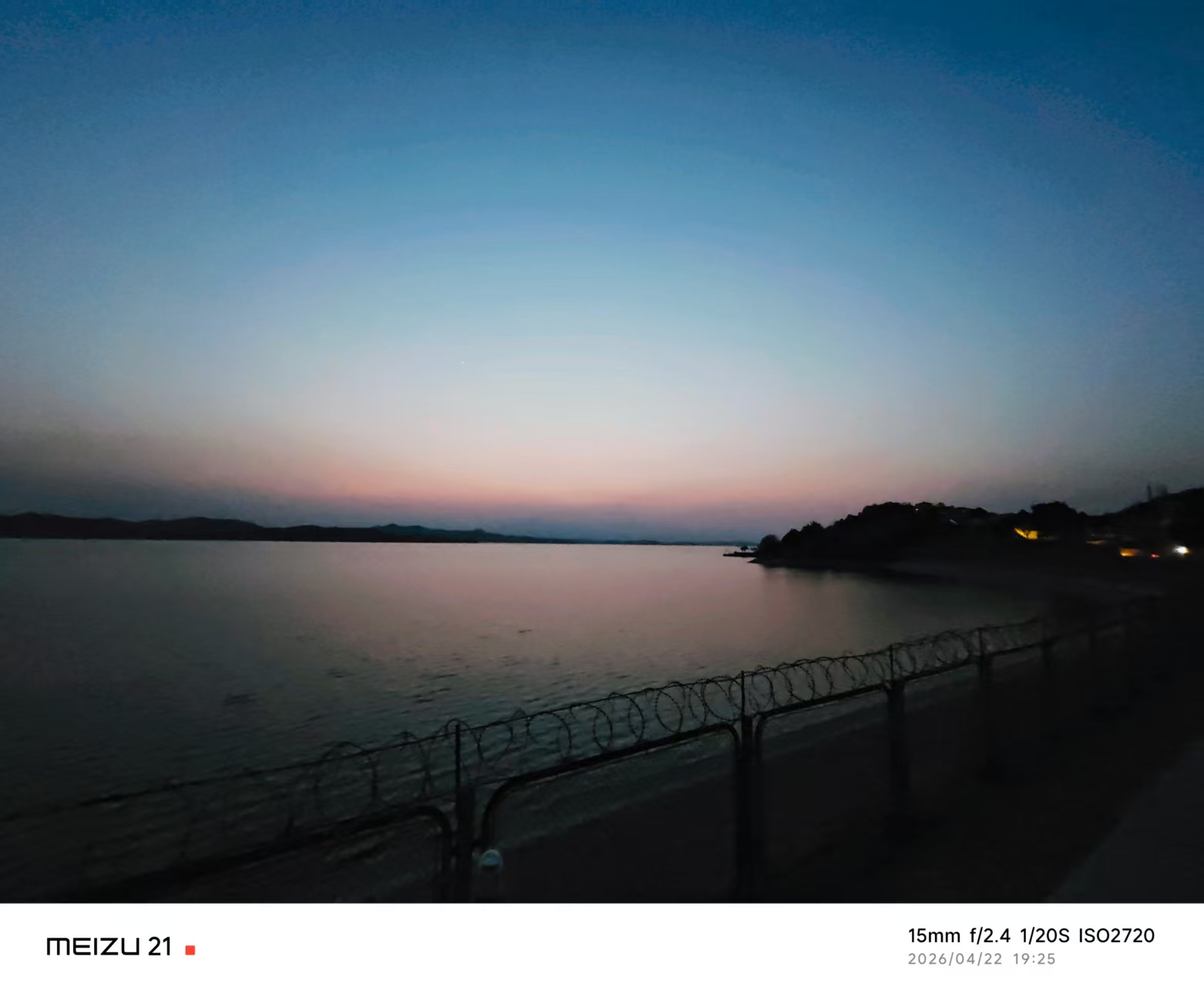
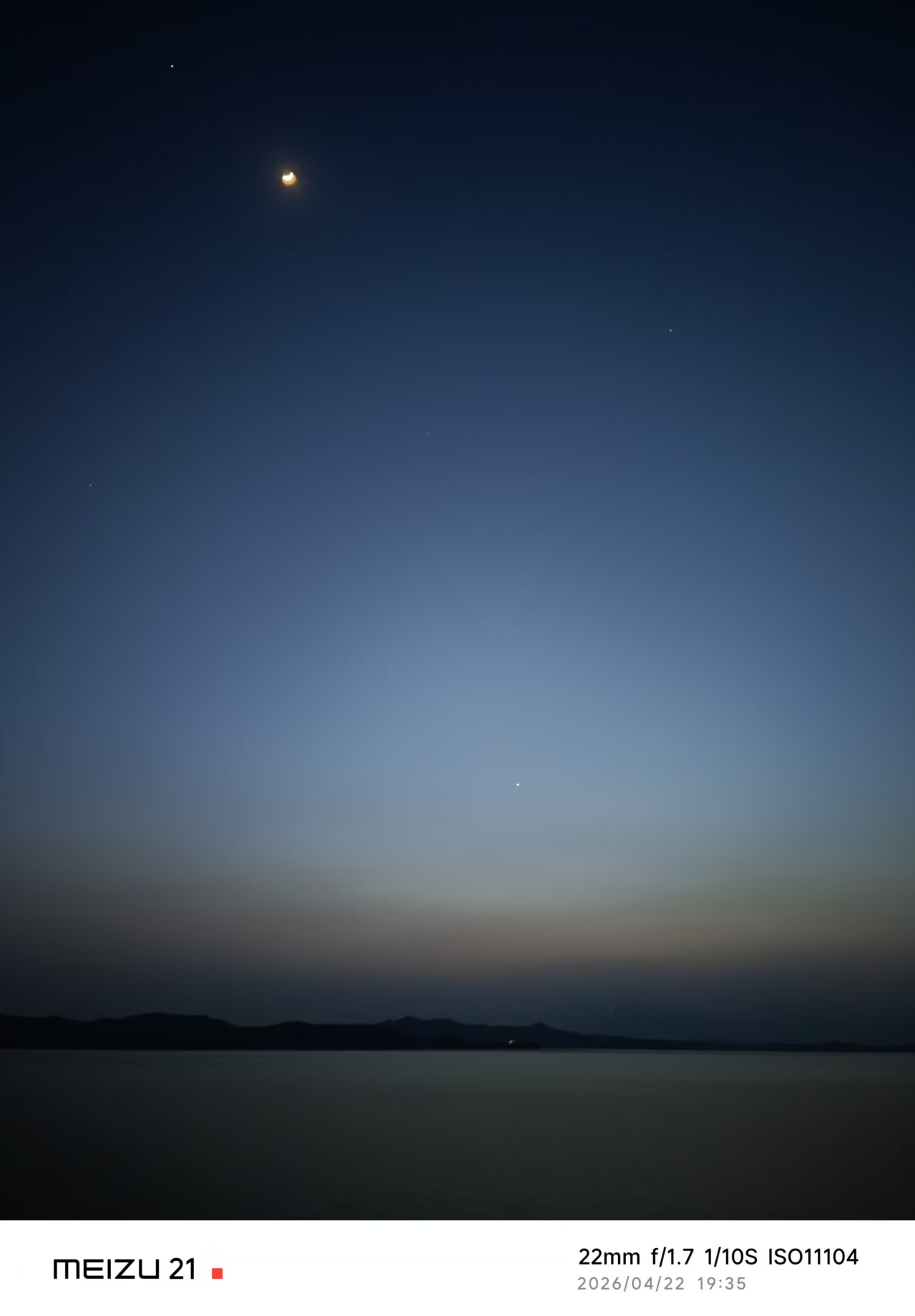
I dreamed before dawn, and by evening that same day I went out on the motorcycle to clear my head. Because I left late, it was already 6:50 p.m. when I reached the dam at Miyun Reservoir. There were very few people on the dam. In the distance, where water and sky met, low mountain ridges stretched across the horizon. From south to north they narrowed gradually until the thinnest section looked like a single black line separating water from sky. In the western sky, the sunset had already faded to only a faint orange trace. As I stood there, night slowly came down.
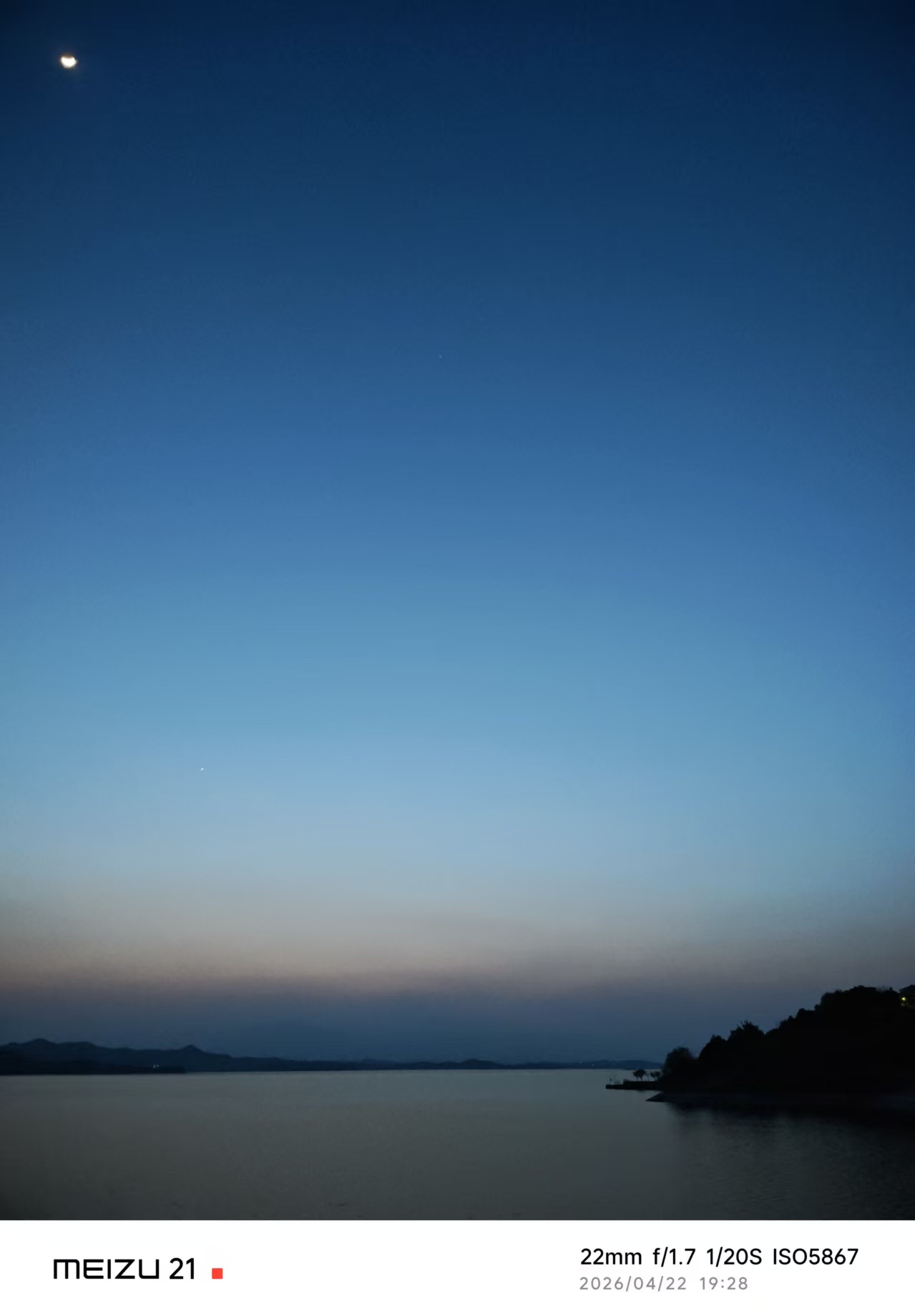
That first night ride after arriving in Huairou, Beijing, I gave to my own private thoughts, and to the waning moon and evening stars above Miyun Reservoir. The photos taken on my Meizu phone actually came out quite well.
Over the sea rises the bright moon; beneath the sky, we share this same moment. West of the dam lay the reservoir, encircled by mountains. East of it were also mountain-ringed villages, their night lights scattered like a galaxy. I sat on the dam and watched the dusk deepen. A few barks drifted up from the village below. They sounded very far away, and the whole world seemed far from me as well. Once the matter that had troubled me in the ordinary world had reached its outcome—and that outcome had little to do with me—my heart became quiet again, there under the deepening blue stillness over Miyun Reservoir.
After sitting for a while on the concrete embankment blocks by the dam, I headed back.
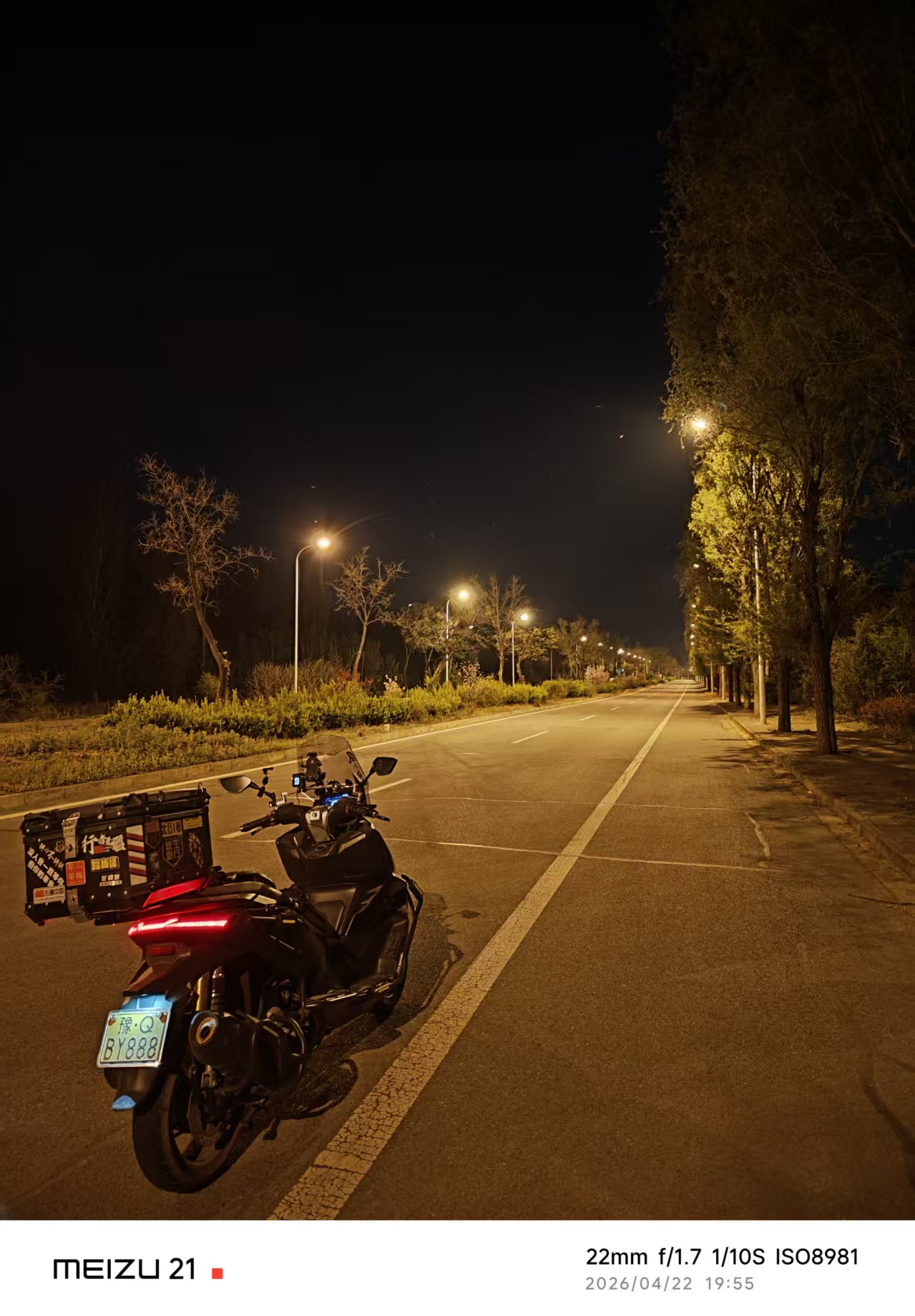
The return ride at night felt exceptionally good. Since I started riding the Voge 250GT, this was the first time night riding had felt so peaceful and so easy.
The previous time I had ridden deep into the night was during last year's Sichuan-Tibet journey, on the third day of that trip, May 11. At 9:30 p.m. that night, I arrived in Ningqiang County in Hanzhong, Shaanxi. But that was simply a matter of making distance. I was not really paying attention to roadside scenery or to the relief of the mind.
The ride back from Miyun Reservoir showed me something closer to the real pleasure of night riding. The cool breeze, the speed, the absence of hurry, the absence of worldly concerns cluttering the mind—everything narrowed into the act of riding itself. It felt as if the pulse of the engine and the beat of my heart had become one. In current terms, perhaps people would say night riders enter a state of flow more easily. In that state, the joy of motorcycling becomes sharper and more complete.
There is one more moment from the return trip worth noting. As I passed through Miyun's urban area along Binhe Road, I saw a large shopping mall. Later I found out it was called Miyun MixC. It was around 7:20 p.m. When I rode past that brightly lit place, crowded with people and movement, my mood shifted in an instant.
I had spent too long in the northwestern outskirts of Huairou. What I usually saw were empty streets, and at the research base there were often only a handful of people. I had grown accustomed to quiet and solitude. So when prosperity and noise suddenly appeared in front of me, I felt, for a brief moment, as though I had been separated from that world for ages. It was almost as if I were living inside a dream, and the feeling brought a slight discomfort with it. I only glanced at the place twice in passing. I did not dare linger, and kept going.
Only after I got back to my residence in Huairou and parked the motorcycle in the empty underground garage did that strange feeling finally fade.
That was my first night ride in Beijing: an entirely ordinary experience, and not ordinary at all.