If too little attention in childhood can push a child to create trouble just to be noticed, then the pattern can harden into a deeper lack of security. In adulthood, that often turns into a "hurts but feels good" dynamic: a person starts using negative reactions, criticism, even discomfort itself, as proof that they exist. And when the brain’s reward system begins to blur pain and gratification—especially in the nucleus accumbens—the pursuit of painful experiences can become even stronger.
But there is another rule that matters just as much: too much is as problematic as too little.
A child who is over-focused-on can develop a different kind of insecurity. So attention is not a simple on-or-off switch, not something that is either wholly absent or unquestionably good in larger amounts. And yes, some people will insist they do not need attention at all. That, too, belongs to another form of insecurity.
Histrionic personality as a possible outcome
This does not mean that everyone who develops a "hurts but feels good" pattern will end up with histrionic personality traits. The point is narrower: when childhood teaches someone that gaining attention through pain, disruption, or exaggerated reactions works, and that strategy remains intact into adulthood, it becomes fertile ground for that kind of personality structure.
I happened to see two sharply contrasting examples while walking my dog.
On the way down in the elevator, I met a mother and daughter. The girl was curious about my dog and kept quietly telling her mother that she wanted to come closer. Her mother did not step in and speak for her. She answered only that it was a Shiba Inu, then encouraged her daughter to ask me directly if she could approach. The girl hesitated, but finally asked whether she could pet Naizi. In that brief elevator ride, the mother let her daughter build both curiosity and a social interaction on her own.
On the way back up, I met another mother and daughter who reacted in the exact opposite way. As soon as the girl saw me entering with the dog, she began loudly shrieking in front of everyone: "Ah, a dog! I’m scared of dogs!" She drew every eye in the elevator within seconds, while Naizi sat quietly in the corner. Then her mother cut through the scene with a flat, unsparing line: "What are you performing for? Don’t we have a dog at home too?" The calmness of that response barely sounded like she was speaking to a child, but it also suggested that this had happened many times before. The girl went completely quiet after that.
I am not saying the second girl had a histrionic personality. Plenty of children behave in attention-seeking ways. Adults are the ones who later label it "performing." But the contrast between those two scenes says something important: one child was being properly seen, the other likely was not.
Most childhood "performing" is still conscious. It is an instinctive reflex for obtaining attention. It is not necessarily calculated in an adult sense. A child who says something cruel or dramatic is not always expressing a fully formed intention; often it is simply reenacting a tone, an indifference, or a way of relating that has already been modeled at home.
When the soil of "hurts but feels good" becomes rich enough and the pattern hardens, the person is no longer doing it deliberately. The mechanism shifts underground. It starts operating subconsciously. And when that subconscious drive for attention combines with excessive emotionality, high suggestibility, and the kind of distorted interpretation that resembles erotomanic thinking, it can develop into a histrionic personality structure.
Subjectivity, and why some people cannot receive love
A discussion about "true love" often ends up touching something much bigger: subjectivity.
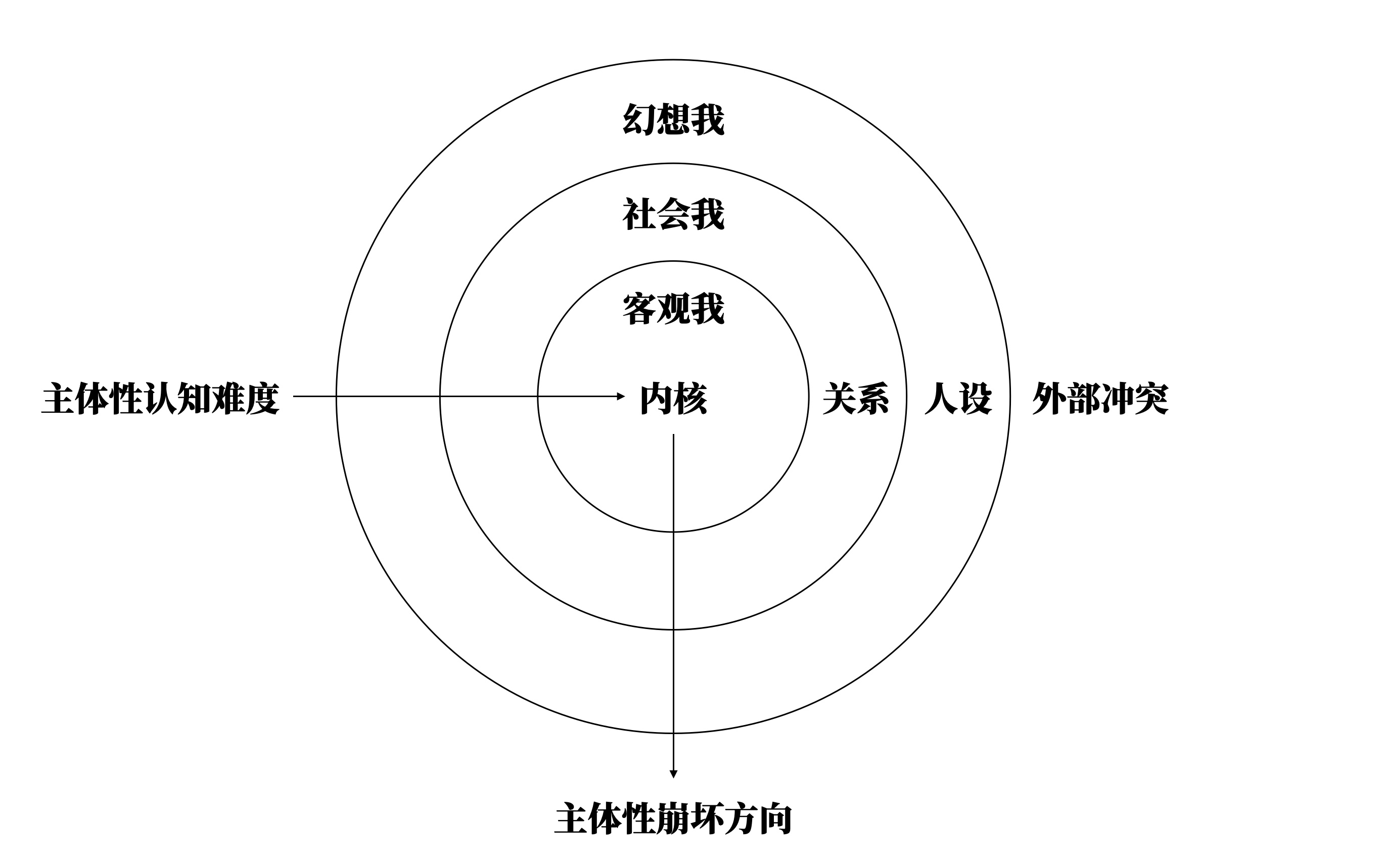
What kind of love can erase a person’s inner core?
Take Stockholm syndrome as an example. If someone is deprived of freedom, subjected to cruelty, and then given basic necessities and prolonged one-on-one dependence, their subjectivity can gradually be worn down. Once that inner core is weakened, it becomes possible to rebuild them around a fabricated self: without me, you are nothing; without me, you cannot go anywhere.
That sounds familiar because it is also the logic of emotional manipulation. It links directly to gaslighting.
Gaslighting works because the victim’s grasp on reality is repeatedly forced out of alignment. Little by little, they begin to doubt their own inner certainty. At the extreme end of that process, they no longer trust their own mind at all. The false self imposed on them becomes more believable than their original one.
These examples sound obviously abusive and negative, so how do they connect to a childhood marked by excessive attention?
Stockholm syndrome and gaslighting share one core method: they deny the other person’s subjectivity. That denial can happen through physical restriction or psychological reconstruction. Put simply, the person is not treated as a person. What gets stripped away first is the most objective part of the self—the part that can say, this is what I feel, this is what I want, this is what I perceive.
Overattention and overindulgence can produce a similar effect.
Mother thinks you are cold. Mother thinks you are hungry. Mother wants to give you the very best and expects you to achieve success. In that process, your own core is gradually displaced. What takes its place is a standardized "fantasy self": which school you should attend, which major you should choose, what kind of work should be arranged for you afterward, whom you should marry, how many children you should have.
Once personal will has been repeatedly overridden and a fixed mode of thinking takes shape, the person often no longer feels that anything is wrong. Obeying parents starts to feel like responsibility itself.
Then they enter wider society and encounter relationships that reflect back many different versions of the social self. Not everyone will relate to them in the same engulfing way a parent did. So when they come across love that exists between two subjects—love that leaves room for another person to exist as a separate self—they may feel confused, even frightened. The result is severe internal friction.
This is what it means to be unable to receive love.
People like this often repeat the curse of childhood by attaching themselves to another subjectivity they can live through. The crying mother at a youth football match, overwhelmed as she watches her son play, may not actually be moved by her son at all. What she may be responding to is the extension of herself she has placed inside him.
From willing devotion to severe internal conflict
Most of the time, when someone keeps yielding in a relationship and seems "willing" to do so, we assume it is because they are afraid of losing the relationship. Very few people push further and ask what is happening at the level of subjectivity itself.
And to be fair, not everyone needs to go digging that deeply.
The point of tracing these underlying mechanisms is not that insight can rewrite history. It cannot. At best, this kind of thinking offers a method for the future.
For example, someone once asked how to deal with this "hurts but feels good" pattern because she was terrified that her own family history would be passed down to her child. In response, she had started overindulging that child. The real issue was not simply whether she loved the child enough, but that she had swung toward the opposite extreme. In that sense, becoming conscious of the other danger mattered more than receiving a neat solution.
The moment you go deep, you have to dissect yourself in a thorough and objective way. That process is brutal. It may overturn twenty or thirty years of self-understanding. The internal exhaustion this creates is far greater than the ordinary stress of getting stuck on one problem.
So if this kind of recognition is useful only at one key moment in the future, that is already enough.
Personally, I think awareness should begin only after you notice that something is wrong. First sense the problem, then look for the problem—not the other way around.
There are a few common signs:
- The same type of thing keeps happening to you again and again. For example, you repeatedly end up with the same kind of bad partner, or every time a relationship reaches a certain depth, you suddenly want to give up first.
- You keep wanting to retreat into the ocean of "knowing" to search for answers, but once you enter that state, it feels strangely cut off from the world.
- You habitually have a certain emotional reaction to a certain category of things—specific symbols, certain groups of people, recurring types of situations.
- And if you genuinely feel there is no problem, then treat it like running code: if it works, do not debug it.