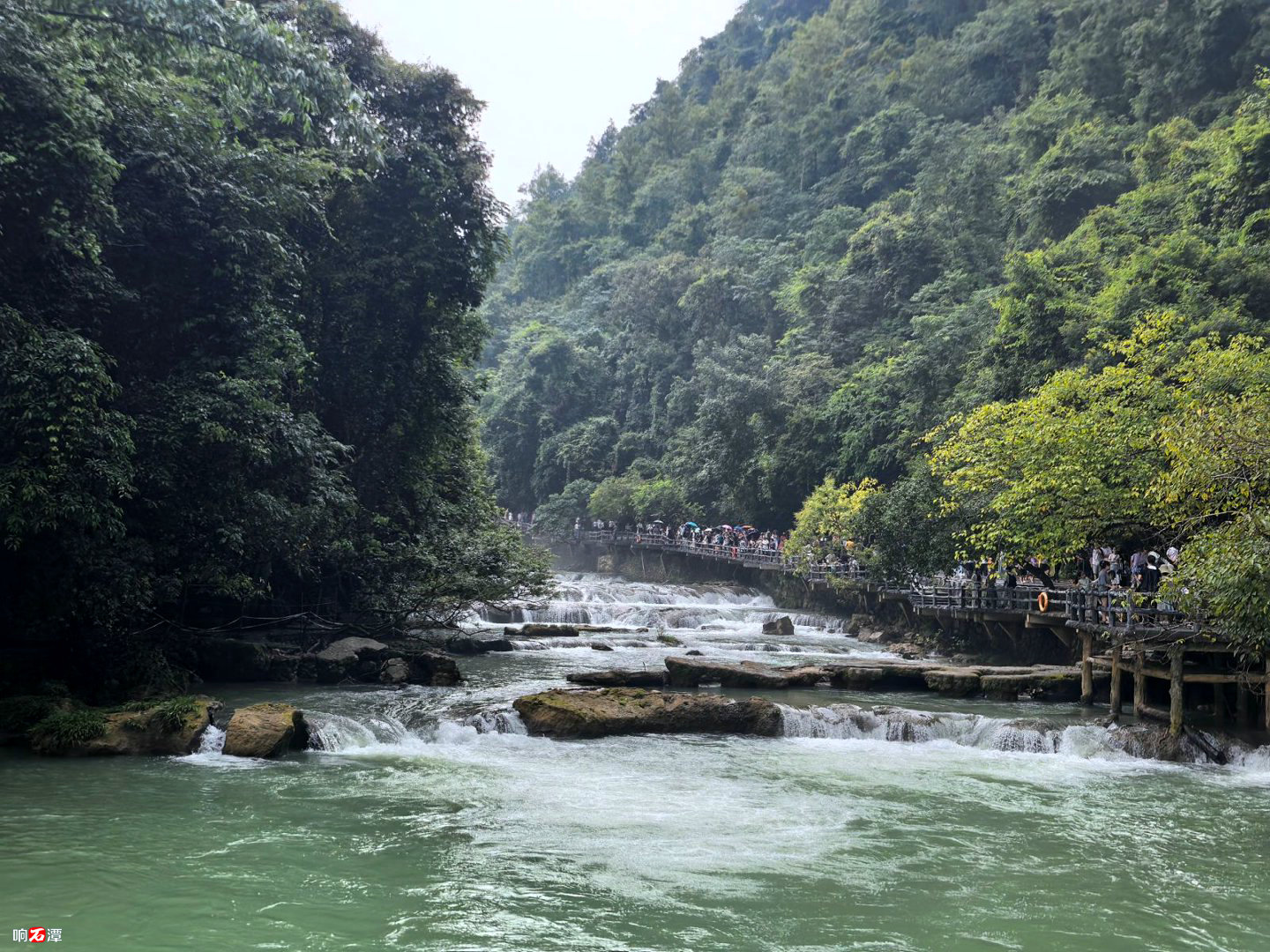
Before I went to Guizhou, one name stayed with me more than any other: Xiaoqikong. I kept wondering what a place called Little Seven-Hole would actually look like.
Now that I have been, the name feels like a symbolic label. There is an old bridge with seven openings, but the bridge itself is very small.
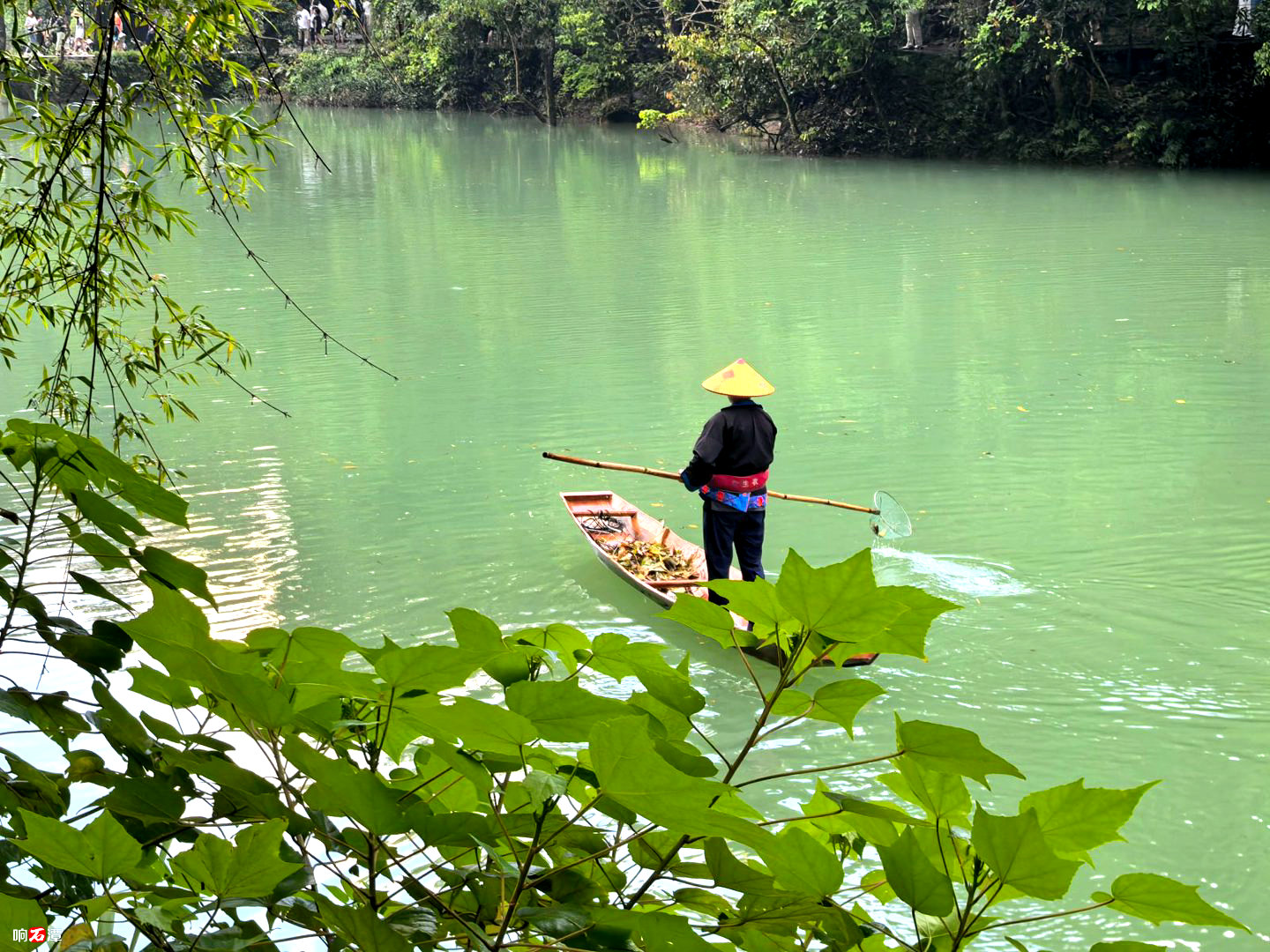
On the water, a man was collecting trash. Somehow the scene looked comfortable rather than grim: drifting on the river, free and easy. The wooden boat was lovely too, and I took a close-up. I could imagine lying in a boat like that under blue sky and white clouds, hands behind my head, knees bent, one leg resting over the other, a stem of grass between my teeth, watching birds fly past, sleeping with the sky and the earth.
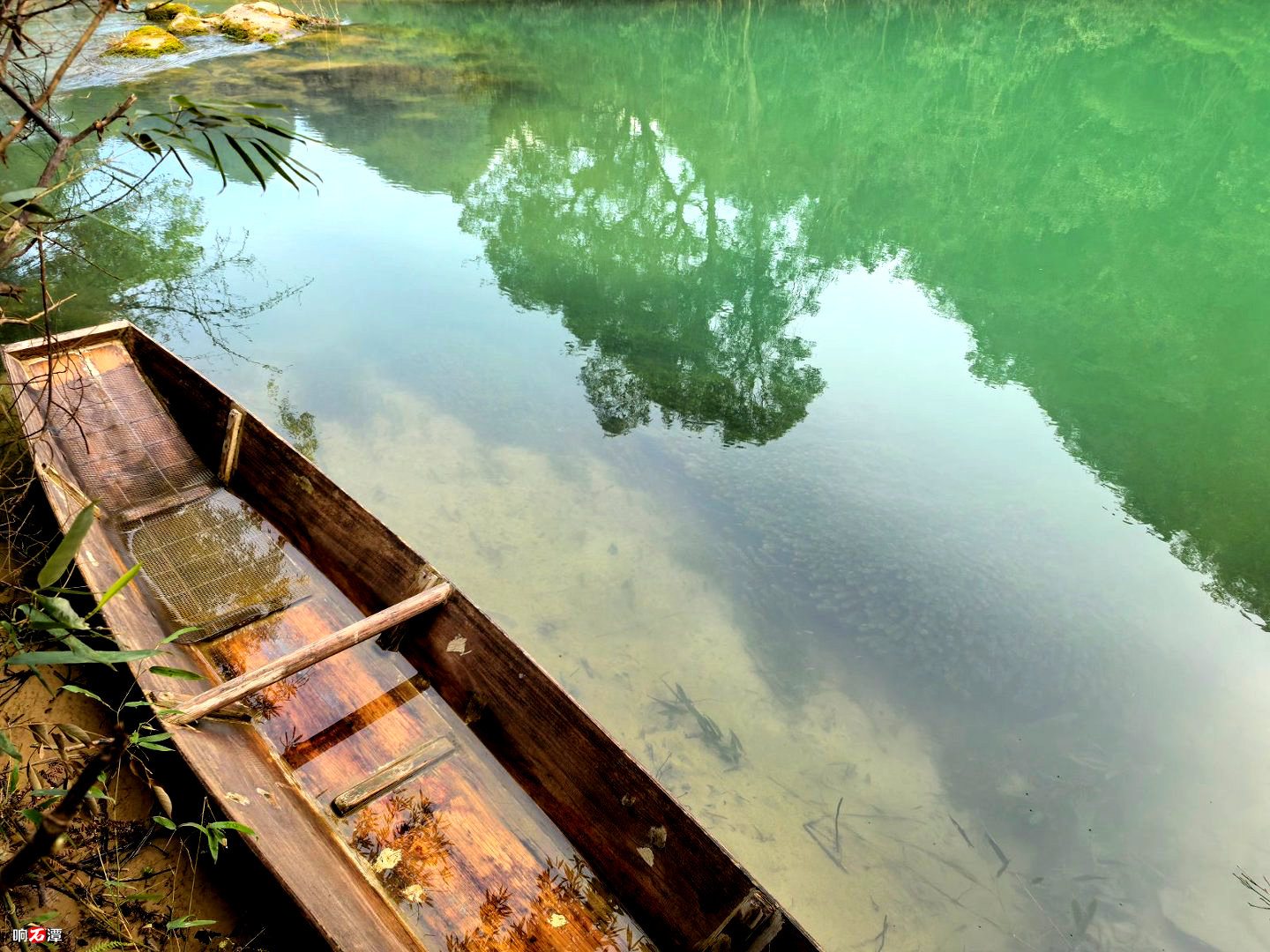
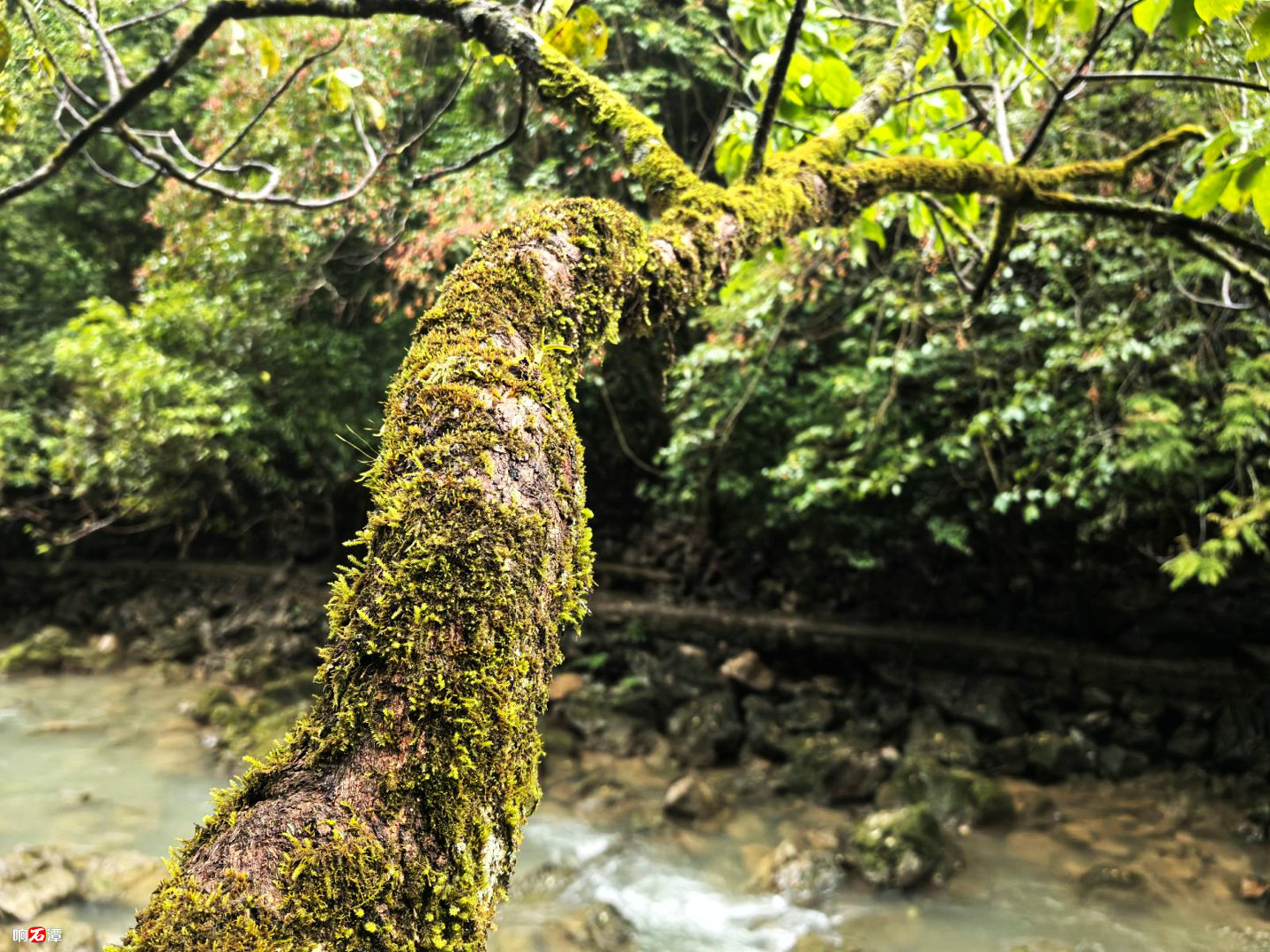
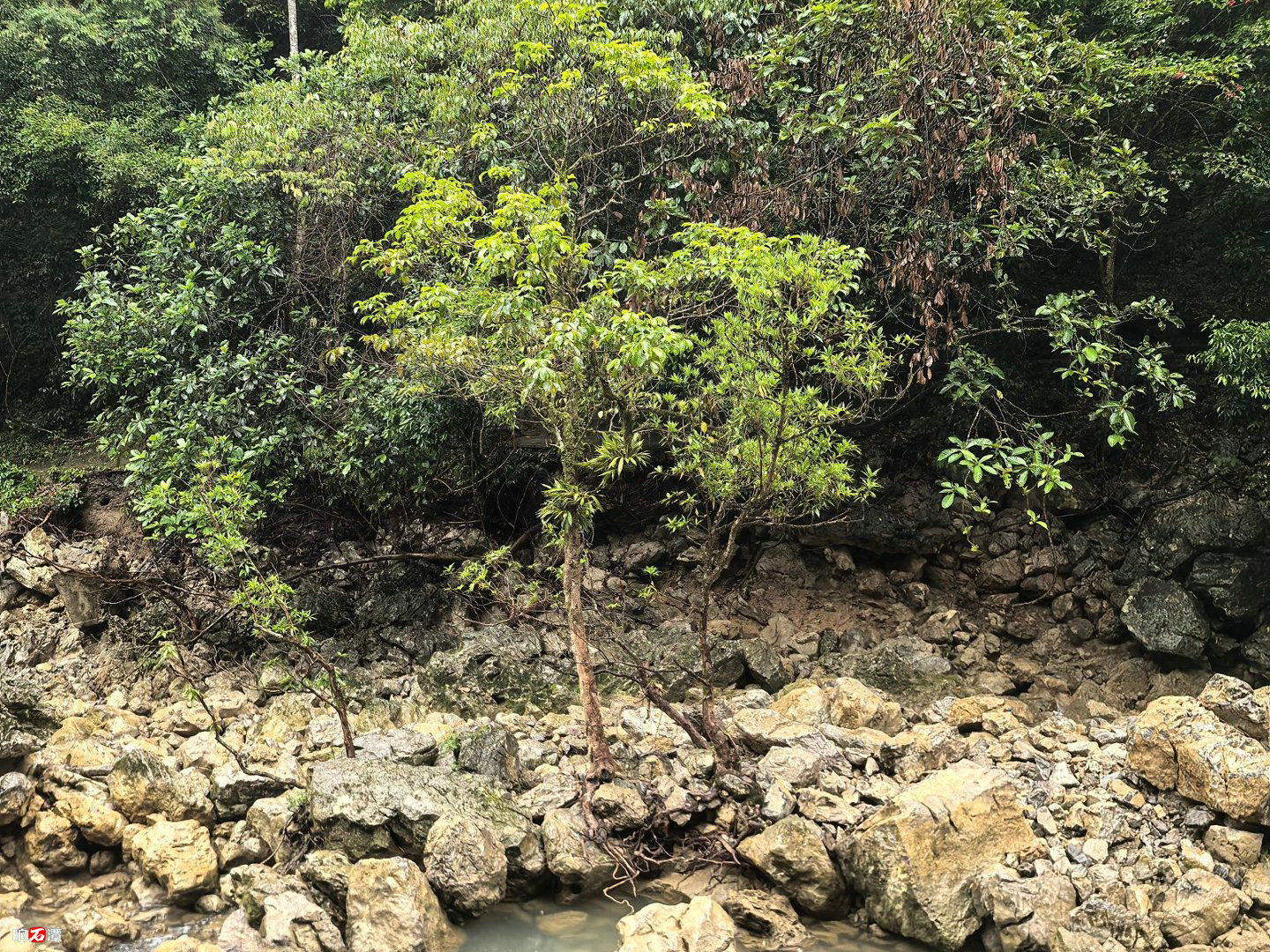
Walking along the river, I kept seeing trees reaching out from the banks, covered in moss. It shows how wet this place is. The water was not rushing; it felt quiet and hidden, much more so than Huangguoshu and Maling River Gorge. Looking closely, I saw that the trees were growing out of stone, their roots completely wedged into cracks, pushing stubbornly downward. That is the power of life, and perhaps it is also the stubborn strength of Xiaoqikong.
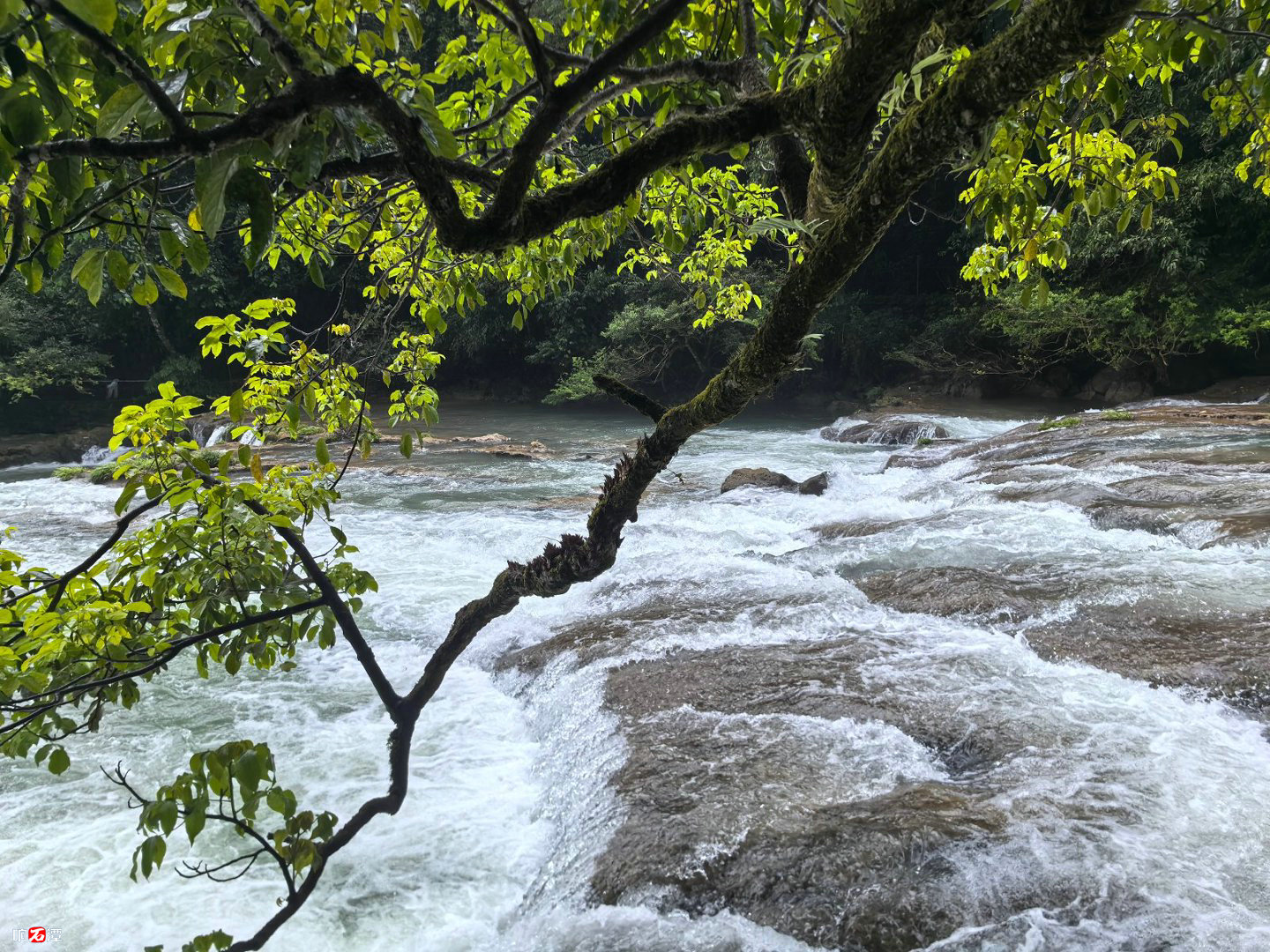
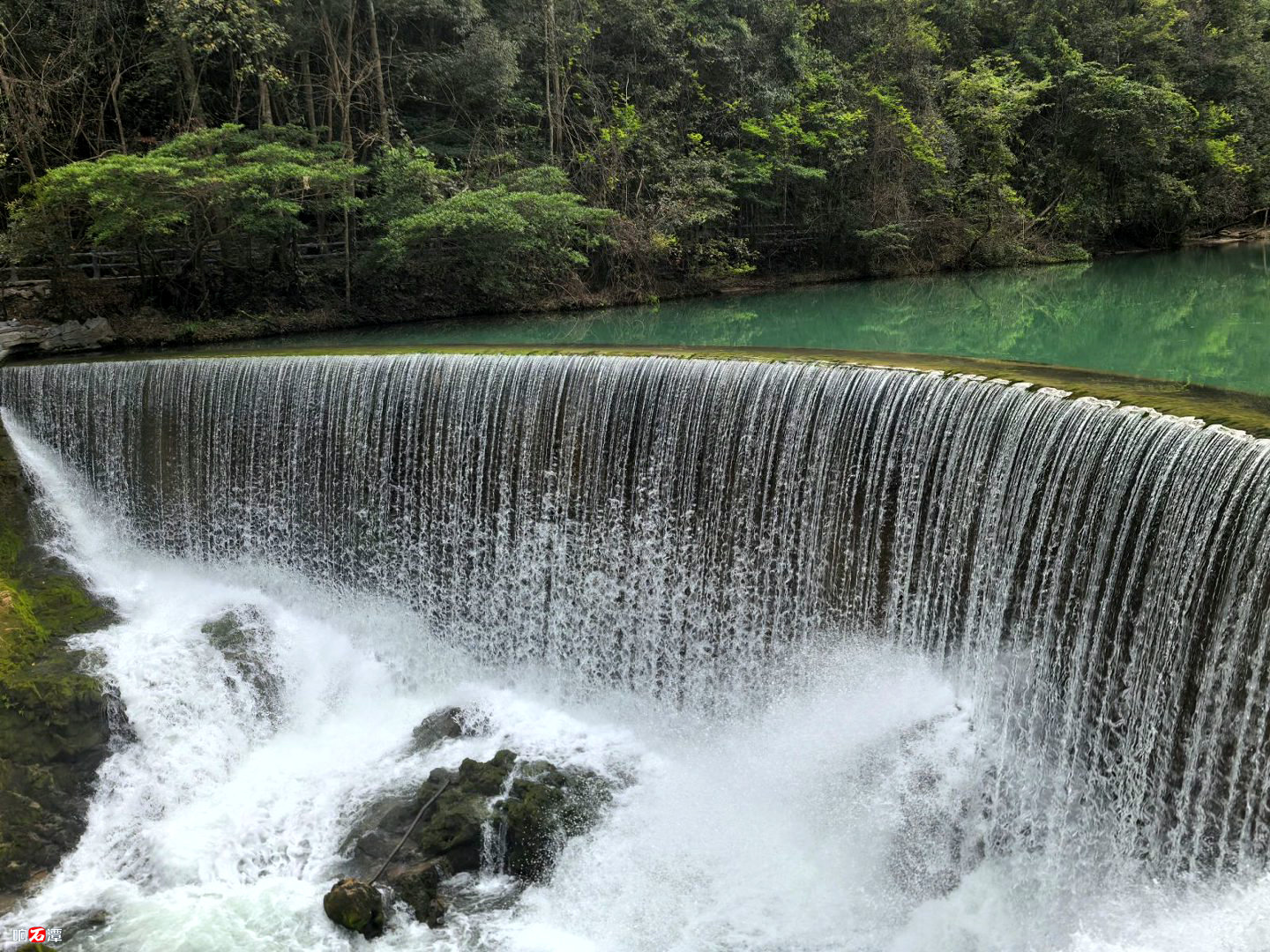
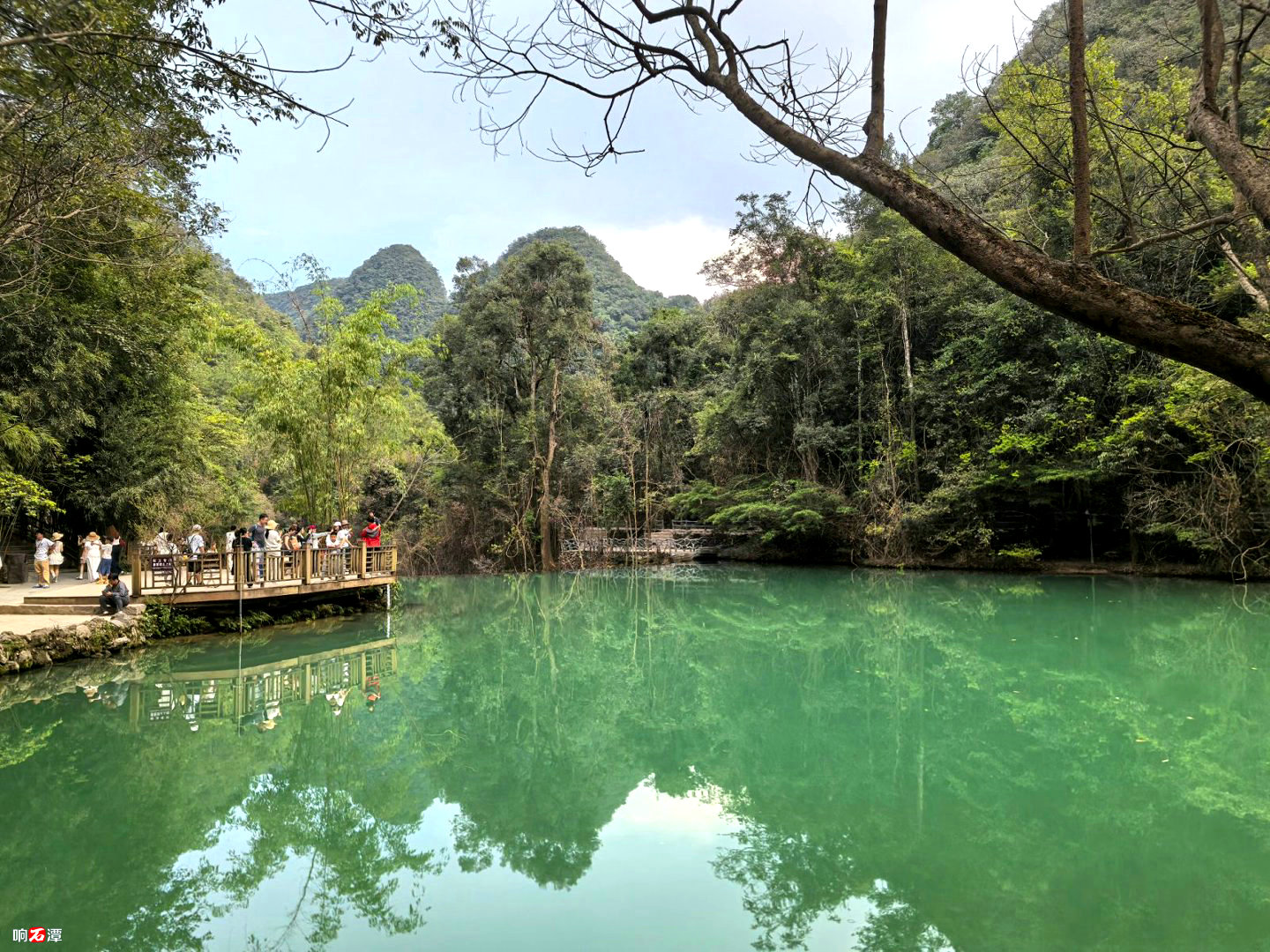
The waterfalls do not hurry either. One slid down along the mountainside, neither galloping nor roaring, yet still throwing up spray. Another was low, with the lake below forming an arc and the water surface echoing it. Above the drop, the water was very still; only at the edge did it pour down. Before that, it was a sheet of green water. A walkway crossed it, people strolling and taking pictures, their reflections in the water. The surface was like a large mirror.
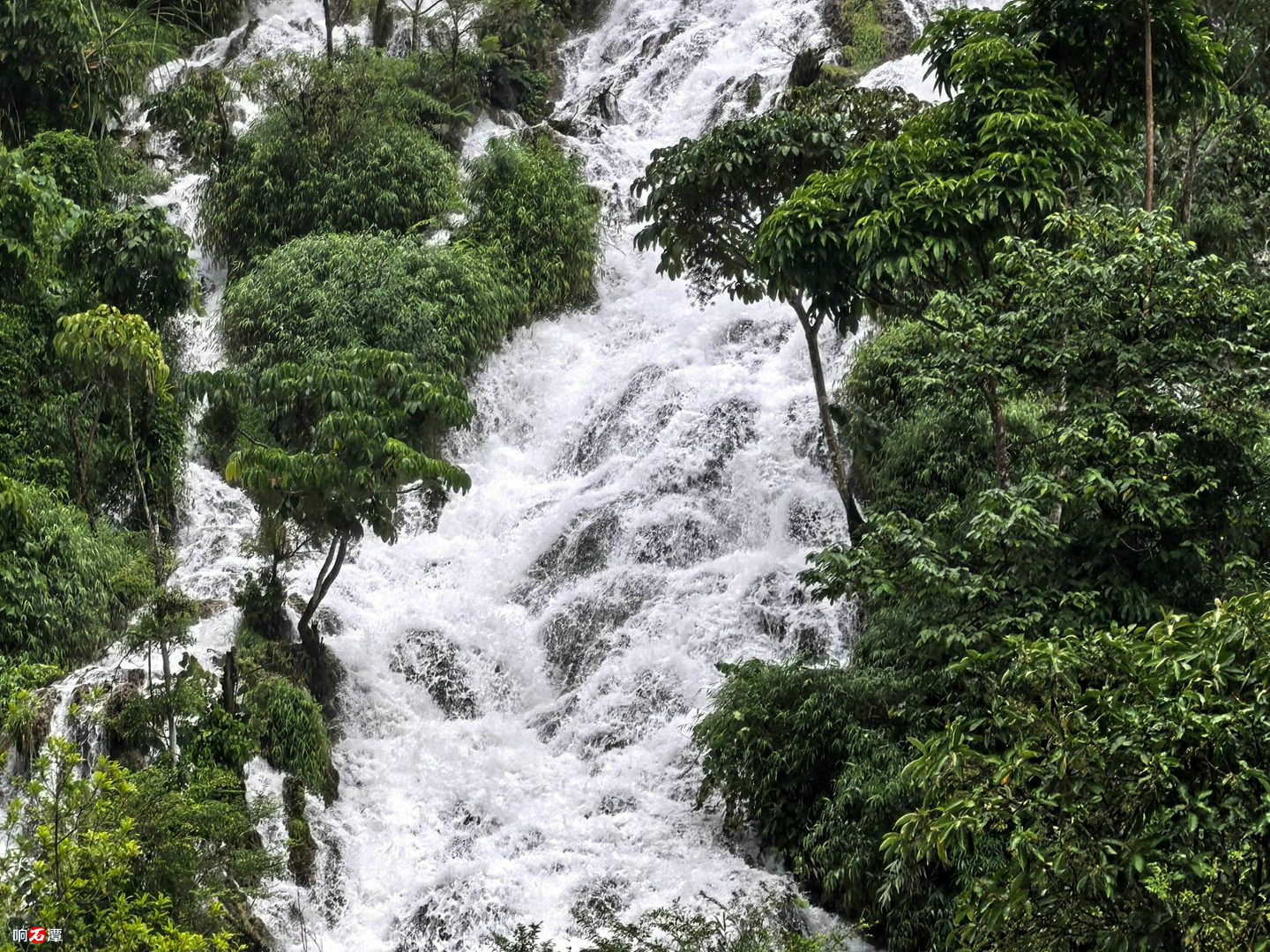
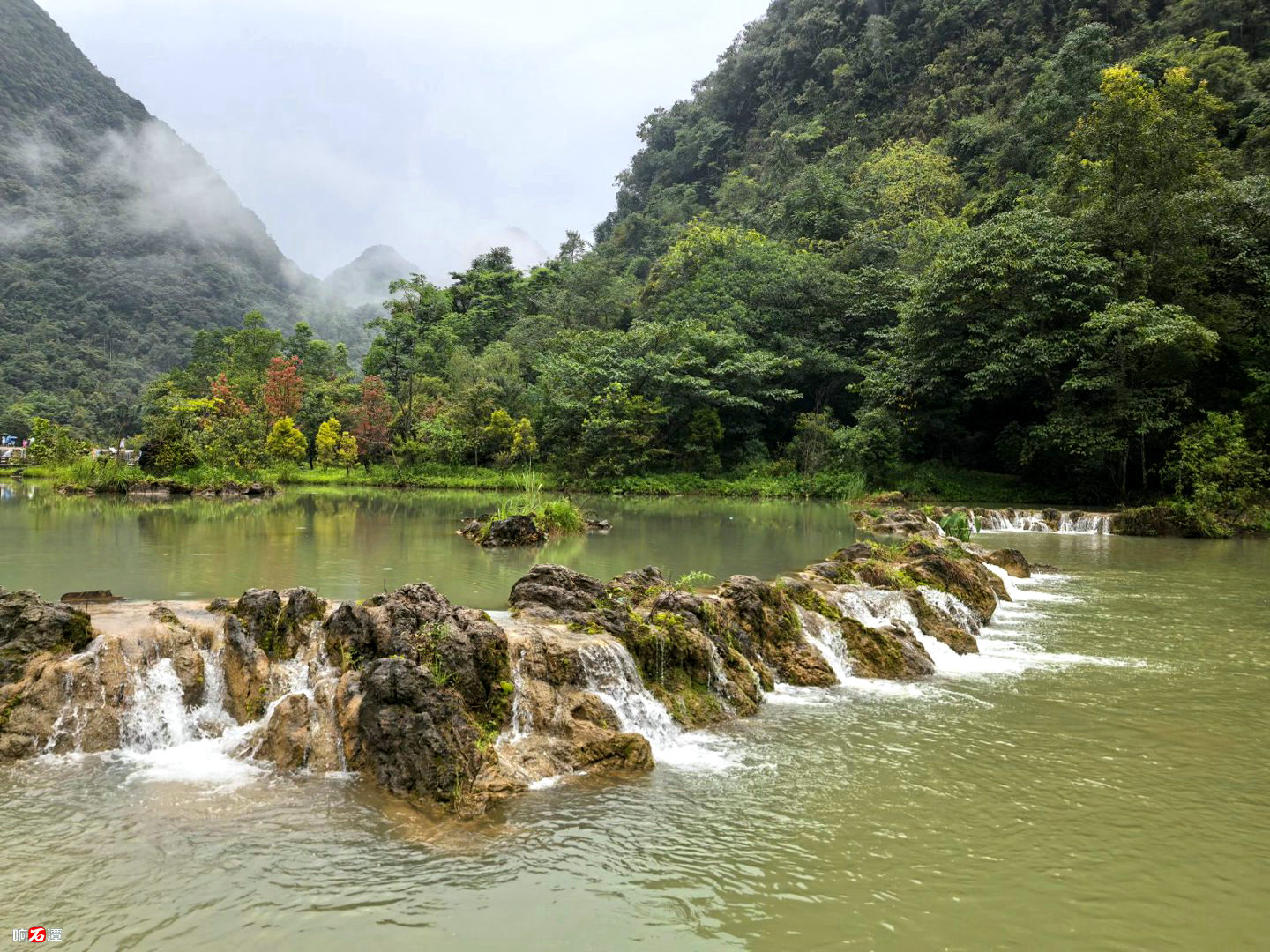
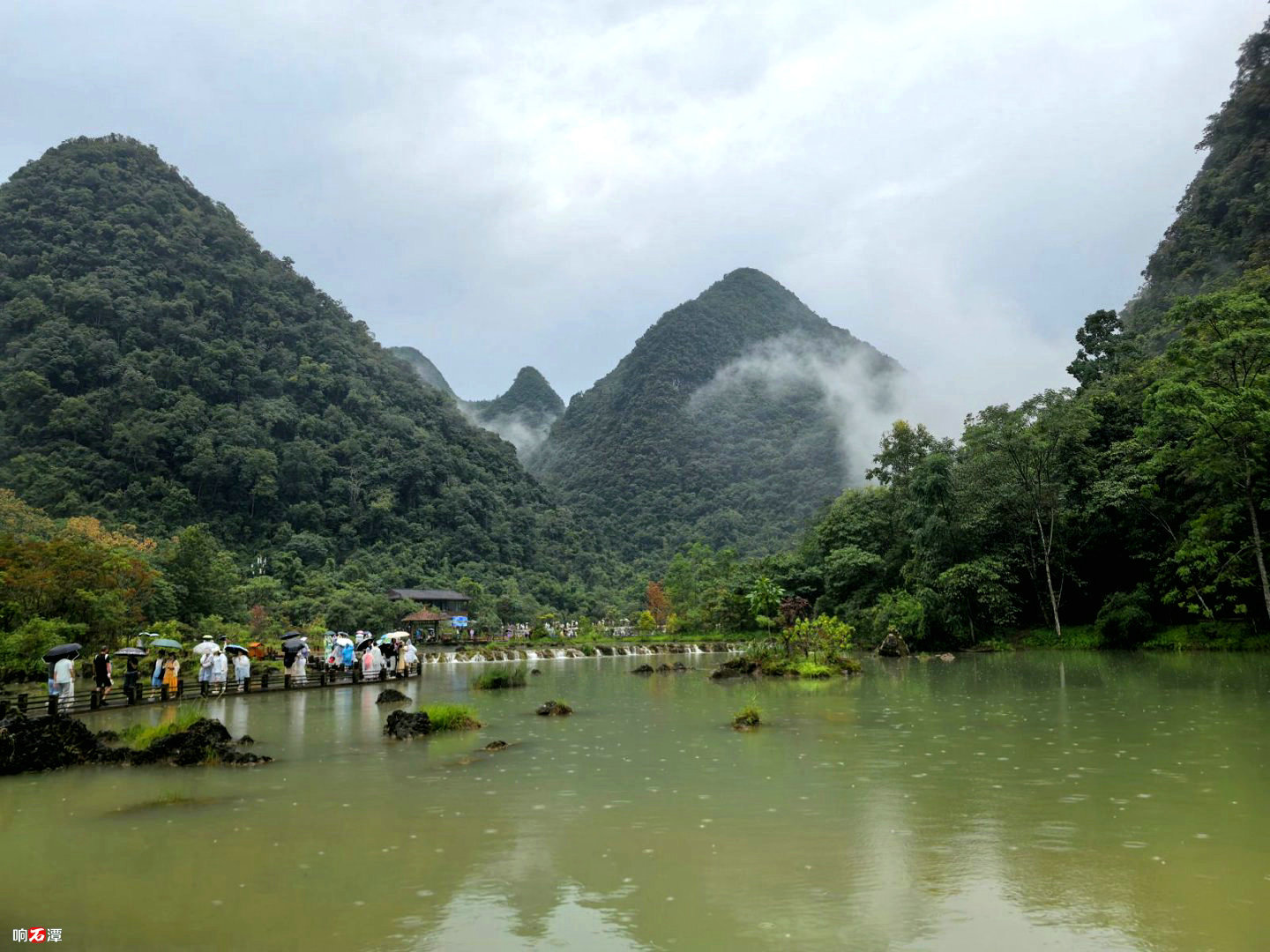
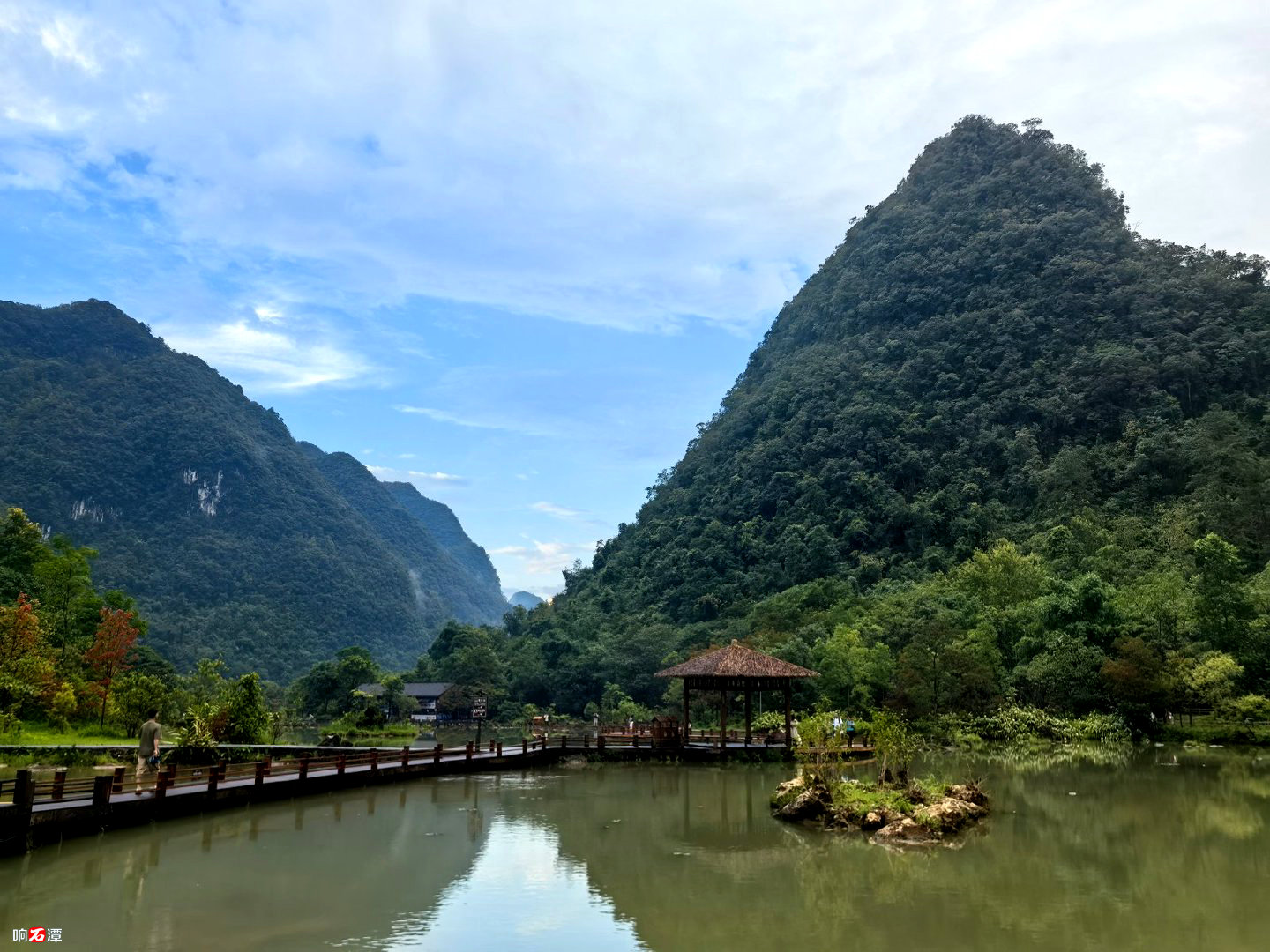
There was also a lot of water moving among the mountains in what looked like terraced fields, terraces of water, step by step, always flowing lower. It had just rained, and mist drifted in the distance over people walking the paths. The rain had not fully stopped. The water was broken by white spray; some people held umbrellas, others wore raincoats. Soon the rain cleared, blue sky appeared, and the peaks looked as if an invisible hand had carved ridges and ravines across them.
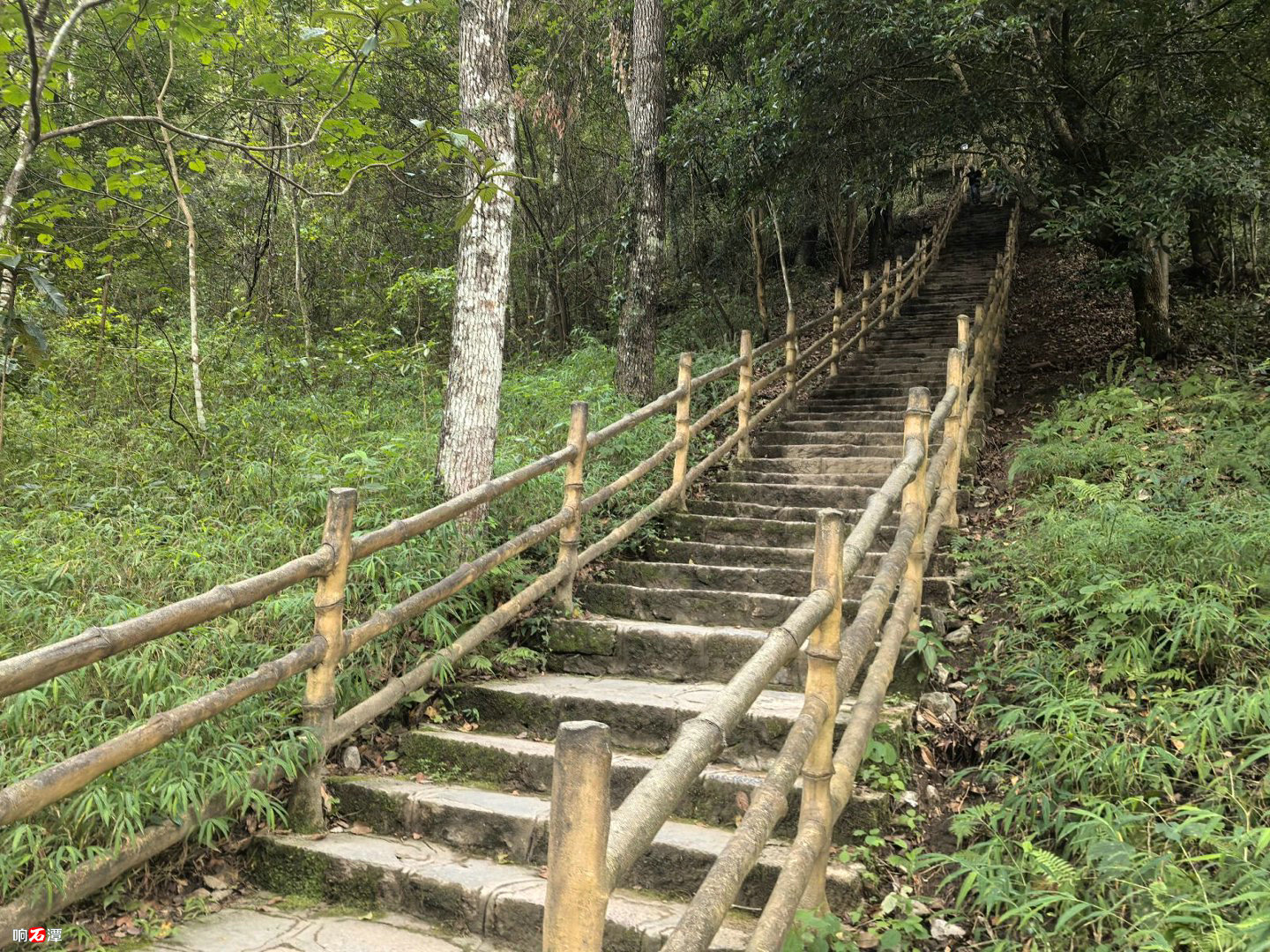
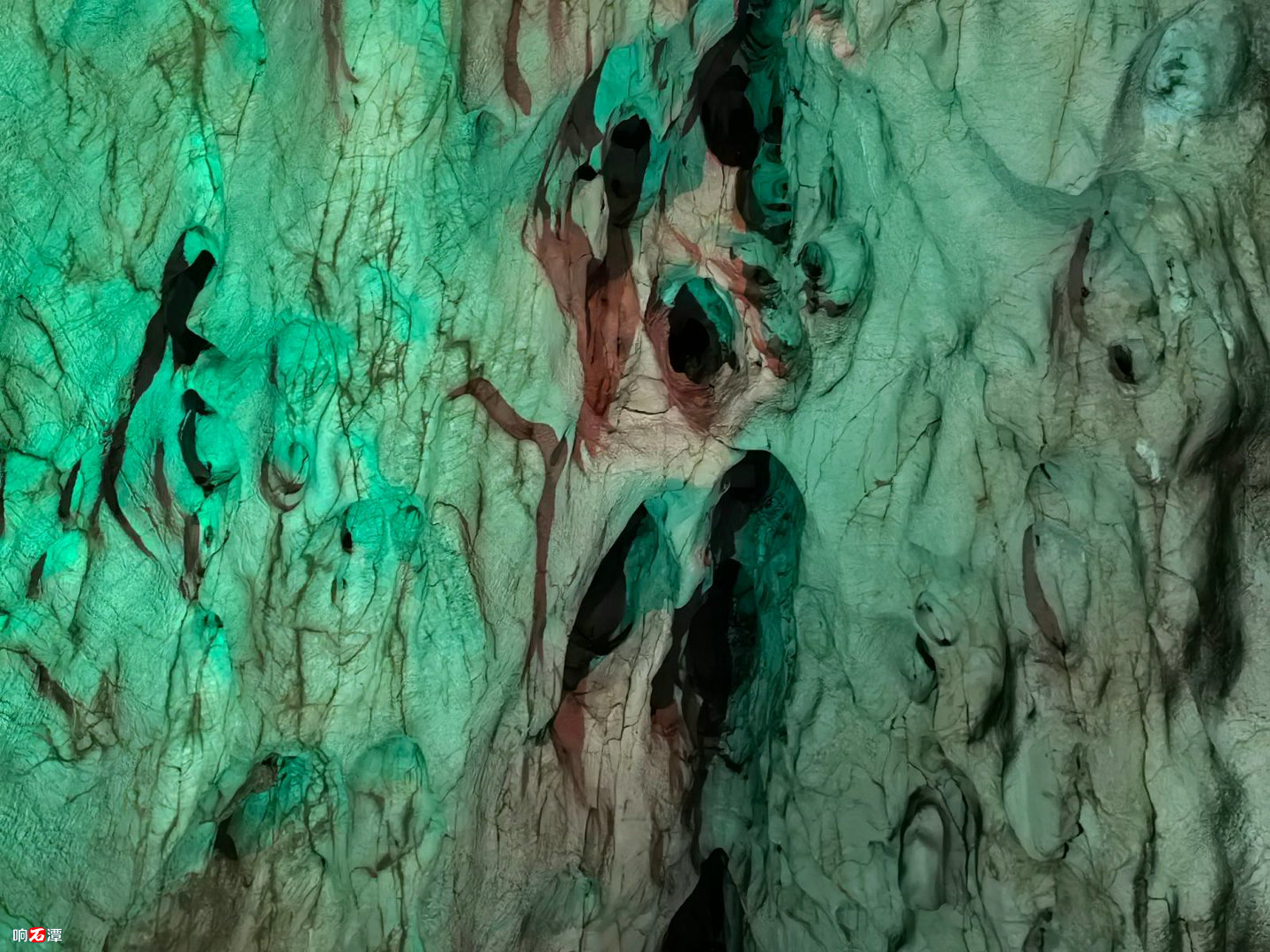
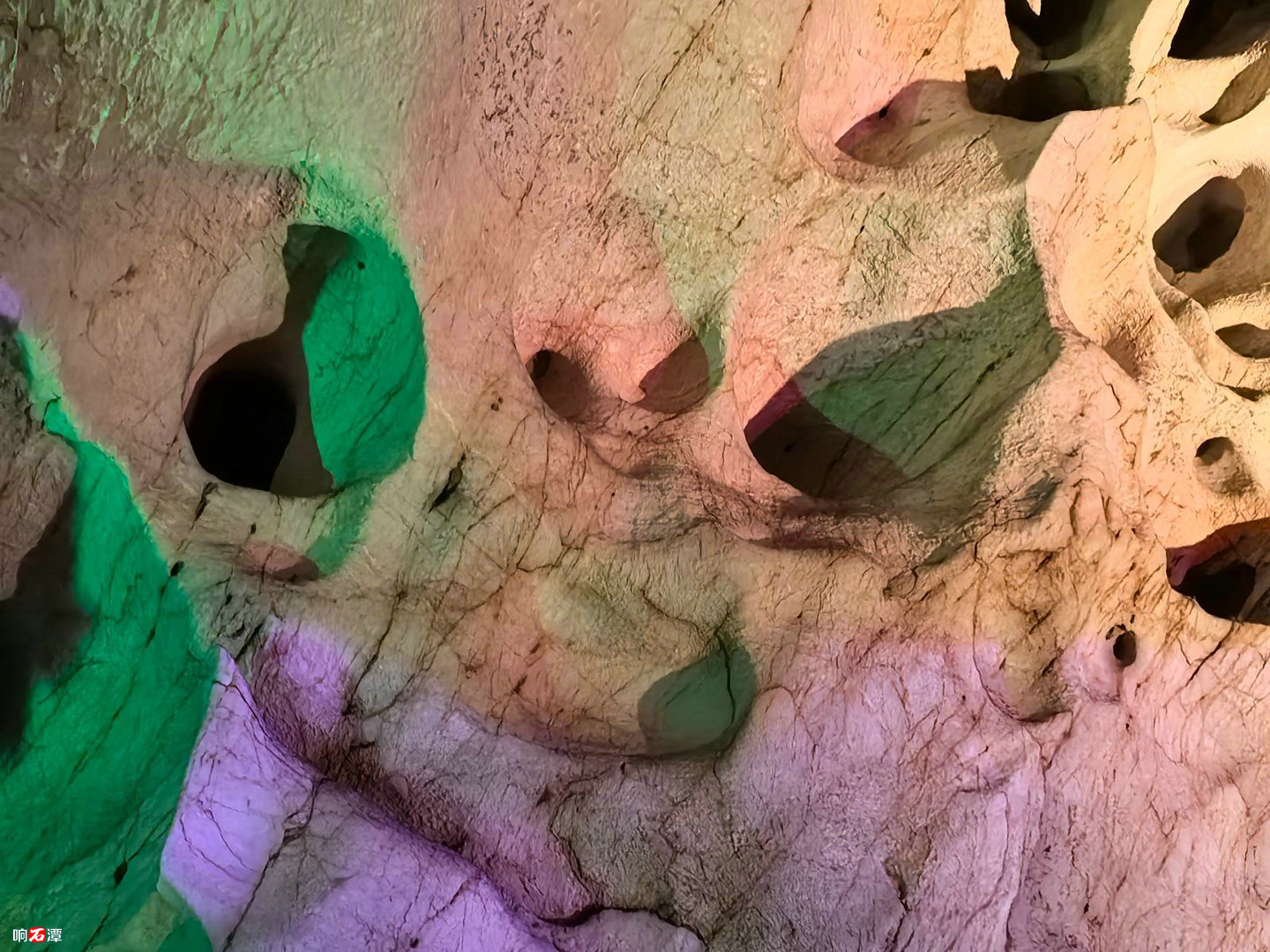
High on the mountain is a deep cave called Jinzhong Cave. After leaving it you have a long, long staircase to walk, but the stairs are not the point. The cave is a karst cave, and I was most interested in its ceiling. The stone overhead is pitted and uneven, full of hollows. It suddenly reminded me of the inside of a human skull. There was even a heart-shaped hollow. Perhaps I really had walked into the heart of the earth, or into its brain.
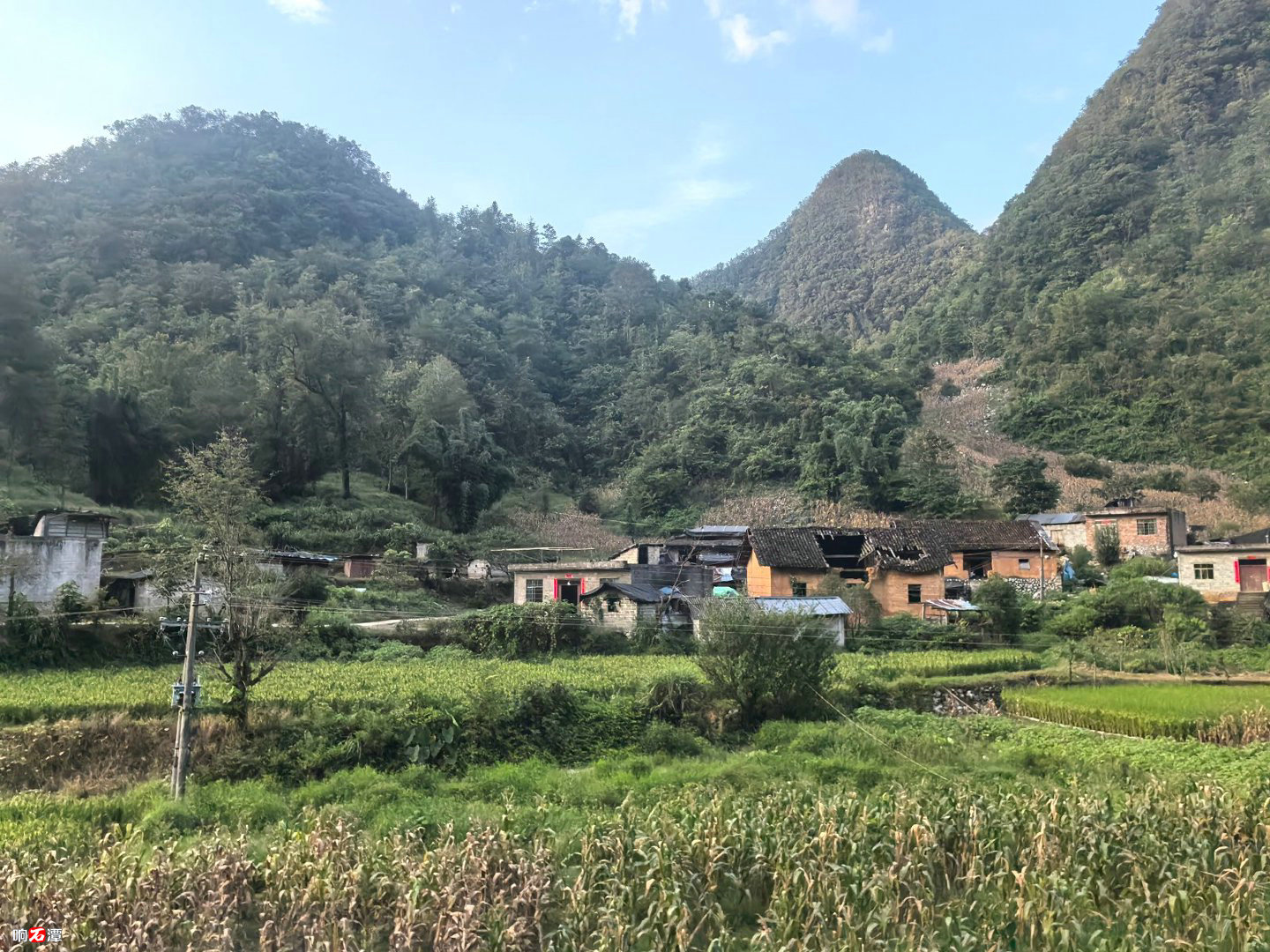
The water flows slowly, and there are still many visitors. Water in the mountains gives them spirit; villages in the mountains give them life. Some houses have collapsed and may be empty now. At some doorways, couplets are still pasted. However it looks, this is life. Xiaoqikong: flowing water, homes, a karst cave, life.