Go first took shape in 2007 and was publicly released in 2009 by Google. It is still a relatively young programming language, but its design goal has always been unusually practical: combine the development speed people appreciate in dynamic languages such as Python with the performance and safety associated with compiled languages like C and C++. That balance, along with simple deployment, strong support for concurrency, thoughtful language design, and solid runtime performance, is a big reason Go has become so widely used. A number of major open-source projects, including Docker and Kubernetes, are built with it.
For anyone getting started, the hardest part is often not finding material, but finding books that match your stage. Some are better for absolute beginners, some focus on grammar and semantics, and some become much more useful once you begin writing real services or web applications. The following ten books cover those different entry points.
1. The Way to Go / 《Go 入门指南》
This is an open-source book originally published in English as The Way to Go. Even though parts of it are now somewhat dated compared with current Go releases, it remains one of the more valuable foundational texts for beginners. The translated edition was created to make a strong introductory Go resource more accessible to Chinese-speaking learners, and the original author authorized that work and supported its open-source distribution.
The original author is Ivo Balbaert.
Available resources: - Reading edition: the-way-to-go_ZH_CN - eBook: https://www.ituring.com.cn/book/1205
2. 《Go语言101》 / Go 101
This open-source book digs deeply into Go syntax, semantics, and runtime-related topics, and it is presented as ready for Go 1.16. Its aim is not just to teach someone how to write Go, but to help Go programmers understand the language more thoroughly and more precisely. It also collects many of the details and corner cases that often confuse learners.
That makes it unusual among introductory material: it works for beginners, but it also remains useful for developers who already have some experience and want a stronger conceptual grasp of the language.
Author: 老貘
Available resources: - English edition: https://github.com/go101/go101 - eBook downloads: https://github.com/golang101/golang101/releases - Online reading: https://gfw.go101.org/article/101.html
3. 《Go语言趣学指南》
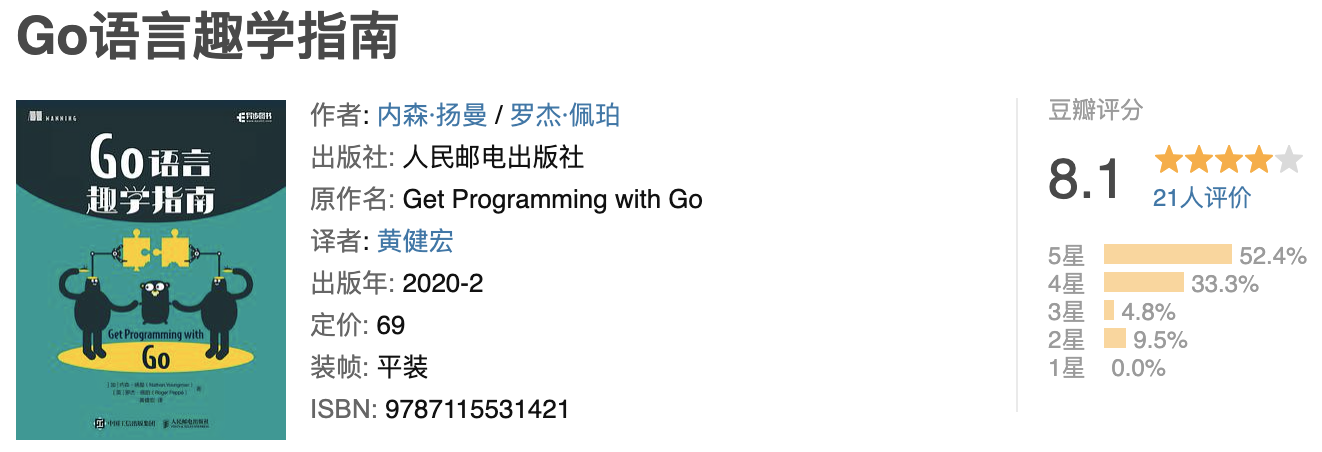
This book is written for newcomers to Go and introduces the essential knowledge step by step. One of its strengths is the way it uses lively, approachable examples instead of presenting the language as a dry list of rules. It also includes plenty of exercises, which helps reinforce what the reader has just learned.
Authors: - Nathan Youngman, a self-taught web developer and a long-term advocate of lifelong learning - Roger Peppé, a Go contributor who maintains open-source Go projects, runs a Go meetup in Newcastle, UK, and has worked on Go cloud infrastructure software - 黄健宏 (huangz), an IT technical author and translator
4. 《Go语言从入门到进阶实战》
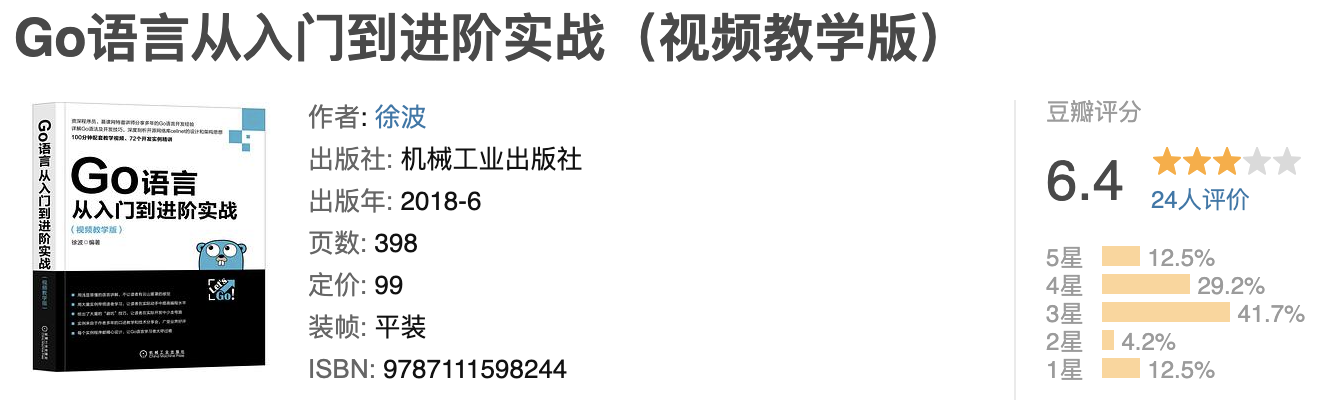
This book is organized around a “theory plus examples” approach. Drawing on extensive practical development experience, it gives a broad introduction to Go syntax and usage through a large number of examples. The overall design emphasizes ease of learning, ease of understanding, and ease of reference.
Because of that, it works both as a systematic introduction for beginners and as a quick way for experienced developers to fill gaps and strengthen their command of core syntax and common development techniques.
Author: - 徐波, a senior full-stack game developer with more than a decade in the game industry, an online instructor, and an open-source enthusiast
5. 《Go语言学习笔记》
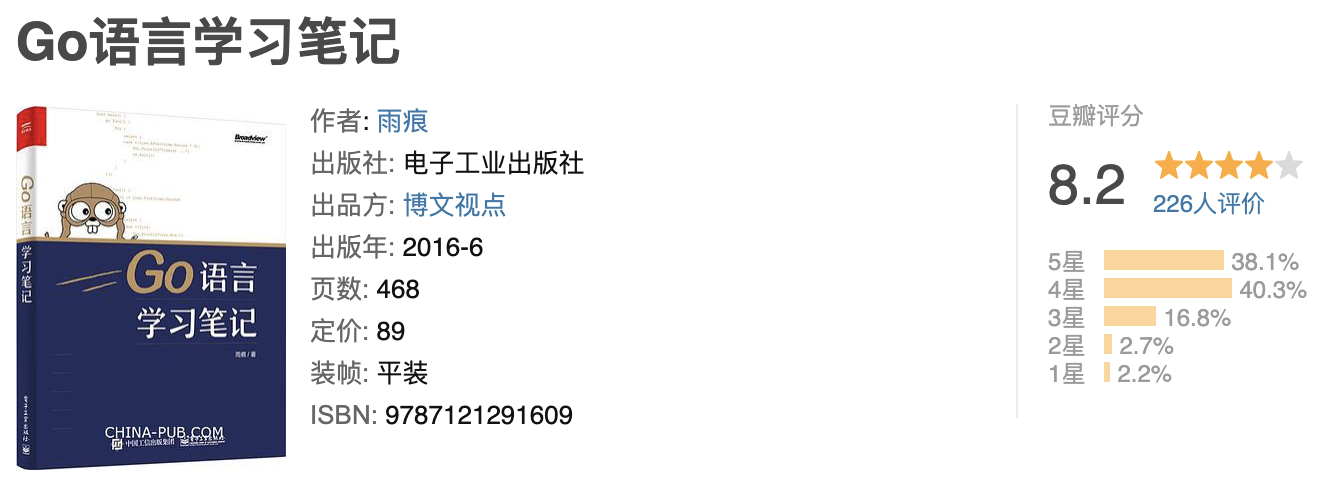
This book was gradually refined over more than four years. Its scope goes well beyond basic syntax, covering the language itself, the runtime, performance optimization, and the toolchain. That breadth makes it especially appealing to readers who want a resource they can continue using after they move past the beginner stage.
6. 《Go语言入门经典》
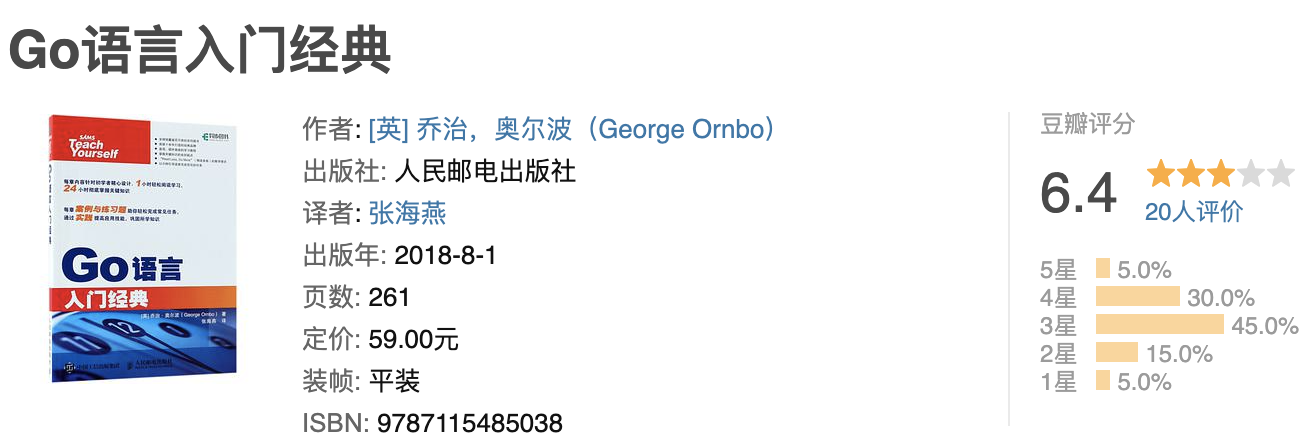
As the title suggests, this is aimed squarely at readers who want an entry-level Go book. It is suitable for those approaching the language for the first time and looking for a straightforward starting point.
7. 《Go语言编程》
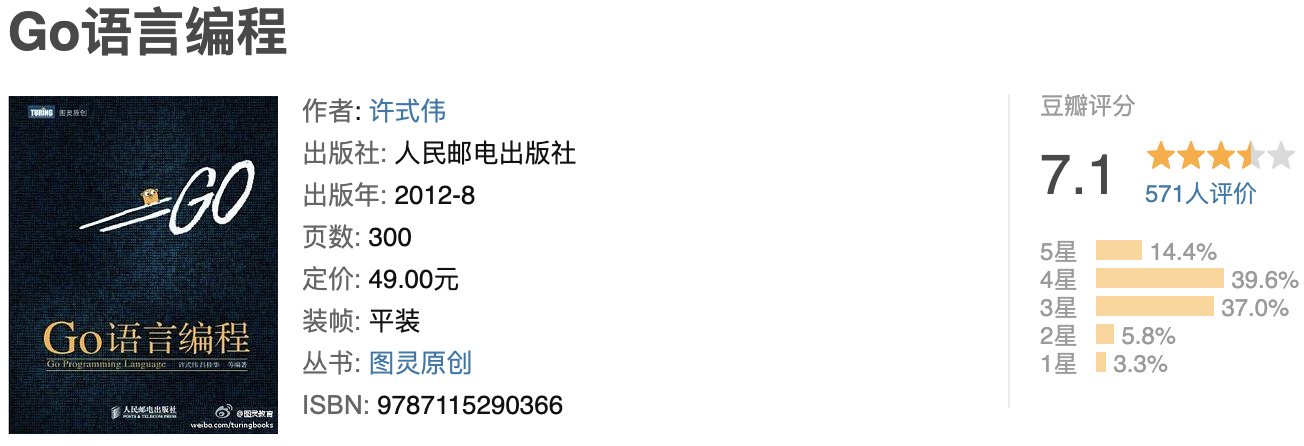
The writing here focuses on explaining Go’s language features, but the examples try to stay close to real development practice rather than relying on toy snippets with little practical meaning. That makes the book more grounded than many purely syntax-driven introductions.
Its topics include memory management such as heap and stack behavior, error handling, object-oriented programming ideas, and concurrent programming. The intended audience is broad: developers planning to use Go, especially those coming from C, C++, Java, or C#, though Python and PHP developers transitioning toward Go can also benefit.
Authors: - 许式伟, CEO of Qiniu Cloud Storage; previously a senior researcher at Shanda Innovation Institute, technical director at Kingsoft, and chief architect of WPS Office 2005 - 吕桂华, co-founder of Qiniu Cloud Storage; previously worked as an architect and department manager at companies including Kingsoft and Shanda Games, with experience in enterprise systems and large online game platforms
8. 《Go语言实战》 / Go in Action
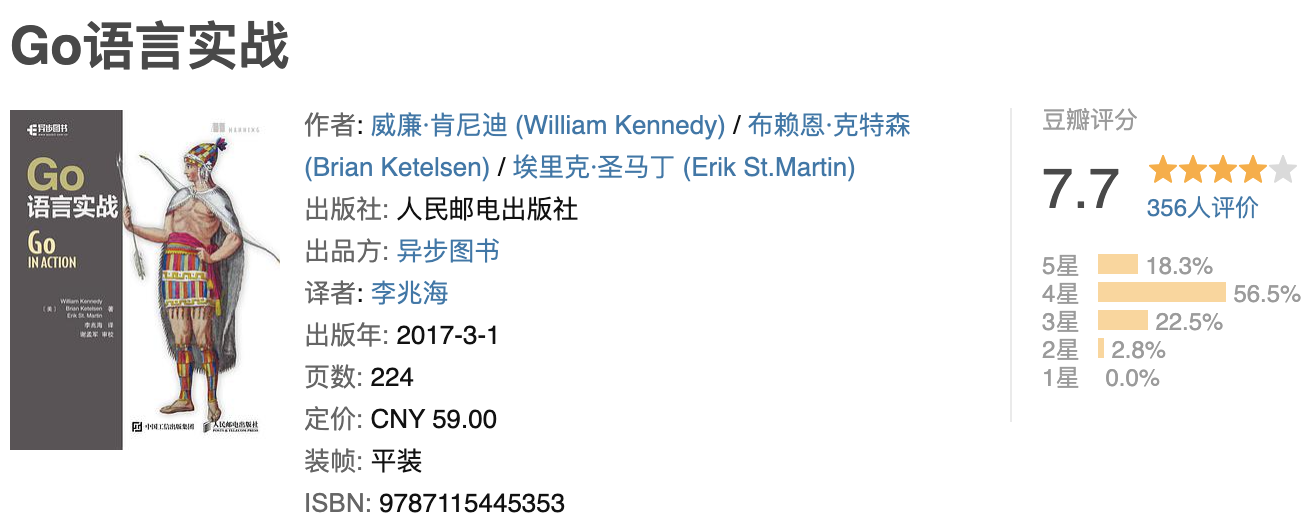
This book offers a focused, comprehensive, and idiomatic perspective on Go. It pays attention not only to language rules but also to implementation concerns. Topics include syntax, the type system, concurrency, channels, testing, and several other areas that matter in day-to-day Go programming.
Author: - William Kennedy, an experienced software developer and the author of GoingGo.Net
9. 《Go Web 编程》 / Go Web Programming
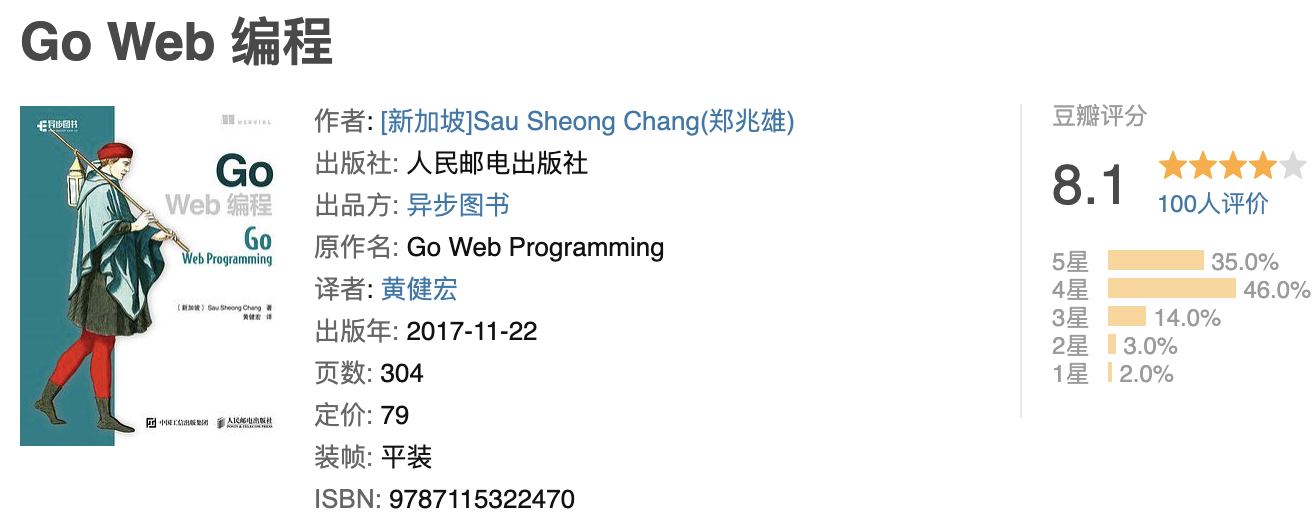
Originally published as Go Web Programming, this book teaches web development in Go by centering the discussion on a web forum example. Through that example, it explains how to build a Go web application using core components such as request handlers, multiplexers, template engines, and storage systems, and then how to extend that foundation into corresponding web services.
For learners who already know a little Go and want to see how the language fits into a complete web application, this kind of project-based structure is especially helpful.
Author: - 郑兆雄 (Sau Sheong Chang), currently Chief Digital Technology Officer at Singapore Power; previously a consumer engineering manager at PayPal and also worked at HP, Yahoo, and Garena
10. 《Go语言编程入门与实战技巧》
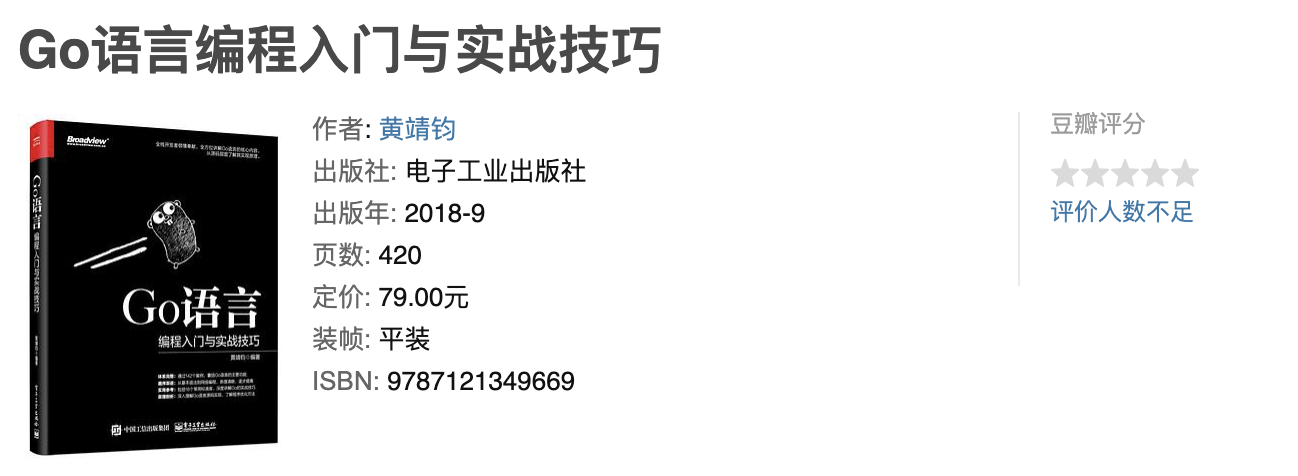
This book is suitable for newcomers interested in computer programming in general and Go programming in particular. It also fits programmers who want to grow in web development and see Go as a practical language for that path.
Author: - 黄靖钧, a full-stack developer who has used Go for web application development over a long period and has substantial hands-on experience with Go programming
If you are choosing where to start, the best pick depends on what you need most. A reader who wants a gentle introduction may do well with The Way to Go, Go语言趣学指南, or Go语言入门经典. Someone who wants to understand the language at a deeper level early on may prefer Go 101 or Go语言学习笔记. And if your goal is to move quickly toward practical development, especially web work or production-oriented programming, books such as Go语言编程, Go语言实战, and Go Web 编程 are likely to be more rewarding.