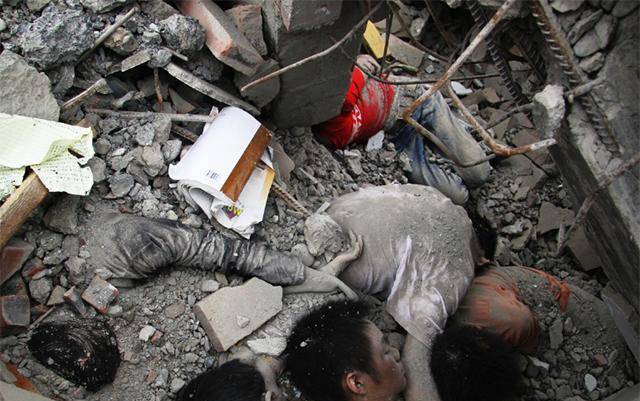
The May 12 earthquake is over, yet in another sense it is not over at all. For everyone who lived through that national catastrophe, its aftershock remains in the heart. The physical destruction was immediate and visible, but the wound it left in people’s minds keeps bleeding long after the ground has stopped shaking.
One evening, a television discussion brought this into sharp focus. A host and two psychological experts were talking about post-disaster intervention and the groups most in need of it. They identified three kinds of people.
The first were those directly injured by the disaster. The second were the rescue workers who entered the scene, saw the devastation with their own eyes, and carried the weight of what they had witnessed. The third were the people who saw the disaster unfold, the largest group of all. Their need for psychological support was no less real, because proximity to suffering can leave deep scars even when one is not physically buried in the ruins.
The conversation went into the details of psychological care after catastrophe. Much of the focus was on people in the disaster zone, and within that, special attention was given to children and adolescents. The program discussed methods, practical approaches, and the feasibility of helping young survivors process trauma. On the screen behind them were images of children and teenagers receiving counseling and emotional support.
That response felt not only right, but urgently necessary. After a disaster, what needs rebuilding is not just roads, bridges, houses, and dams. The human spirit also has to be restored. And among all those in need, children deserve the greatest care.
This has always seemed especially important. In the face of disaster, people showed courage, endurance, and extraordinary resolve. But bravery should not blind us to the spiritual shock and psychological damage left behind. While many were still thinking through that problem, reports were already showing that mental health support for people in the affected areas was being organized and delivered at remarkable speed. That quick reaction from both society and the media was deeply reassuring.
In an age so often preoccupied with money and material concerns, it is no small thing to see such attention paid to the inner life. It speaks to a growing maturity in society. On television, when children and adults in the disaster areas began to show the faint return of a smile under this care, it was hard not to be moved. We may be powerless to stop an earthquake, but we are not powerless in what we do afterward. To help rescue people from emotional ruin as well as physical ruin requires wisdom, compassion, and courage.
No one needs to be told that rebuilding devastated communities will be long and difficult. But under that burden, can we hold on to the conviction that inner reconstruction matters too? Can we persist in it with the same stubborn determination used to clear rubble and raise walls again?
When disaster destroys a home, the most urgent needs are obvious: food, shelter, roads, bridges, water systems, all the labor that must be repeated day after day to make life livable again. In such circumstances, it is easy to have little energy left to care for the mind, and especially for the hearts of the young. Children in the disaster zone may survive the collapse only to live on in silence, keeping company with the shadow of what they lost. Teenagers may hide their smiles behind gloom, carrying not only grief for dead family members but also a lasting loneliness.
Long-term emotional repression shapes a person’s character with undeniable force. A child may be lucky enough to escape the earthquake itself, yet later fall into an abyss of the spirit. If that happens, can we really say reconstruction has succeeded?
Anything worth doing requires persistence. The intelligence and courage shown in the moment of disaster were real. The harder question is whether that same strength can endure later, when material life gradually improves and urgency fades. Immediate psychological intervention is good and necessary, but being timely is not the same as being healed. Early treatment is not the same as sustained care.
What remains ahead is still a heavy responsibility. After disaster, the task is never only to restore material homes. We must also rebuild the inner space in which people can live.