I went to Beijing on Wednesday and came back the same day, for a look at health management for older people and children. The work itself does not need describing; what I brought back was more than enough. Beijing's day breaks early—roughly an hour ahead of Chengdu. The team was to leave at eight, so I went out at six and had two hours to wander nearby. It felt natural.
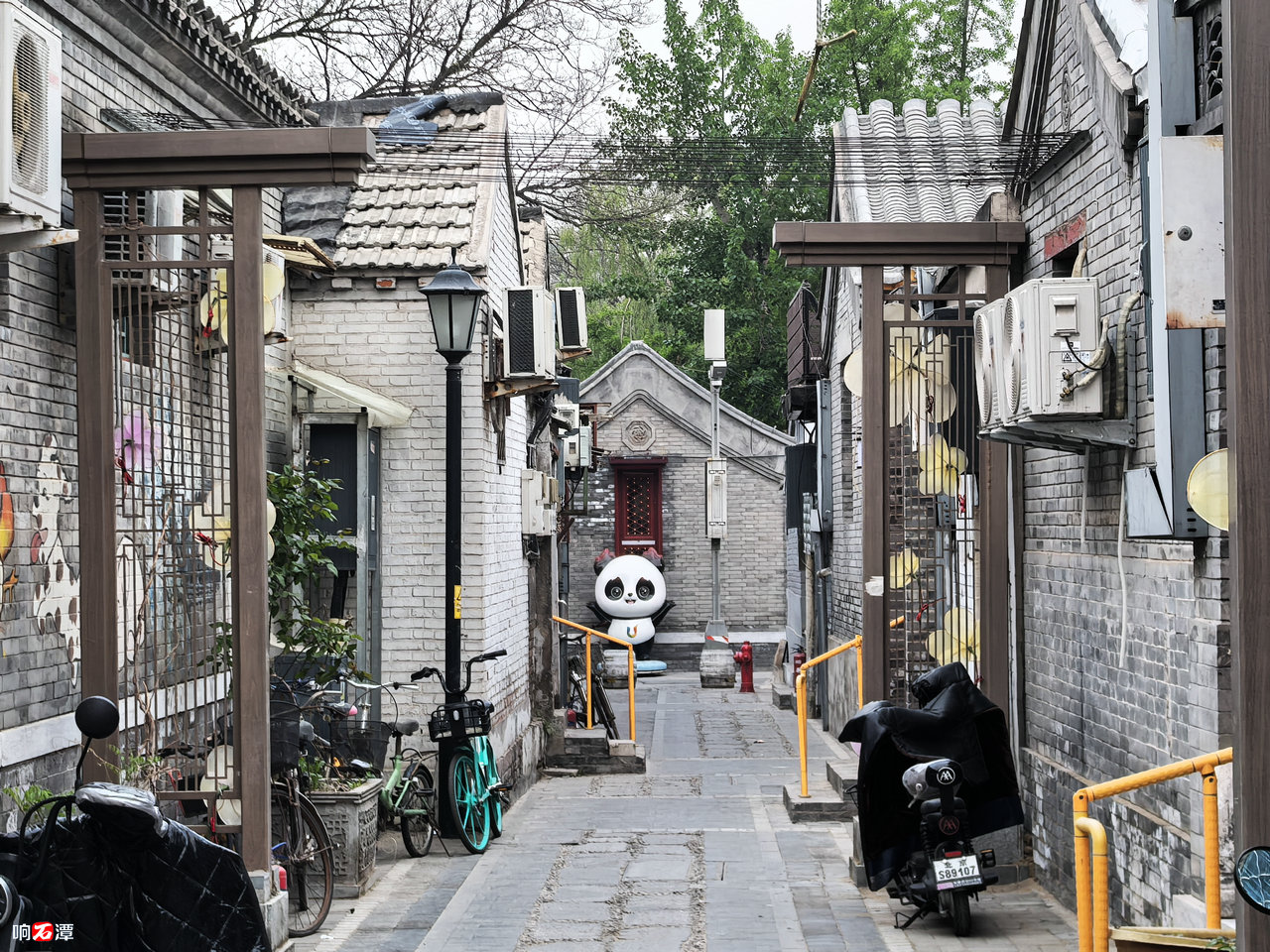
Not far from the hotel was an interchange, and there, of all things, was Rongbao—the panda mascot from the Chengdu Universiade. Seeing a bit of Chengdu in Beijing felt warmly familiar.
The more hutongs I walked, the less the first charm lasted. They began to feel cramped, even a little oppressive. Fine as a sight; not as a place to live.
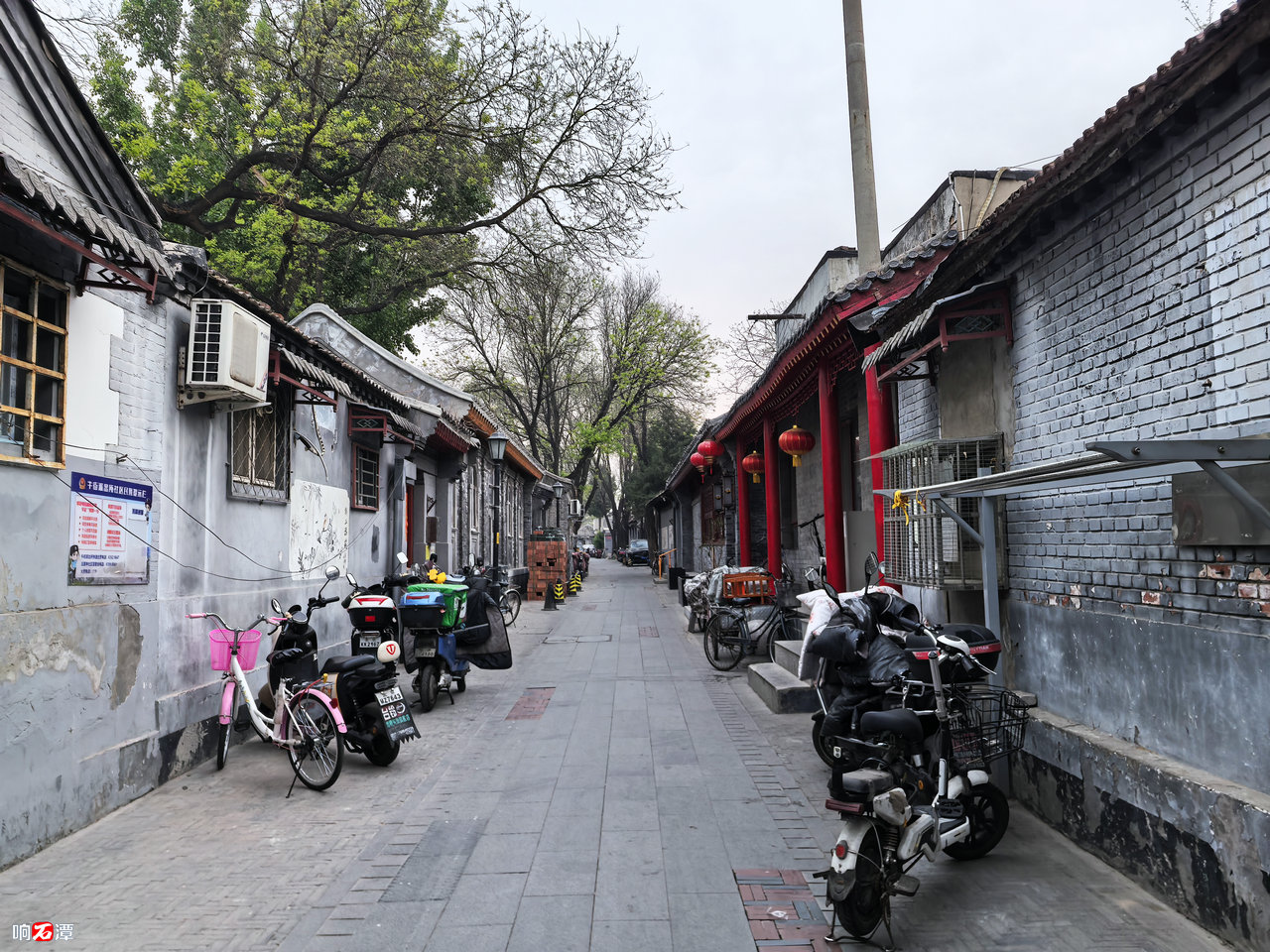
At a street corner stood a little wizard—or was it a dwarf? White beard to the ground, tall red hat, an oil lamp in one hand and a small shovel in the other. Off to dig for treasure, or to rob a grave? He gave the corner a mysterious air. Not every street has to be the same; I was glad to see him.
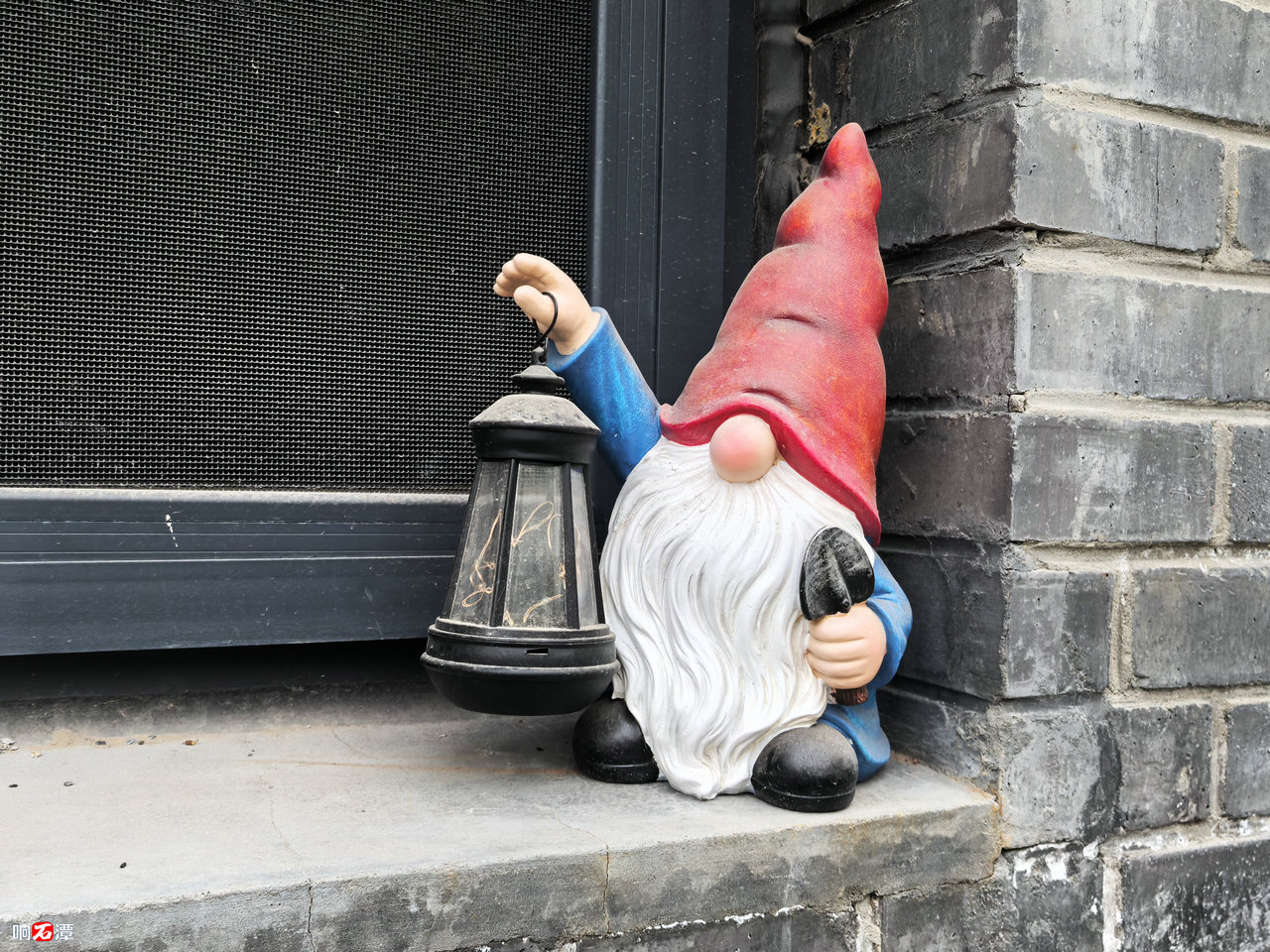
Then Bing Dwen Dwen. Next to my own little mascot, this one was enormous. Three years after the Winter Olympics, it still looked friendly; at the time it had been almost impossible to get one. Those big, cute eyes made me smile.
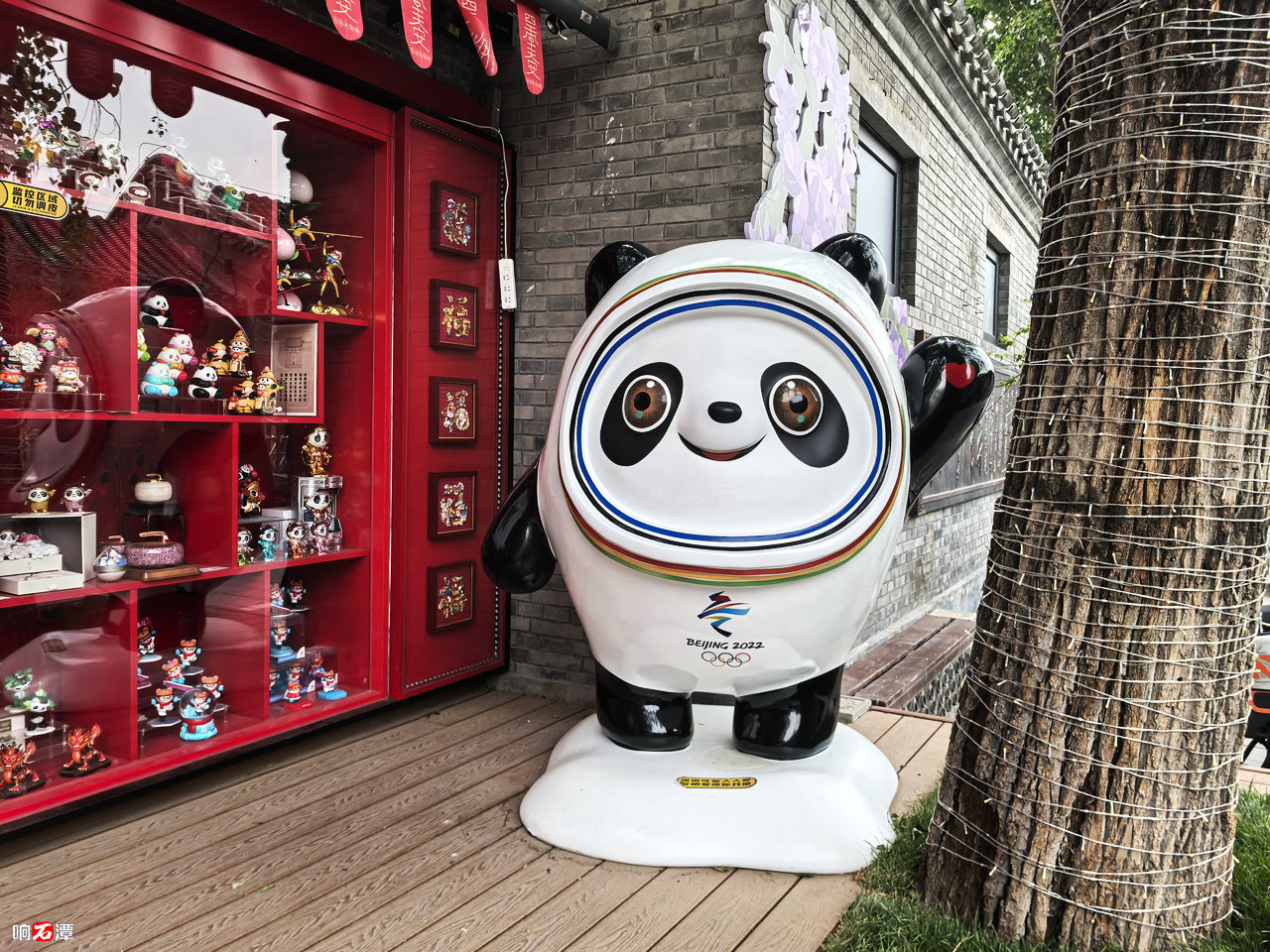
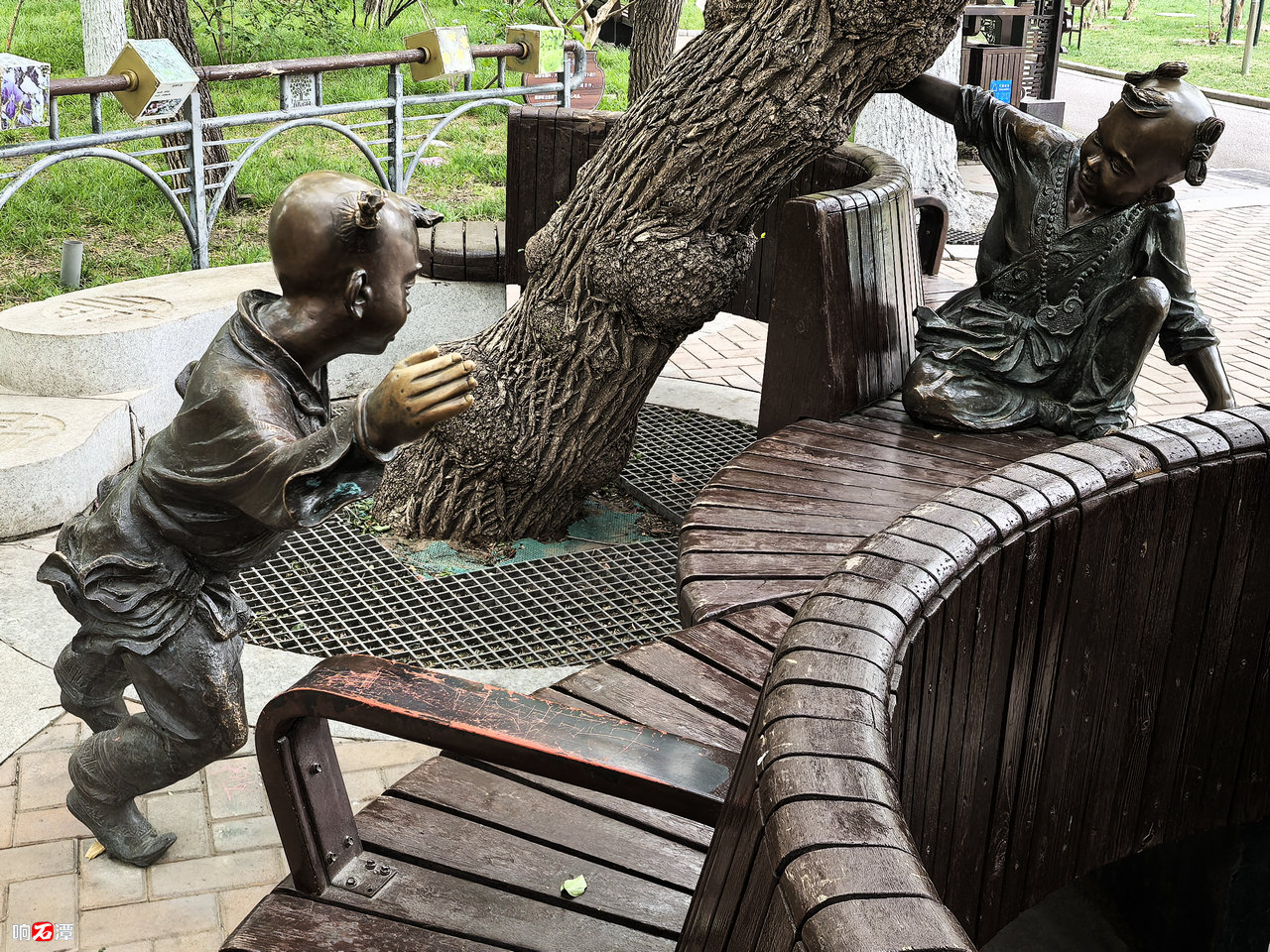
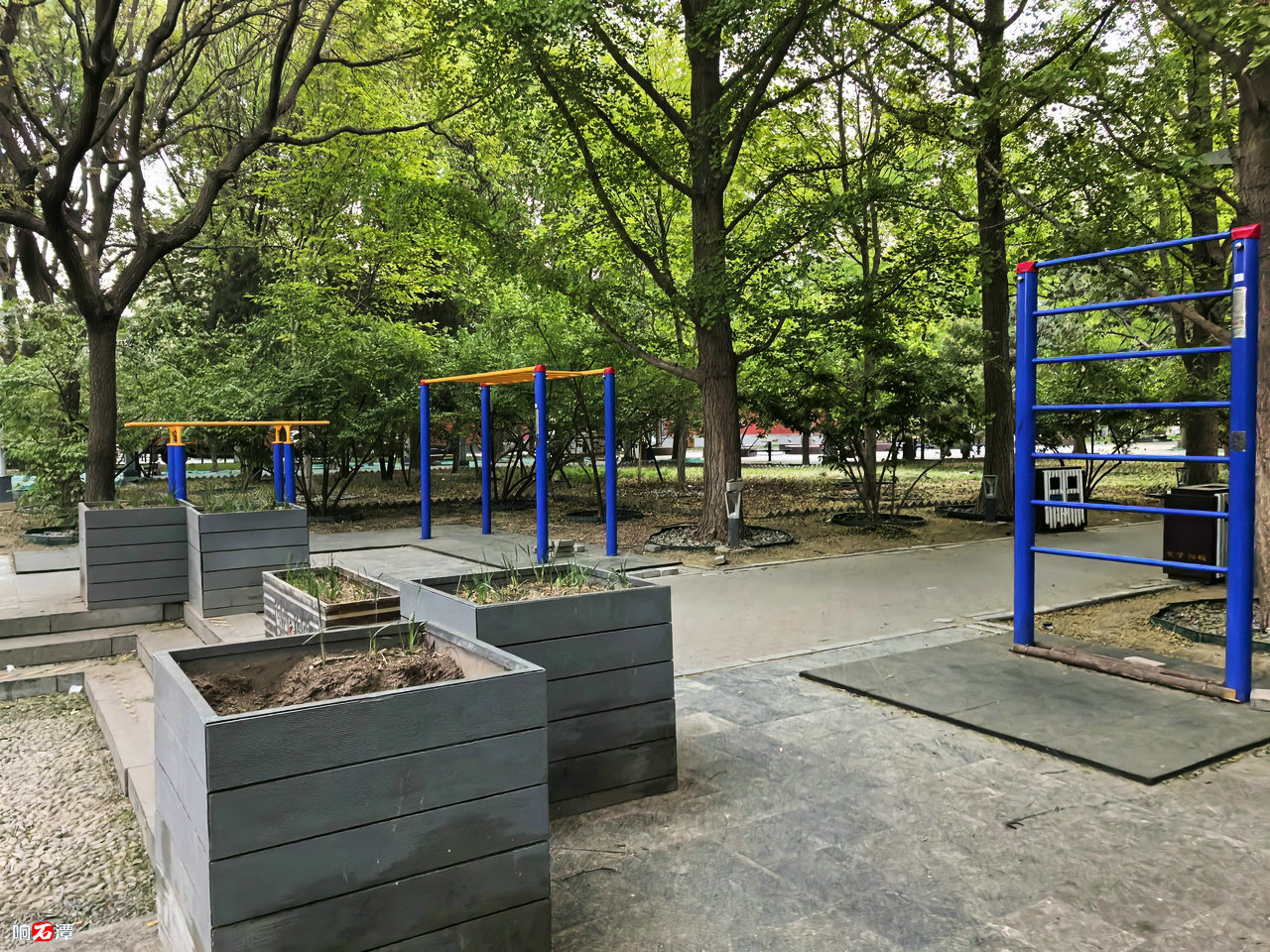
Further on was a park. At half past six, morning exercisers were running, practicing martial arts, stretching their legs. Under a tree two children were playing, dressed almost like figures from an old painting—maybe a pair of fairy children. The park was full of blossoms, peach or crabapple I can never tell, but lovely either way.
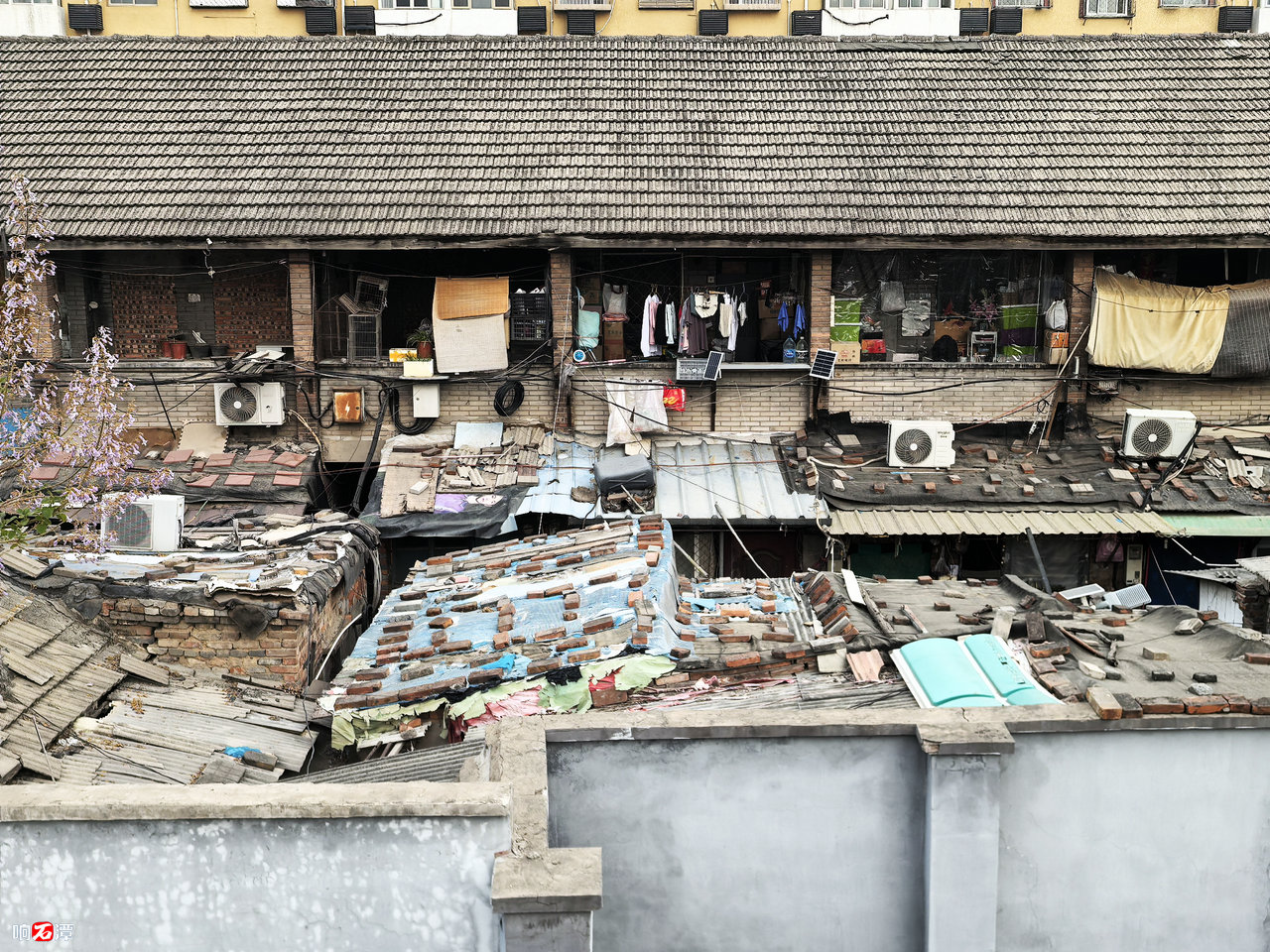
From a pedestrian overpass I saw high-rises standing beside low tile-roofed houses. The roofs were patched with asbestos sheeting and plastic, held down by bricks as waterproofing. Shabby, yes, but probably not cheap. I wondered who lived in them.
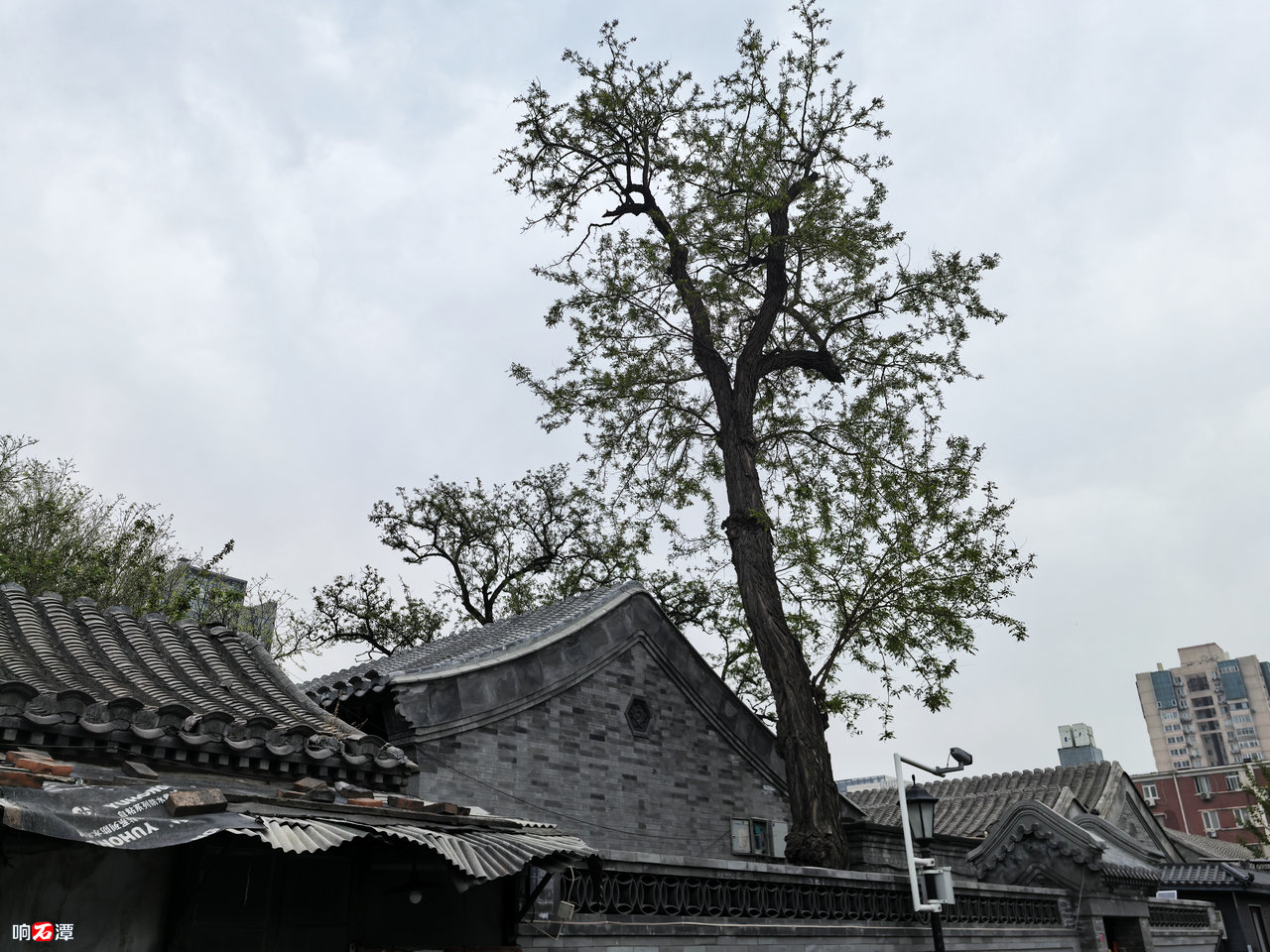
In the hutong I passed a tall tree. I liked its poised, unforced way of growing, as if all its energy were gathered in the present. It rises with the wind, can take square or round shapes, follows its own nature. Maybe it is a happy tree. Or better, no need to call it happy—it is simply at ease.
Later I walked past a row of trees just breaking into leaf. That is what spring looks like: full of life. Flowers open, wind hums low, crickets sing clearly—all following an inner call, with no special reason.
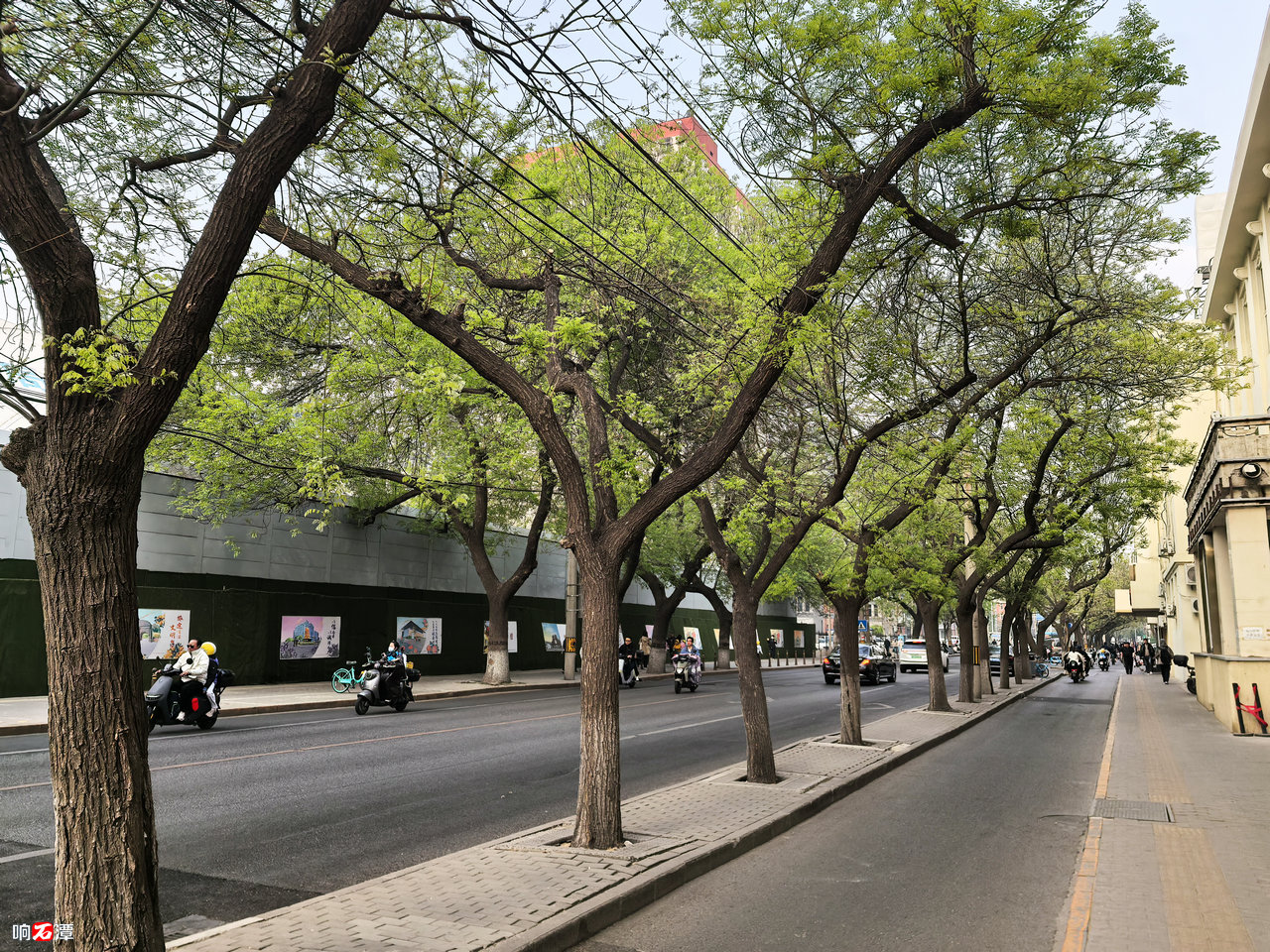
Trees, and more trees. Natural, vigorous, able to bend and stretch, hard and soft at once. Beijing used to feel strange to me; later it became familiar; now it even gives me a small sense of home. As the Chan master Shenzhao Benru put it: Everywhere one meets the road home; every place reaches the old hometown. Things are already here—why wait to think them over?
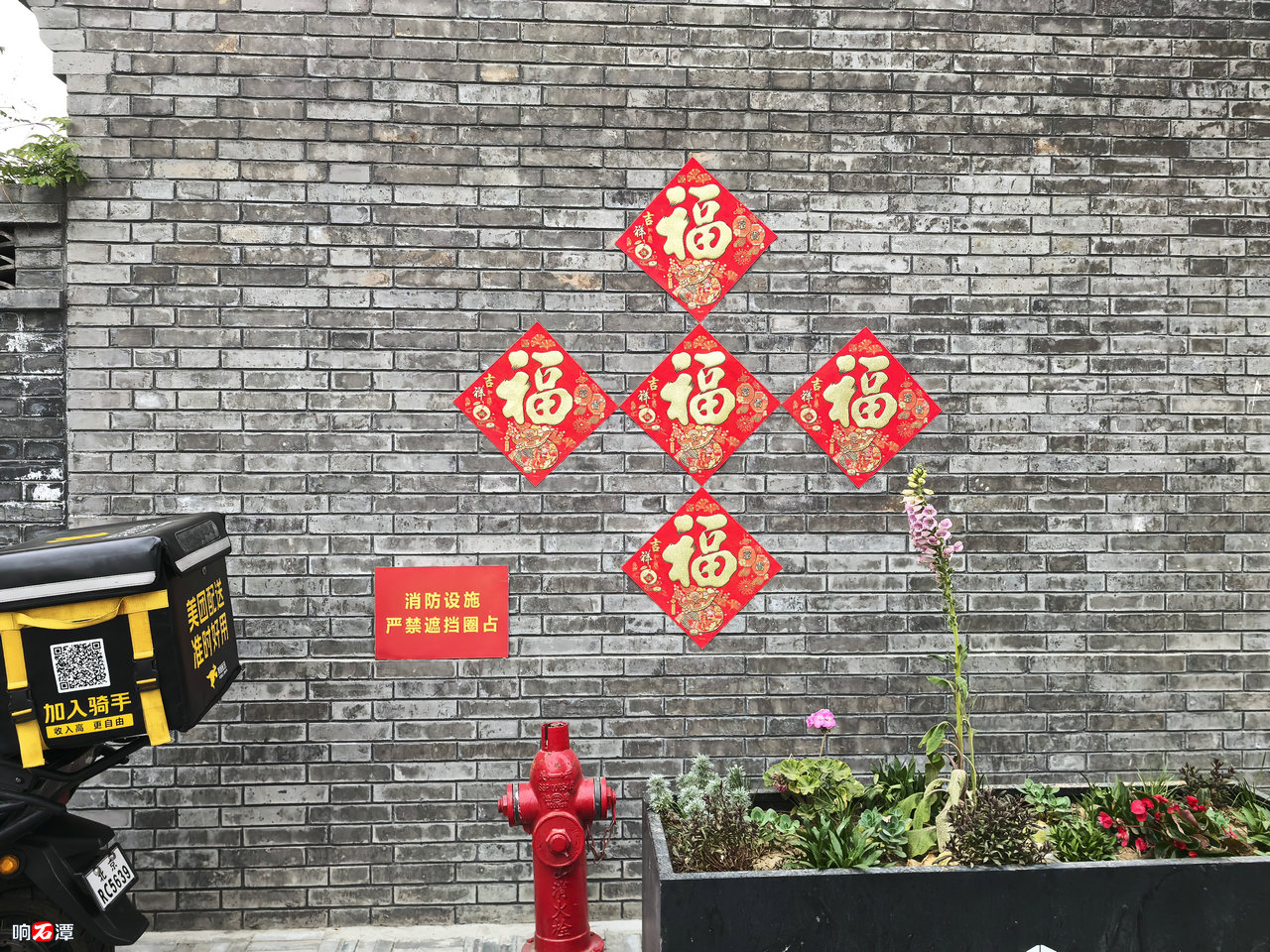
On one wall were five fu characters—the character for blessings—five blessings arriving together. Maybe the pursuit of happiness is itself the happiest part. We come into the world with nothing and leave with nothing; we cannot carry anything away. Better, then, to enjoy the process of seeking whatever we seek, so that this trip through the world is not wasted.
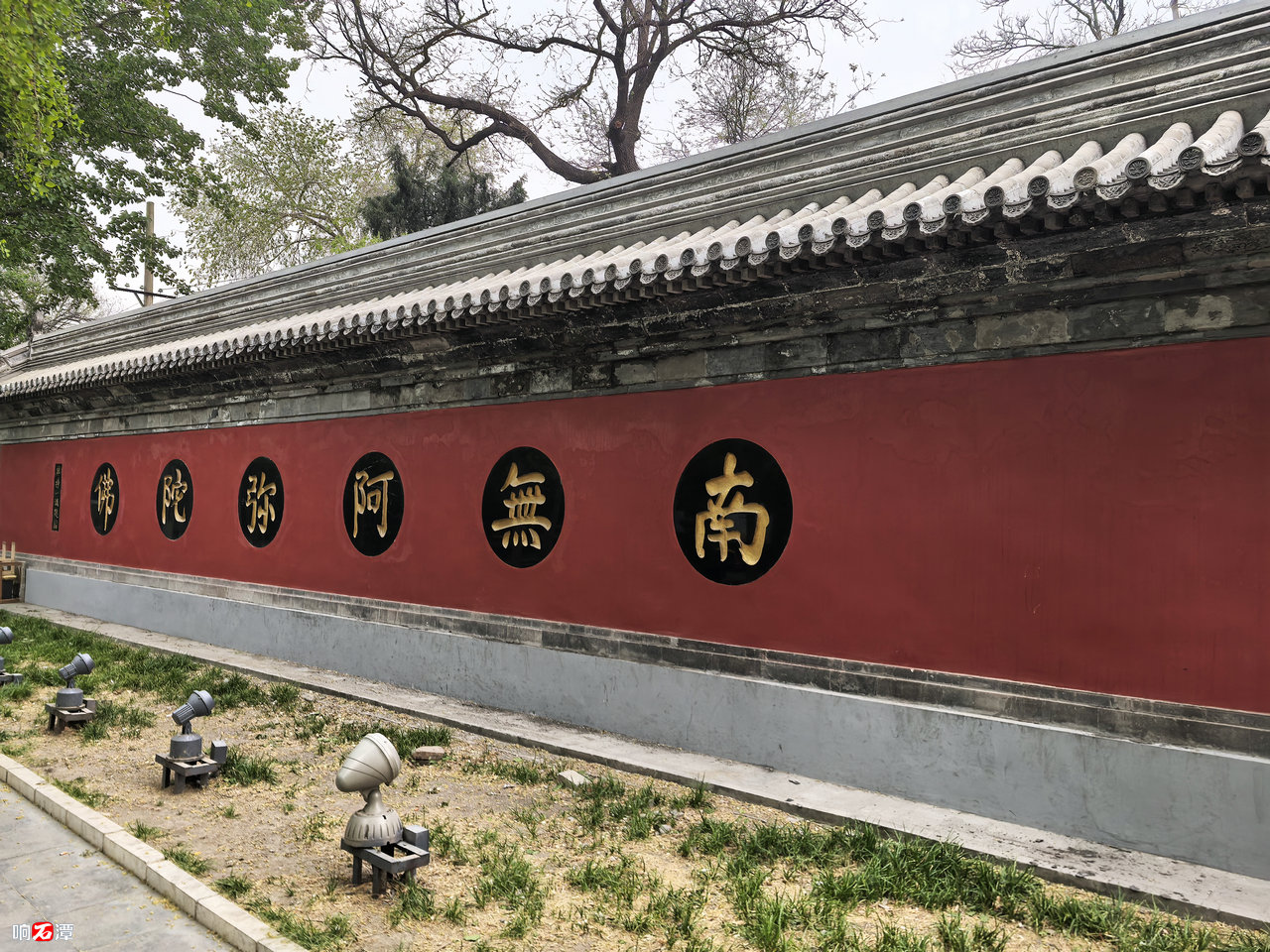
I came upon a temple, with Namo Amitabha written over the entrance. In the early morning, with few people around, it felt suddenly quiet and free. Everything in the world is at leisure already; it is people who make the noise and busyness. Why not watch the flowers bloom and fall before the courtyard, and follow the clouds as they roll and unroll in the sky?
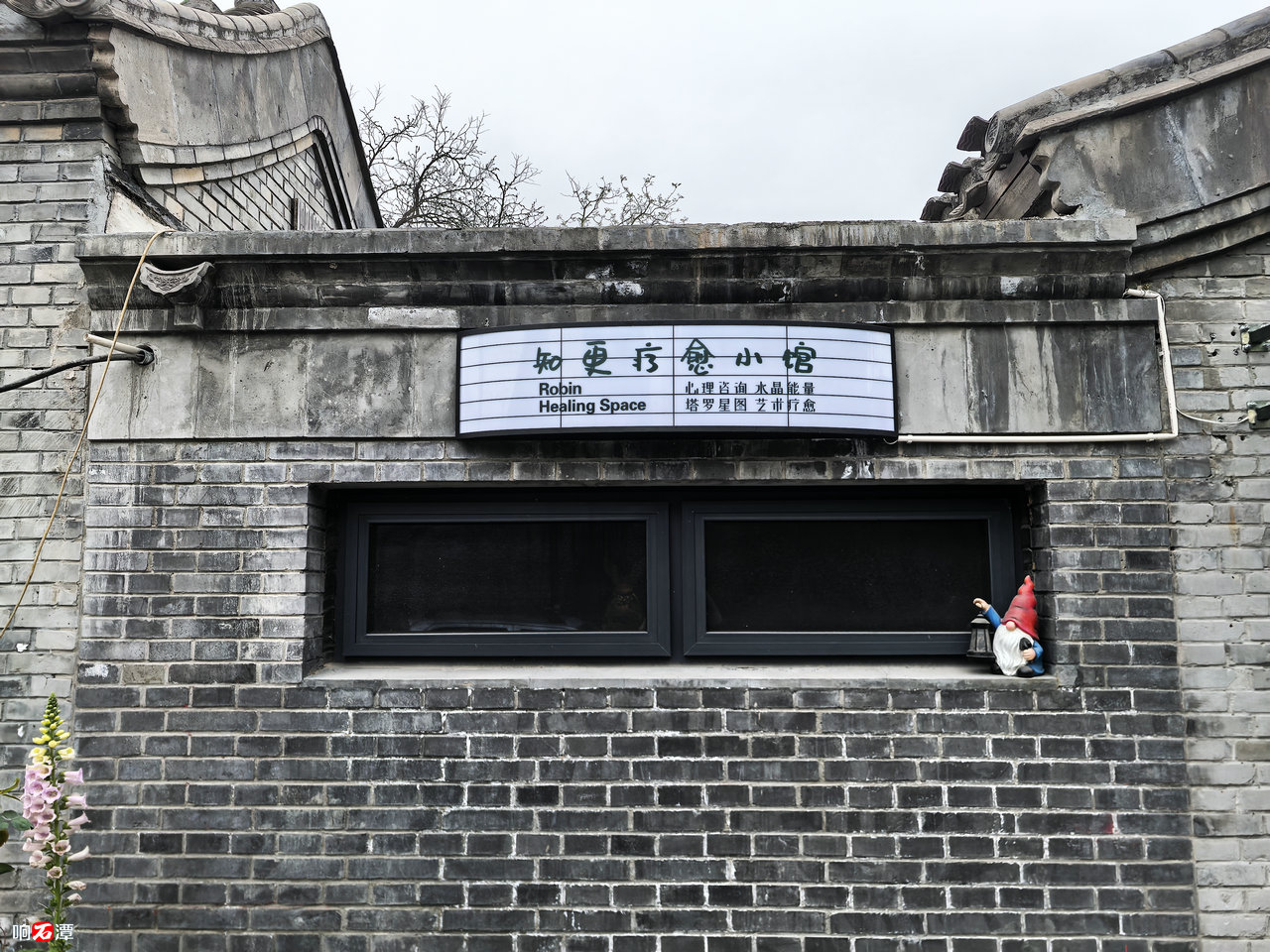
Look—the little dwarf's home was right here: a Robin Healing Studio, offering psychological counseling, crystal energy, tarot charts, and art therapy. I kept walking, steady and comfortable, paying attention to each step, finding the greatest freedom and ease within time's constraints.
Too often we rush, and the scenery by the road goes unnoticed. Everyone wants to walk singing; most people walk worried. Master Yicheng said:
The human heart is simple to begin with, without so many burdens and tricks. It is only because we stay too long in society that we take on colors that are not our own. To clarify the mind is to shake off those impure colors, wash away the lead, and find the original self. To see one's nature is, amid the confusion of ignorance, to draw back the gaze that keeps going outward, turn it toward oneself, and awaken to the unpolluted nature at the deepest center.