The two-part Healing Camp interview with Lee Byung-hun lasts two hours and fifty minutes. That is not a talk show; it is a minor expedition. SBS’s format is simple—three hosts, one guest, a loose conversation about a life—and its tone is unusually gentle for Korean variety, with jokes slipped in without wrecking the mood. In this case the guest did most of the work. Lee Byung-hun, who had rarely done this kind of long-form variety, seemed to have decided to open every drawer at once.

He began with two small legends. The donut endorsement did not continue because he ate too many free donuts—or so the joke goes; he denies it. A prop watch was given to him by the production, then needed back, and he had lost it at home. He ended up paying seven million won in compensation.
He talked about arm wrestling for ten minutes—and was still talking about it more than a decade later. As a kid he had no clear goal or dream; arm wrestling may have felt like the one thing he could offer.
He hated his smile in middle school. He was nicknamed for it, and he explained in detail why his upper lip looked wrong to him. Later, when he became an actor, a photographer told him to show his teeth; it made him angry. There are people who never hated their face as teenagers, and people who cannot imagine not hating it. The line between them is absolute.
With total seriousness he said he had once been rumored to date Kim Min-hee and Yoon Eun-hye, both from the same agency. The hosts reacted as if he had admitted to time travel.
He also talked about his parents. His mother used to beat him when he got into trouble, and he could laugh while telling it; still, the section is hard to sit through. His father was a huge influence. His death was sudden and traumatic: Lee made the decision to remove the oxygen mask, spent the last time when his father still had vital signs, and said the final words. He was not yet thirty. Later, living with his mother, he kept as many as twenty-seven dogs at once. It is hard not to hear grief in that number.
Then came the debt-repayment stories. He tried to make them funny, laughing about the commercials he had taken, but the studio—usually a professional laugh track—could not laugh. He kept adding jokes to keep the air from freezing. The effort was visible.
When the debt was finally cleared and things looked stable, depression arrived. He described the world as narrow as a bathroom. ‘Every moment was painful. Every moment.’ Panic disorder came later. The first attack was on a plane to the United States: he could not breathe and thought about asking to get off in Japan. Eventually he slept nine hours on the tray table.
The part of the first episode that stays longest is the humiliation. On his first TV drama, the director criticized him and made him repeat a sentence every day: ‘This is my debut, and this is my retirement.’ Lee saw a senior actor buy drinks for the crew and thought the director disliked him because he had not done the same. He asked his family for money, bought drinks, and the director refused twice: ‘Why would I drink yours?’ Twenty years later he asked the director why he had said that on a show. The director answered that he had been sincere—he really had wanted Lee to quit acting. The people who humiliate others often do it without thinking; the people humiliated carry it for decades.

The second episode turns into a record of an Asian actor trying to get through Hollywood. G.I. Joe: Retaliation gives him a mask, a body, and very little face; for long stretches he is a handsome Korean import placed in the frame to be looked at. He trained to the peak of his career for it—kicking, eating chicken breast, building a body—and the result was a role that mostly required him to be a beautiful lamp. ‘After filming I thought everyone would know me,’ he said. ‘No one did, haha.’
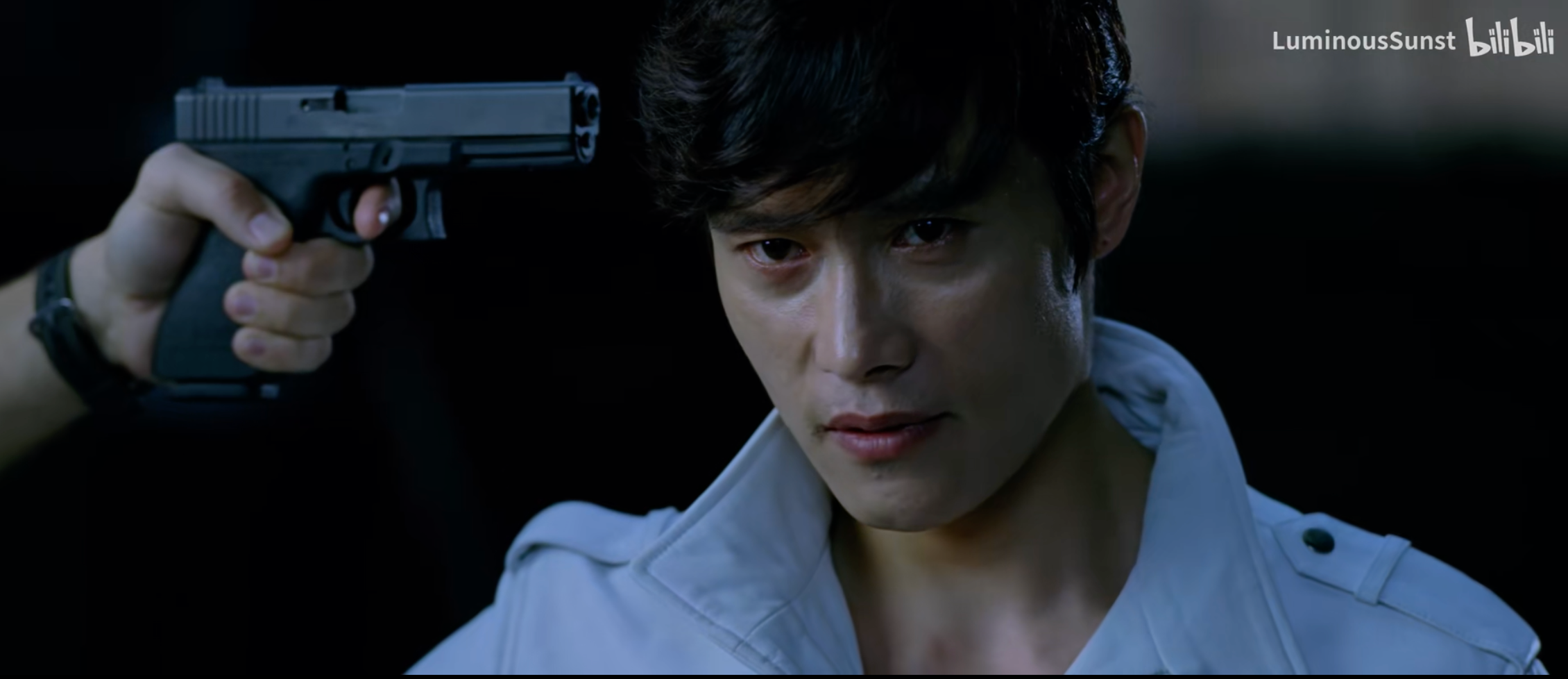
On G.I. Joe he was the only Asian actor. The first script read was tense; he spoke little and answered only what was necessary. People asked if he was a prince from the East. He took medication that night. After Storm Shadow, people asked if he was gay. Even hosts on domestic shows had heard. His explanation: his hair was down and his body was smaller then. Foreign productions have a way of turning Asian men into toys.
A decade of building that body meant nothing to the foreign audience; a Netflix bromance would have done more.
When he was cast, his agent sent six films and a video of a Tokyo Dome fan meeting with forty thousand people. The director did not watch the films, only the video. He was chosen because he could sell tickets. That is the sort of detail that makes a career look less like art and more like a market.
On set he was not treated as an actor. When he tried to put emotion into an action scene, people praised him as a movie star; the crew seemed to see him as an oriental martial artist. This was the man who had done JSA and A Bittersweet Life, at his softest and most interesting. In Hollywood he was a genre component.
On his first night in the US, the makeup test left only his eyes visible. He thought about refusing the role, even if it meant kneeling. He could not sleep, wondering if the path was right. He decided to work as a newcomer. He was treated like one: a rookie makeup artist, no chair on set, nine hours of waiting, then being told there was no scene for him today—go home. He only wished the tone had been a little more respectful. In Korea he had been a lead; here he was an extra with a passport.
In Japan, a co-star said he was famous there. He worried that no fans would come, or fewer than the Hollywood actors’. At the airport it was Beatles-level; ninety-five percent of the crowd was there for him. The other actors were stunned. He smiled like a child who had been favored.
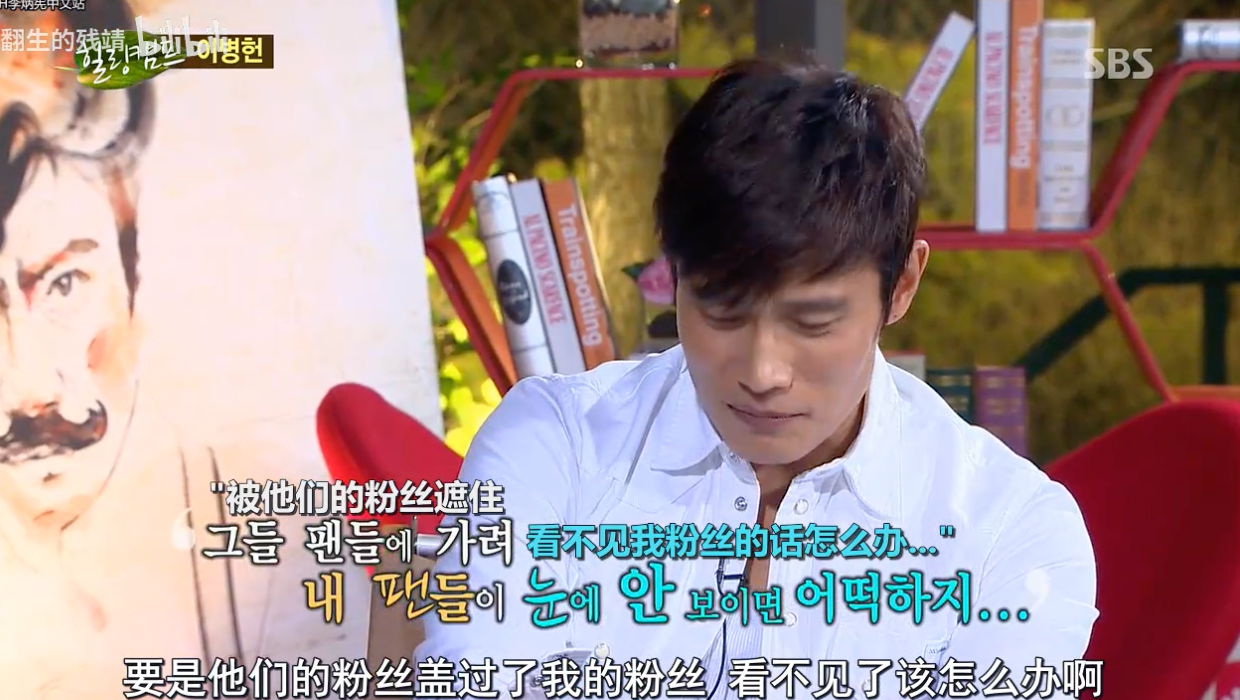
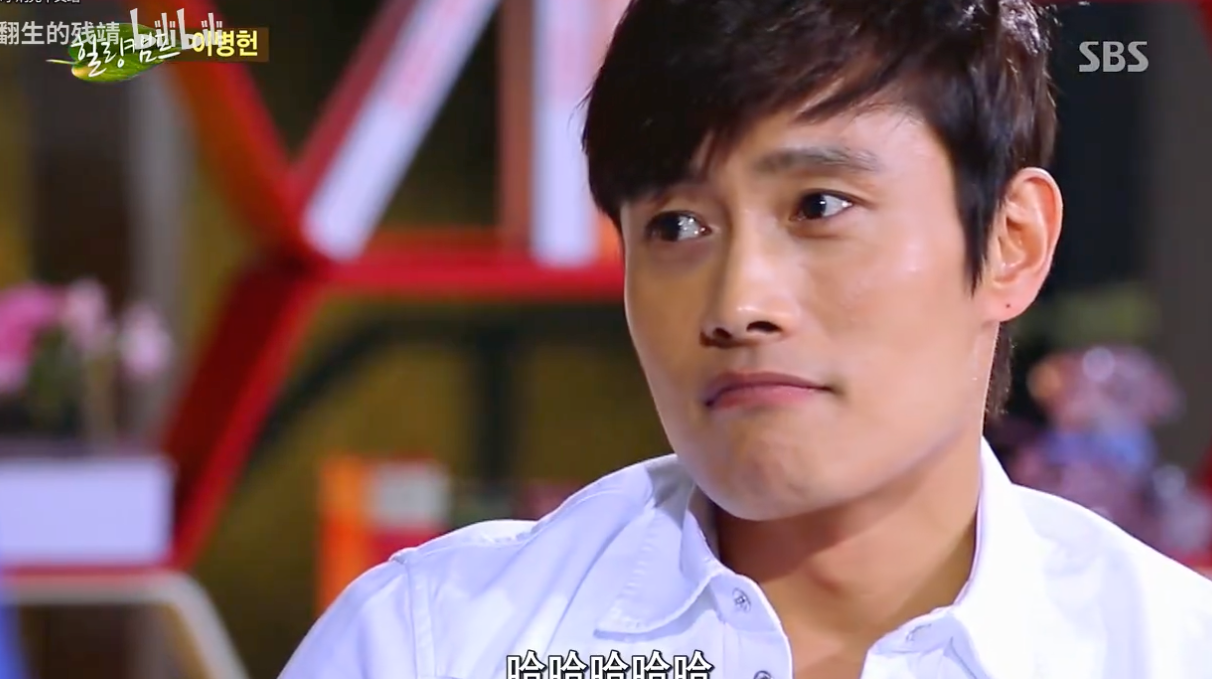
For Red 2 he heard the Asian role was being considered for Jackie Chan, Jet Li, Chow Yun-fat—and him. It is hard to imagine Lee Byung-hun and Chow Yun-fat on the same shortlist, but there it was.
He talked about Bruce Willis with a 🥺 face. Willis was respectful: he shook hands with others, but bowed Korean-style to Lee at their first meeting and afterward. On set, when Willis suggested that Lee’s two-handed gun pose deserved a close-up, Lee got a two-hour close-up. Willis asked if he was okay and winked.
The production needed a photo of Lee. He gave one of himself as a child with his father. In an airplane scene, Willis was supposed to pick up one of two photos. When he learned which one was Lee’s, he chose it, asked the father’s name and spelling, and later had it added to the end credits. For Lee, that moment made the film’s success irrelevant: it was as if his father had seen him in Hollywood, and as if he had connected his father to the Hollywood films they had watched together. He was still talking about it more than ten years later.
At an Oscar party, no photographer knew him. Someone had to hold a sign with his name behind him. When he walked in, photographers changed memory cards and took a few casual shots. He was embarrassed and wanted to leave. Then a staff member recognized him and recited his films; after that he could walk through the room. Later Bruce Willis saw him and gave him a huge hug.
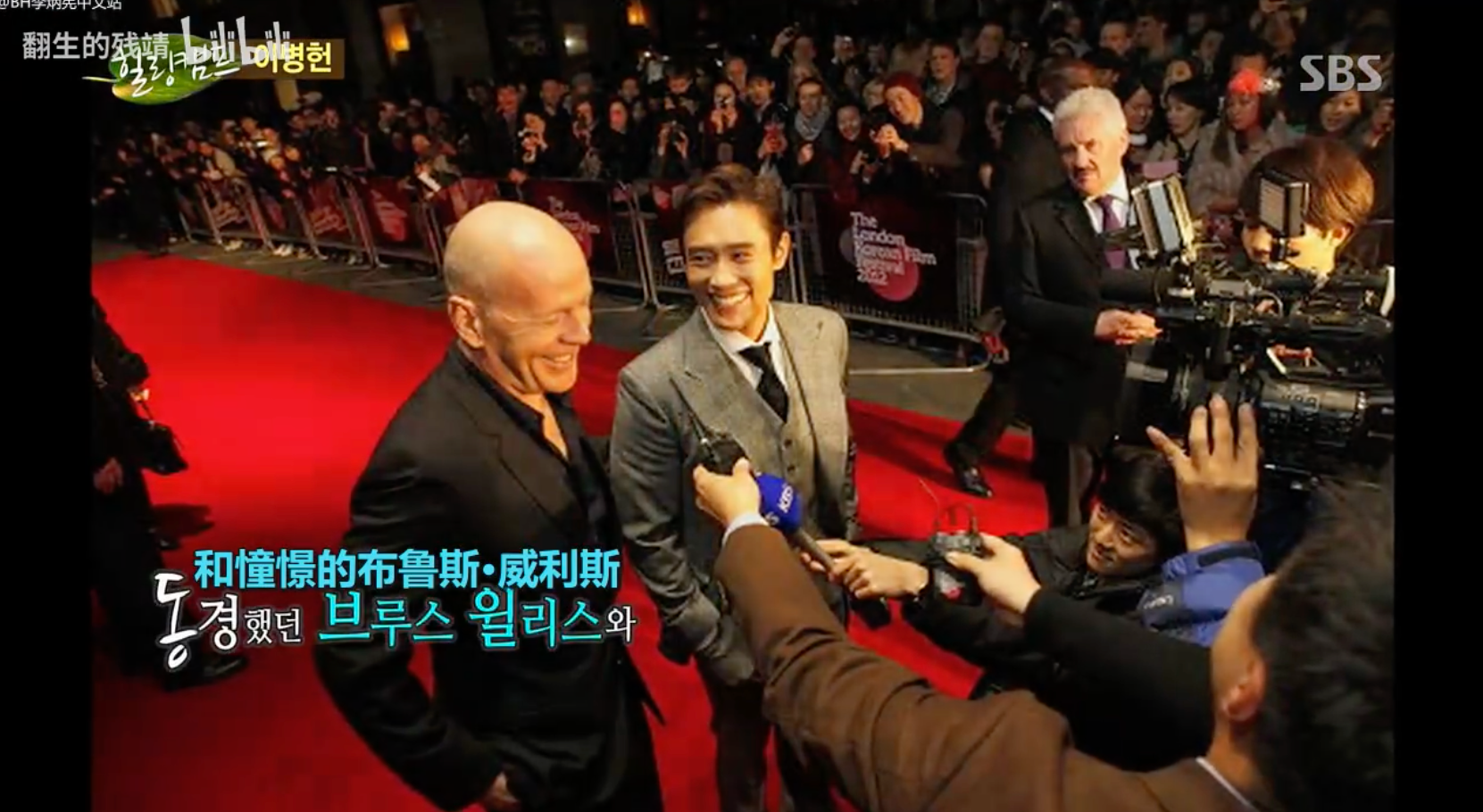
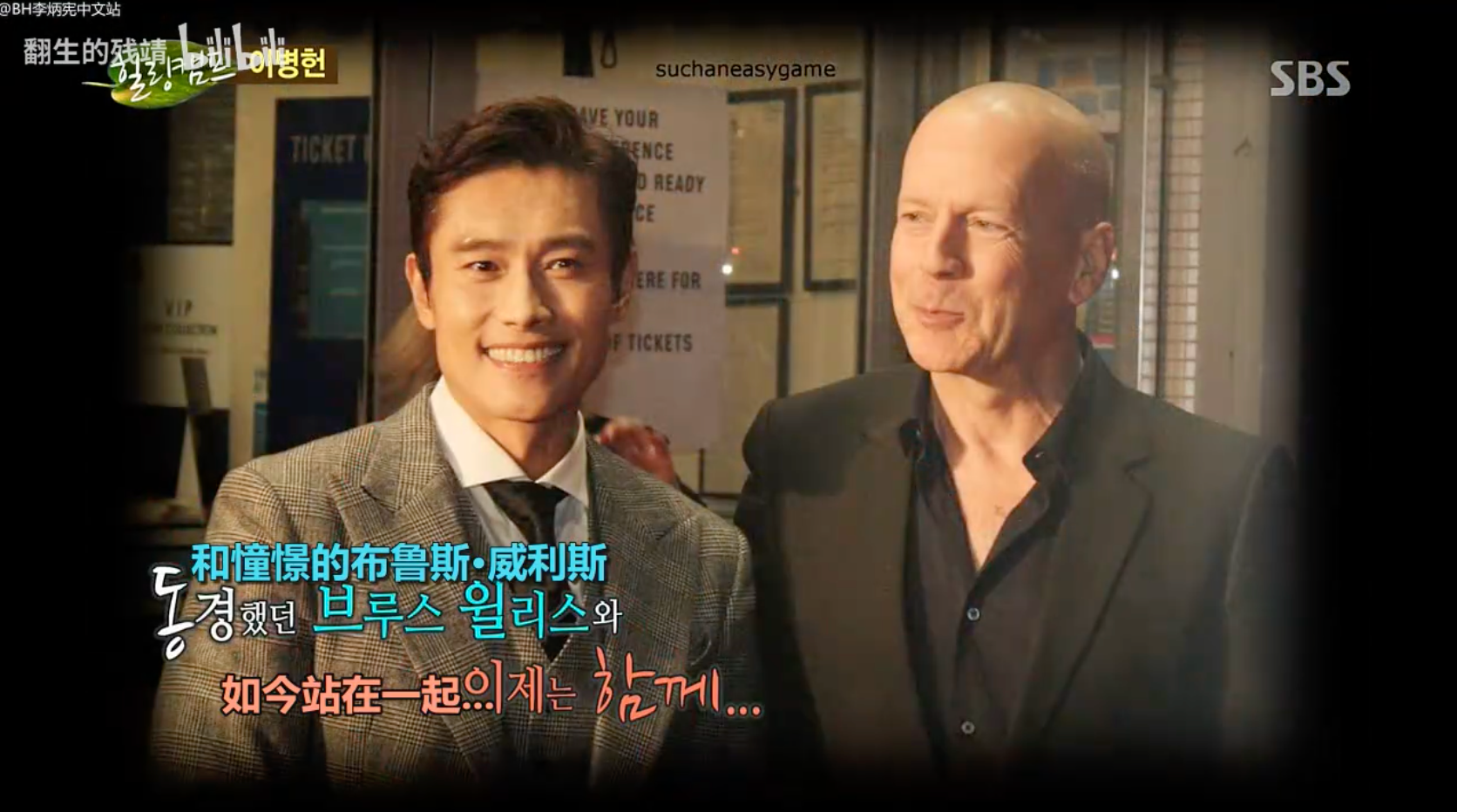
The photos from that night are beautiful. He looks like someone at the beginning of a brilliant career, not a man who had already been through the waiting room.
When he went back to Japan and Korea, the fans were loud and warm. It felt like a homecoming. It is probably why his fan service now is so good: he knows what it is like to stand in a room where nobody knows your name.
He also said he likes making small Korean films, even when they flop. Korean-language films are a lifetime thing; Hollywood is step by step. The action roles don’t show what makes him compelling—the fine, nervous intensity, the sense that his skin is pulled tight over his bones.
The relationship with Lee Min-jung comes up, though it is the one section that tempts fast-forwarding. The interview is almost three hours; even a confession has a limit.