Earlier this year I used AI to modify an open-source browser translation extension. The goal was never to build a full language-learning suite. I wanted something small that translated and then got out of the way. For a while that meant keeping it private, with no real plan to publish it. The idea of applying for SiliconFlow's ecosystem partnership changed that.
Applying to the SiliconFlow ecosystem
SiliconFlow (siliconflow.cn) is an independent token supply platform founded in 2023, with a mission around accelerating AGI to benefit humanity. Many people who write online have probably come across it.
On the evening of August 9, I was browsing the SiliconFlow site again and landed on its ecosystem partnership page. It showed a range of projects, including Immersive Translate, a translation extension with a large user base, and Trancy, which I had used before. Seeing those projects made me think my tiny tool might have a place too. My reason for reinventing the wheel was still the same: there is no perfect product, only the one that fits. I wanted a browser translation extension to translate, not to stuff in vocabulary lists, sentence saving, and other learning features. A translation plugin should handle translation, not language study.
After some hesitation, I filled out the ecosystem partner application. The following Tuesday I heard back from SiliconFlow, and we discussed the partnership. I filled in a form with basic project information and details about API key access, and the application was approved that same day. That was fast.
Making the extension less rough
Until early August, the interface was honestly crude. I eventually could not stand looking at it, so I started making UI changes. The partnership application gave me a reason to go further. The main changes were:
- A cleaner interface
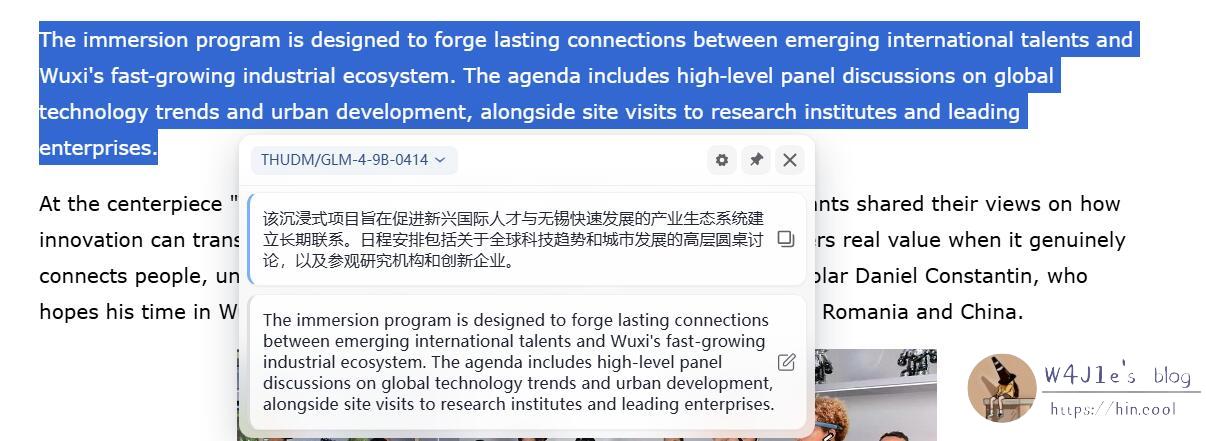
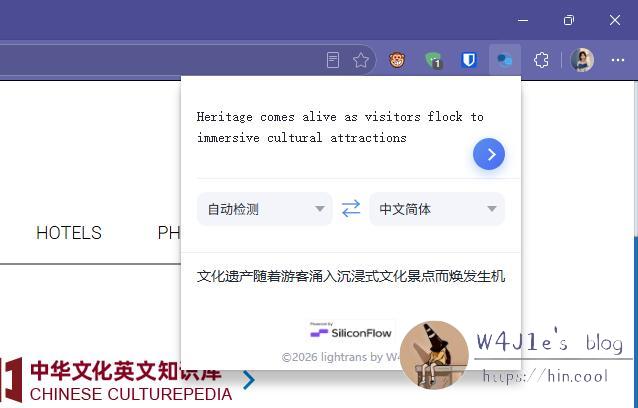
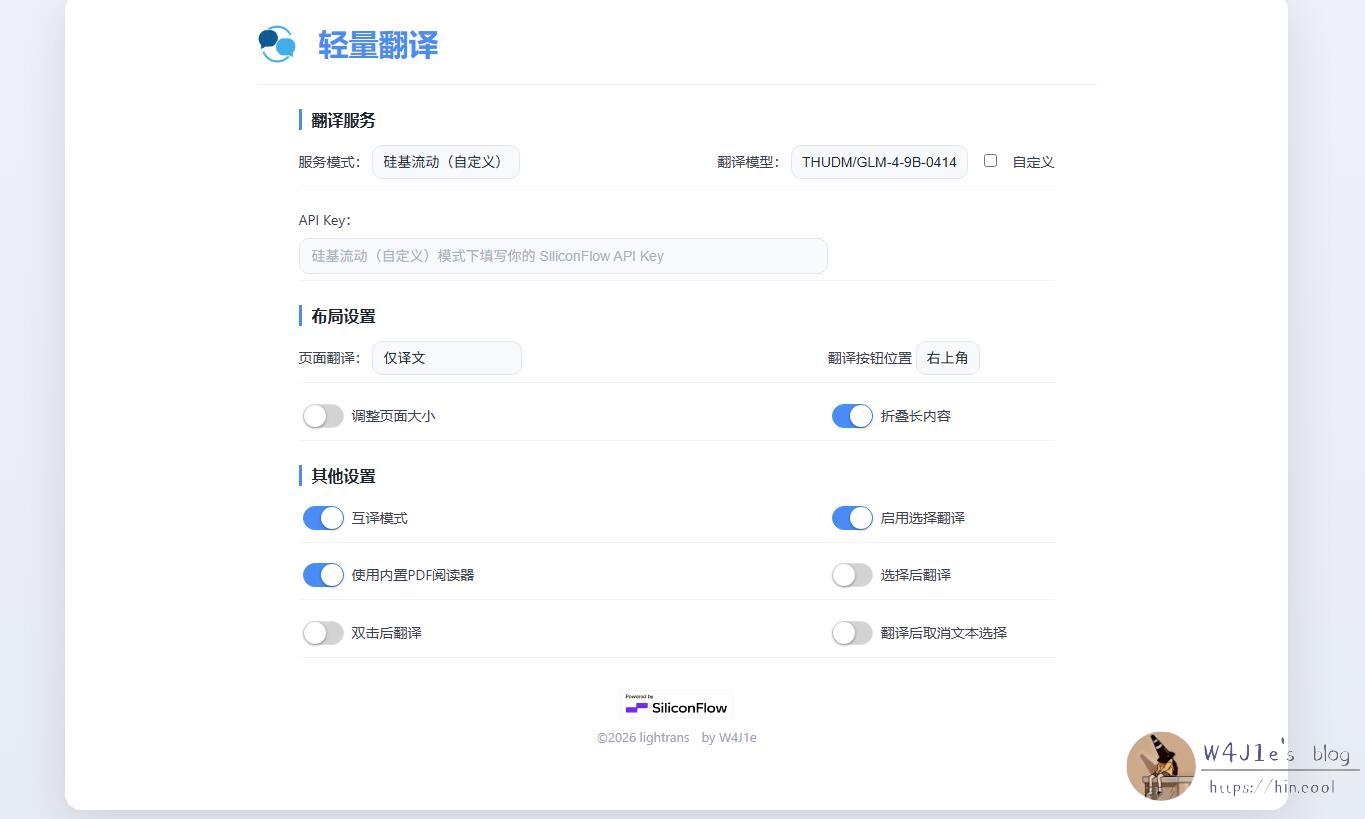
- A redesigned settings page with custom API key support
- Better full-page translation
Submitting an entire page at once easily triggered 429 errors and failed the translation, so I changed it to send content in segments and batches. That sounded good, but it created another problem: on menu-heavy sites, the menu items were translated one by one, and the main article could take a long time to appear. I later packed short words together and submitted menu items as a group, which made the body text translate much faster.
I also fixed the old problem of translating without being able to restore the page. Now there are options for original text only, translation only, and a side-by-side view.
- A self-hosted relay
A browser extension cannot cover every device scenario, so I had built a web version called Lightrans. I also noticed that the extension build hardcoded my API key into the package, so I set up a relay through the web version's API.
To thank SiliconFlow, I added its logo to the popup and settings page.
Getting into the Edge Add-ons store
I had applied for a higher API rate limit. Using it all by myself felt like wasting SiliconFlow's goodwill, even though they never required the extension to be listed in a store.
At a little after 3 p.m. on August 14, I submitted the extension to the Edge Add-ons store. I had read that Edge extensions go through manual review and that waits of seven days or more are common, especially for a first submission. Chrome's Web Store usually approves extensions the next day, though registering as a developer costs $5.
SiliconFlow staff asked when I wanted the rate limit raised. I said I would wait until the extension passed review. Two hours later, I got an email from Microsoft: the extension had been approved.
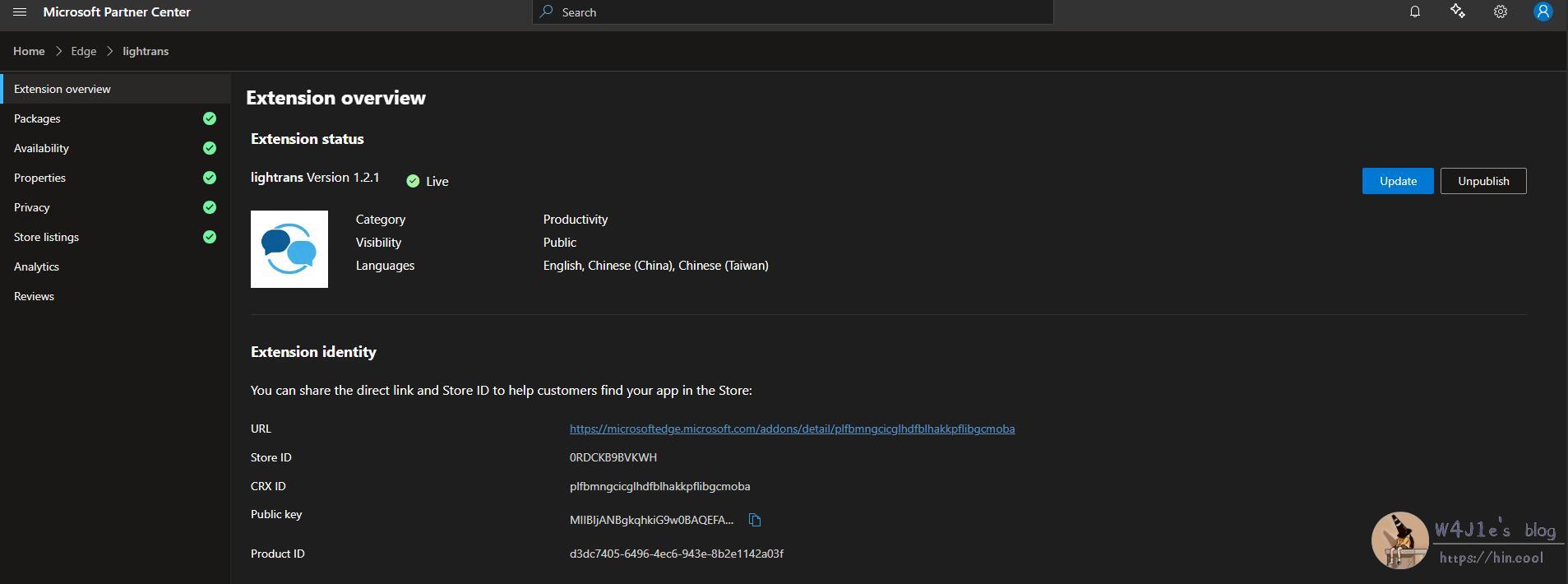
So from now on, anyone who wants to use Lightrans can install it from the Edge Add-ons store instead of clicking through the browser popup every half month.
What the partnership means
It is called an ecosystem partnership, but to me it feels more like SiliconFlow supporting developers and their products. They provided tokens at no cost and helped something I made grow. It reminded me of the CDN I used when I first started writing online, which was also a case of larger companies helping small site owners.
At moments like this, I feel genuinely grateful to the internet.