By the fifth episode of Game of Thrones Season 7—which premiered on July 16—the Seven Kingdoms had split into four main forces. Daenerys commands the Unsullied, the Dothraki, and three young dragons that are already becoming battle-ready. Cersei holds King's Landing. Jon Snow, resurrected and newly crowned King in the North, controls the North. And the army of the dead stands apart from all of them. The alignments are stark: Jon has persuaded Daenerys to confront the army of the dead; Cersei remains fixed on destroying Daenerys and pays no heed to the non-human force beyond the Wall; the army of the dead, for its part, wants to wipe out every power in Westeros.
It is hard not to see a modern Chinese history in that lineup.
On August 15, 1945, at noon, the Japanese emperor broadcast to the entire country that Japan accepted the Potsdam Declaration, would surrender unconditionally, and would end the war. On August 21, 1945, Imai Takeo flew to Zhijiang to negotiate the surrender.
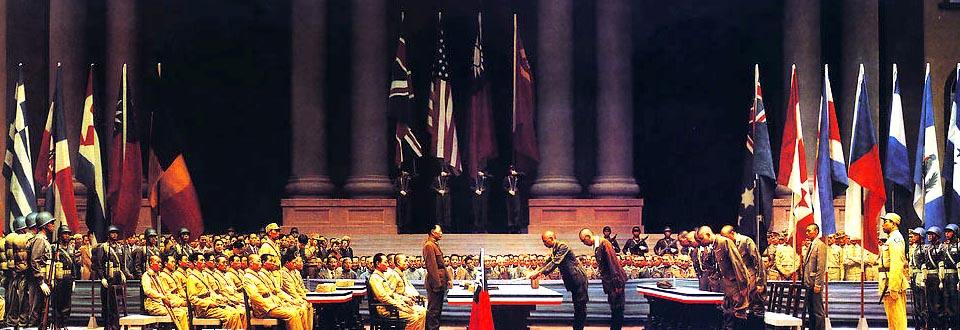
At 9 a.m. on September 2, 1945, the signing ceremony marking the end of World War II took place on the main deck of the USS Missouri, anchored in Tokyo Bay. Japan's new foreign minister, Mamoru Shigemitsu, signed for the emperor and government; Army Chief of Staff Yoshijiro Umezu signed for the Imperial General Headquarters. On the morning of September 9, 1945, the China theater surrender ceremony was held in the auditorium of the Central Military Academy in Nanjing, then China's capital. On October 25, 1945, the Republic of China government held a surrender ceremony in Taiwan, an important marker of the complete victory in the War of Resistance Against Japan.