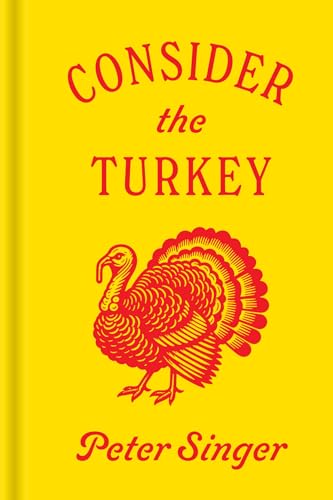
Every Thanksgiving, an odd ritual gets a few minutes of airtime: the U.S. president “pardons” one turkey, sometimes two. The lucky birds are spared from the table and sent to live out their days elsewhere. The tradition is supposed to be lighthearted. Peter Singer’s short book Consider the Turkey treats it as a prompt for a much less comfortable question.
Does it make families in the United States feel better, as they chew on the corpse of one of the 46 million turkeys killed annually for Thanksgiving dinners, to know that somewhere, two of them are still alive?
The pardoned turkeys come from Jennie-O, the country’s largest turkey supplier. That detail alone makes the ceremony feel less like mercy and more like public relations.
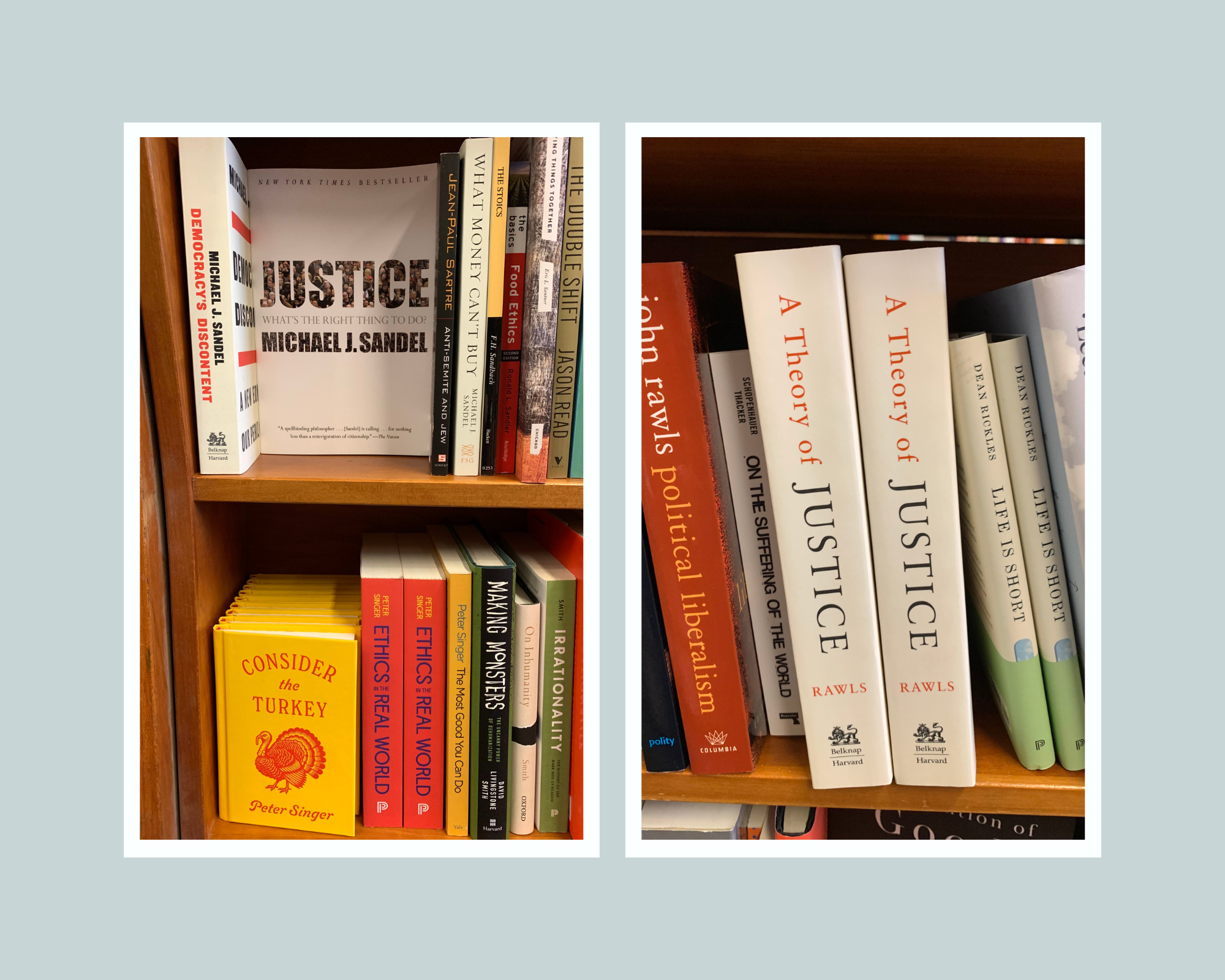
Singer is not writing a sentimental animal book. He is a utilitarian philosopher, and the book’s method is plain: look closely at the turkey, then at the system that produces it. The first surprise is how little most consumers know about the bird itself.
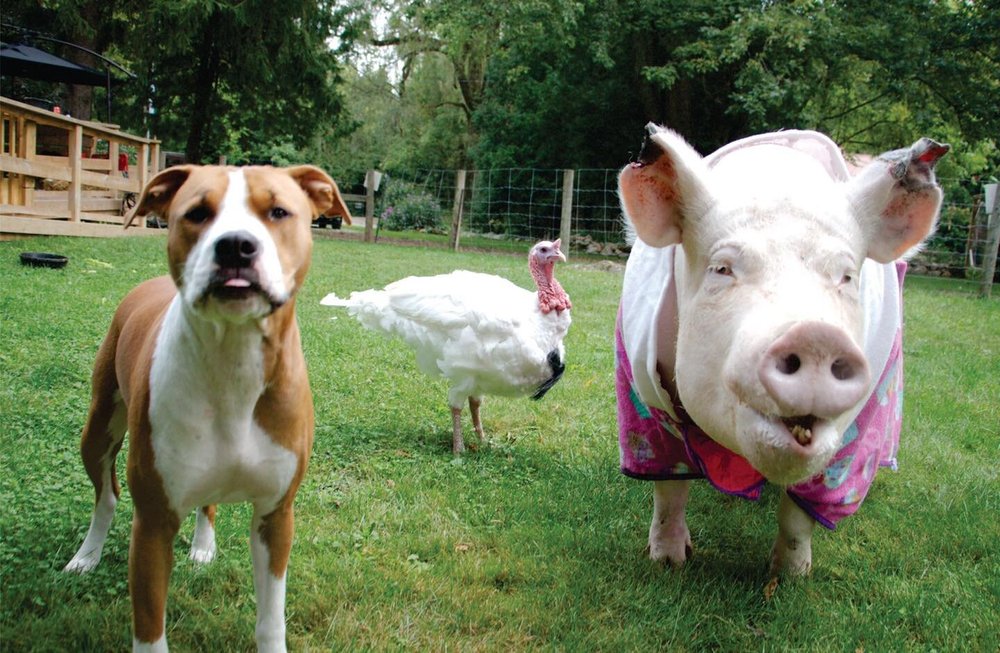
Wild turkeys live in flocks of around twenty and have social hierarchies. They are intelligent enough to pass the mirror test. Singer introduces Cornelius, a turkey who lived at Happily Ever Esther Farm Sanctuary in Ontario, founded by Steve Jenkins and Derek Walter. The sanctuary takes in abused, abandoned, and neglected farm animals. Cornelius could move freely indoors and outdoors, enjoy sunlight and fresh air, play and run with Esther, a pig, and seek out people for attention and hugs. He died in 2023 of heart-related causes; his exact age was not public, but he was likely more than ten years old. His life is a small counterargument to the idea that turkeys are interchangeable units of meat. Given space and care, a turkey can be an individual with preferences, habits, and a long life.
Industrial turkey production starts from a different premise. Breeders have selected for enormous breasts, to the point that many commercial turkeys cannot stand steadily, let alone mate naturally. The birds are kept in flocks far larger than the twenty-odd birds that would feel normal to a turkey, and the crowding produces stress. So the industry relies on artificial insemination. Singer describes the procedure as a form of sexual assault: workers restrain birds and move through them at speed.
Routinely, methodically, the breakers and the inseminator did this over and over, bird by bird, 600 toms per hour, or ten a minute. Each breaker “breaks” five hens a minute, or one hen every 12 seconds, 300 an hour, ten hours a day.
The workers are not villains in this picture. They are pressed to work fast, for long hours, often under verbal abuse; the cruelty is built into the production line.
Most turkeys sold in the United States spend their lives in what the government calls a farm but what Singer describes as closer to a concentration camp for birds: a Concentrated Animal Feeding Operation, or CAFO. Inside, turkeys are not treated as living creatures but as machines for turning cheap feed into expensive meat. A hen may have less than 0.2 square meters of space; a tom less than 0.3. Wild turkeys spend about 80 percent of their day walking and foraging. In a CAFO, thousands of birds are packed together, unable to do much of anything.
Crowding leads to aggression, so the industry mutilates birds to reduce fighting. Debeaking—called “beak trimming” in industry language, as if it were a manicure—and toe amputation are performed without anesthesia or pain relief. The birds are also bred and fed to grow far beyond what their bodies can support. At four months, a wild turkey weighs about 8 pounds; a commercial turkey can weigh 40. Their joints cannot carry the weight. Many cannot stand, and they have almost no room to move.
They are slaughtered at three or four months. The journey to the slaughterhouse is another gap in the law: U.S. rules do not set requirements for poultry during transport, so birds may travel long distances without food or water. Many plants use a water-bath stunner before cutting the throat, but research indicates that some turkeys are still conscious when they are killed, and federal law does not require stunning before slaughter.
The avian flu response is more disturbing still. When outbreaks occur, the method often used is Ventilation Shutdown Plus, or VSD+. The barn is sealed as tightly as possible, heaters are turned on, ventilation is shut off, and the temperature is raised to 40–43°C for at least three hours. The turkeys are, in effect, cooked or suffocated in a crowded, airless space without water. The few that survive are shot. It is hard not to see a parallel with the gas chambers of the Holocaust, though the official vocabulary is sanitized: “depopulation,” or “euthanasia.” The latter comes from Greek words meaning “good death,” an especially bitter misuse.
Then comes the money. Companies that kill flocks this way can receive government compensation for the loss. Jennie-O—the same company that supplies the pardoned Thanksgiving turkeys—received $105,855,157 in such compensation between February 2022 and April 2024. The money comes from taxpayers, which means the public is not merely adjacent to the system; it helps pay for it.
Singer’s final chapter widens the frame. As a utilitarian, he argues that the right action is the one that reduces pain and suffering and increases pleasure and happiness for all beings capable of experiencing them.
I take the utilitarian view that the right action is the one that does the most to reduce pain and suffering, and increase pleasure and happiness, for all beings capable of having those experiences—in other words, for all sentient beings.
He notes that other philosophical traditions arrive at similar conclusions. Kantians and Aristotelians have reasons to extend questions of justice to animals. Then he asks the question that lingers after the barn doors close: if millions of dogs were treated this way, would we tolerate it? Why are some animals companions while others are subjected to industrial cruelty without much public notice? And if we can be indifferent to suffering on this scale, what does that habit do to the way we treat other human beings?
The book ends with something unexpectedly practical: recipes for an “ethical feast.” Singer includes plant-based turkey, a mushroom “meat” gravy, and vegan desserts. For anyone who does eat turkey, he suggests choosing a bird raised on a real farm rather than in a CAFO.
That advice does not make the problem disappear. It is possible to read Consider the Turkey, feel shaken, and then eat a supermarket roast chicken without changing much. The book’s value is not that it turns every reader into a vegetarian overnight. It is that it makes the hidden system visible: the pardon, the breeding, the crowded barn, the sealed shed, the compensation check. Once those facts are in view, the Thanksgiving turkey is no longer just a symbol of gratitude. It is also a product of choices that most people have never been asked to look at directly.