Open-source OCR data is far more plentiful than most teams assume, but it divides cleanly in two along licensing lines. Synthetic corpora and table or document collections are almost uniformly safe for commercial use, because their labels are produced by code — no photographer to credit, no annotator contract to honor. Real street-level captures are the opposite: the ICDAR competition sets and the Chinese scene-text collections are nearly all stamped research-only. Among genuinely photographed data, exactly one dataset has a solid commercial license: HierText.
Everything below was checked repository by repository against LICENSE files, Hugging Face data cards, and README text, not against second-hand summaries. Snapshot date: 2026-10-17.
The short version. Commercially usable: SynthText, PubTables-1M, PubTabNet, TableBank, DocBank, and HierText (the last with attribution and share-alike obligations). Research-only: ICDAR 2013 / 2015 / 2017-MLT / 2019 / 2021, LSVT, RCTW-17, ReCTS, ArT, COCO-Text, SROIE, FUNSD, DocVQA, and XFUND.
SynthText: the ancestor of synthetic scene text
A pipeline that takes natural scene photos as backdrops, renders text onto them automatically, and emits word-level quadrilateral boxes plus transcriptions. The result is 858,000 images and roughly 8 million synthetic words. Because everything is programmatically generated, there is zero annotation labor and the license is clean by construction (the repo is Apache-2.0). The Oxford VGG line — MJSynth and Synth90k — covers the recognition side with about 900,000 synthetic words. For Chinese, you can stand up an equivalent renderer on top of PaddleOCR's data synthesis tooling.
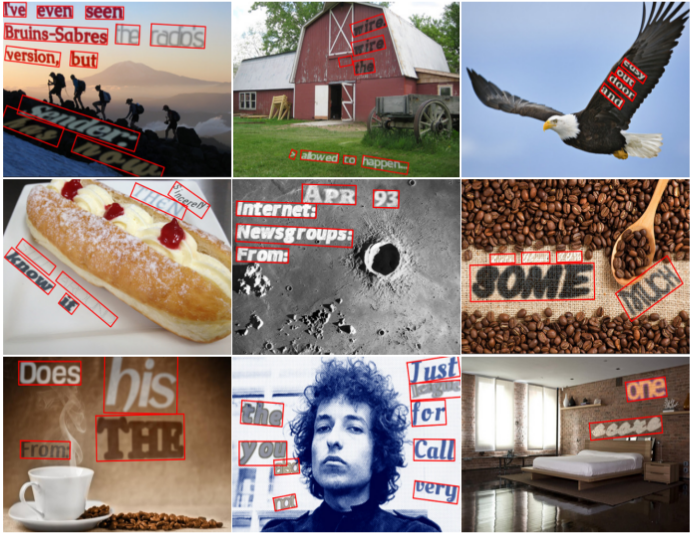
Annotations live in an h5 file: img, wordBB (word-level quads), charBB (character-level boxes), and txt (transcriptions).
Where it earns its keep: commercial pretraining for detection and recognition models. For a Chinese variant, build your own rendering pipeline — supply your own fonts and background images and you sidestep every licensing question entirely.
PubTables-1M: the commercial motherlode for tables
Released under Microsoft's table-transformer project, this set was parsed automatically out of 400,000 open-access PubMed PDFs into one million tables, with three annotation layers: the table bounding box, the row and column structure, and the header in HTML. The Hugging Face card states CDLA-Permissive-2.0 (the permissive tier of the Community Data License Agreement, roughly MIT in effect), and the parent code repository is MIT.
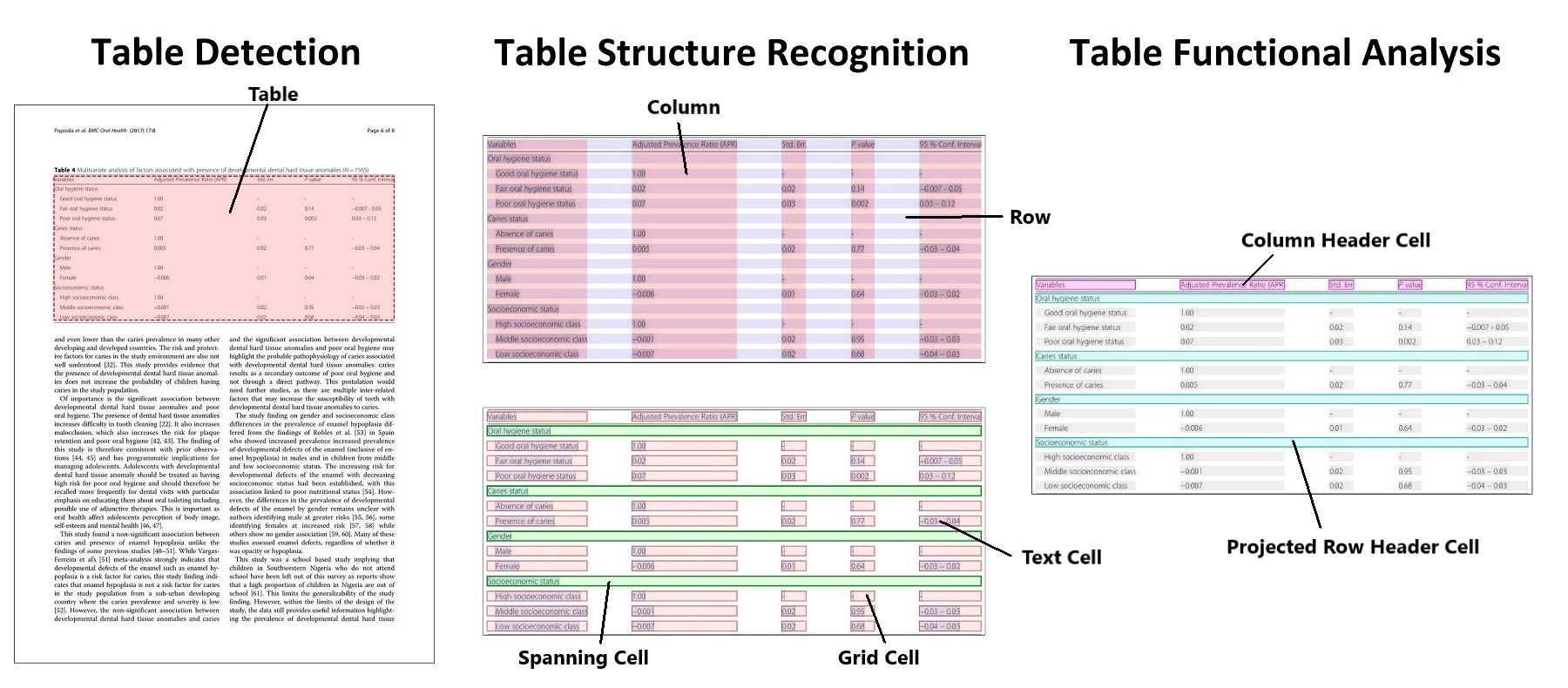
Annotations are JSON: table bbox, row/column structure, and structured HTML output.
Where it earns its keep: training table detection and structure-recognition models, and as the pretraining backbone for structured extraction from size charts, spec sheets, and financial statements.
PubTabNet: the canonical image-to-HTML set
IBM's 568K table-image dataset draws its source images from the PubMed Central Open Access Subset's commercial use collection — that is the README's own phrasing — with annotations generated programmatically. Download requires registering on the IBM DAX page.
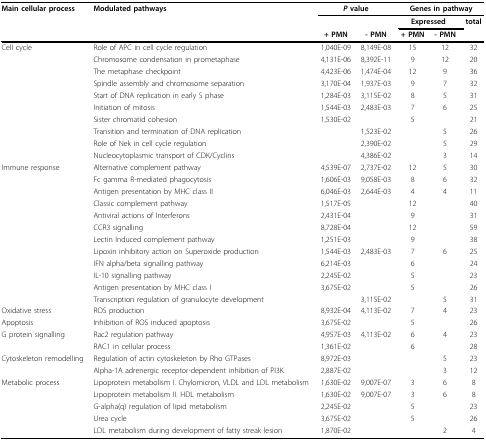
The jsonl schema, quoted from the README:
{"filename": str, "split": str, "imgid": int,
 "html": {
   "structure": {"tokens": [str]},
   "cell": [
     {"tokens": [str], "bbox": [x0, y0, x1, y1]}
   ]}}
structure.tokens is the table-structure token stream (things like <td> and <tr>), while cell[].bbox is the pixel box of each cell. That dual representation — structure tokens plus cell coordinates — is the most common training target in table recognition work.
Where it earns its keep: end-to-end table recognition that turns an image straight into HTML. Mixing it with PubTables-1M works well, since one leans toward detection and structure and the other toward sequence generation.
TableBank: table detection across four domains
Microsoft, 2018. Roughly 417,000 tables harvested from Word and LaTeX documents plus Wikipedia and HTML pages, split into four domains for detection tasks. The official GitHub repository has since moved or gone 404; the reliable access path today is the Hugging Face community mirror (labeled Apache-2.0, though the mirror page is the thing to re-verify against if provenance matters to you).
Where it earns its keep: locating table regions on a page. Old, but the scale and domain coverage still hold up.
DocBank: 500,000 pages of weakly supervised layout
Built by weak supervision — automatically aligning arXiv source with rendered PDFs. Every word carries coordinates plus one of 12 layout labels (paragraph, title, figure, formula, and so on), across 500,000 pages with no human annotation at all. The repo is Apache-2.0.
Annotations are line-based text files: word, coordinates, page number, layout class.
Where it earns its keep: pretraining document layout analysis — finding tables, figures, and headings — ideally paired with a human-verified benchmark like OmniDocBench to form an auto-train plus manual-acceptance loop.
HierText: the one real dataset with a confirmed commercial license
Google's dataset of real handwritten text, 10,640 images, annotated down to a three-level hierarchy of word, line, and paragraph, plus vertex-level polygon boundaries — the finest granularity anyone has published for OCR annotation. The README says plainly: "The HierText dataset are released under CC BY-SA 4.0." Commercial use is allowed, provided you attribute and license any derived data under the same terms.
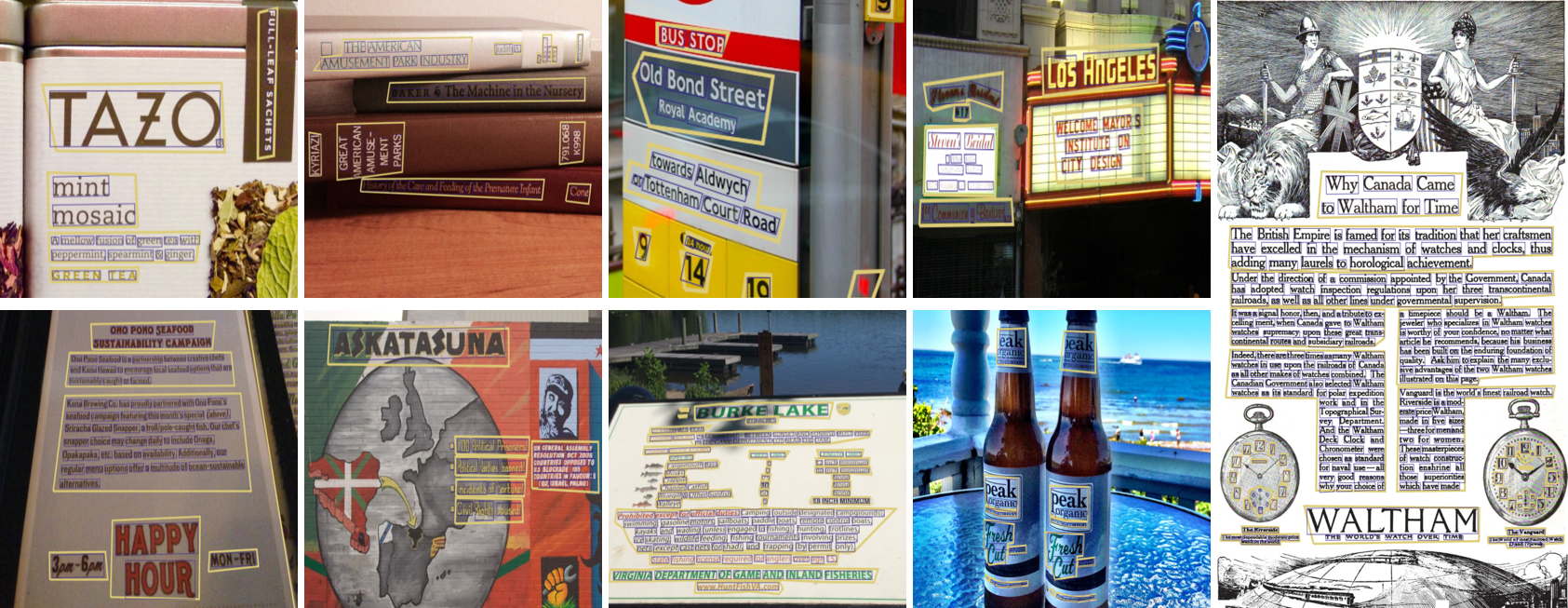
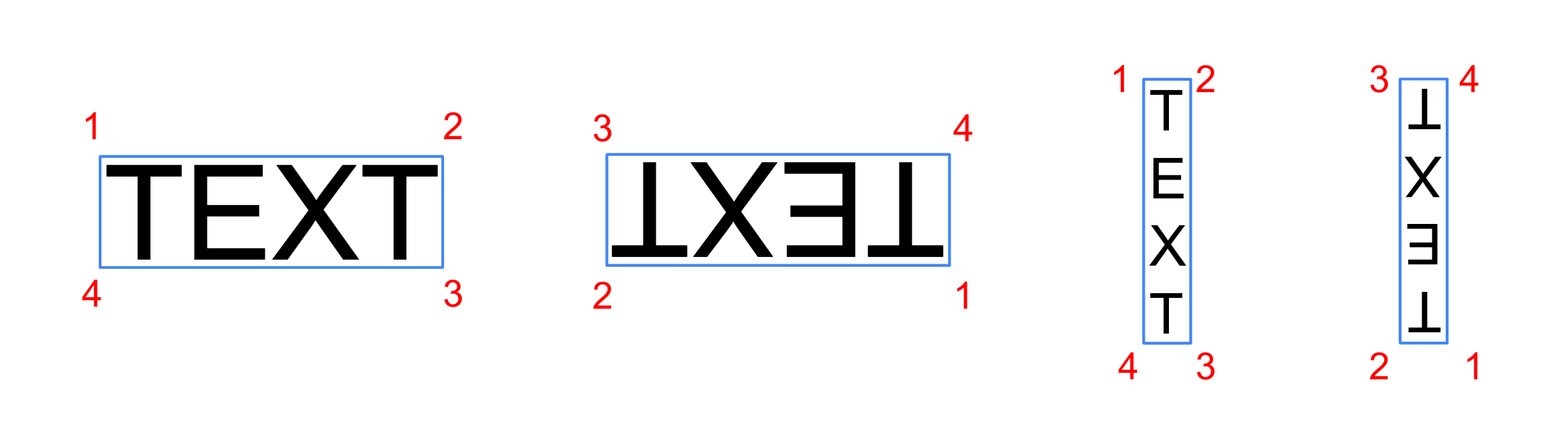
Where it earns its keep: handwriting recognition — but arguably more valuable is its annotation spec. The hierarchy-plus-vertices design is worth imitating in any real-world text dataset you build yourself. If you are labeling text in product photos, start with two levels (word and line) plus quadrilaterals and you will be fine.
MAVE: e-commerce attribute labels (research-only, but steal the format)
An Amazon-derived set widely used in eBay and academic attribute-extraction research: 2.2M products, 3M annotated attribute values, 1,257 categories. The LICENSE file is actually CC BY-NC 4.0 — secondary write-ups online frequently mislabel it as CC BY 4.0, so read the file itself — and the underlying product data is separately bound by Amazon's terms. Two restrictions stacking on each other.
{"id": "B0052LYUH6", "category": "Curtains & Drapes", "attributes": [
  {"key": "Attachment Method", "evidences": [
    {"value": "Rod Pocket", "pid": 1, "begin": 98, "end": 108}]}]}
// evidences anchor each attribute value to a span in the source text
// (pid = paragraph index, begin/end = character offsets)
What it is good for: research comparison only. But the traceable-evidence pattern — every attribute value anchored to character offsets in the original text — is worth copying directly into a self-built product attribute dataset, because it makes quality sampling straightforward.
OmniDocBench: a document parsing benchmark (research-only)
From Shanghai AI Lab's OpenDataLab: 1,651 PDF pages, 10 document types, 5 layout types, and 5 languages with balanced Chinese and English page counts — including Chinese textbooks, newspapers, and ebooks. That makes it one of the rare Chinese-friendly benchmarks in the document space. The code is Apache-2.0, but the data is "for research purposes only."
{"layout_dets": [
  {"category_type": "text_block",
   "poly": [268.94, 319.97, 322.99, 319.97, 322.99, 351.08, 268.94, 351.08],
   "order": 2, "anno_id": "box_id_0", "text": "that"}]}
// poly = 8 coordinates forming a quadrilateral (handles skewed layouts)
// order = reading order, text = transcription
What it is good for: evaluating document parsing and layout recovery models in a research setting. If you build your own Chinese size-chart benchmark, its combined poly + order + text format is a sensible template.
The research-only pile, briefly
ICDAR 2013 / 2015 / 2017-MLT / 2019 / 2021: competition registration required via rrc.cvc.uab.es, each in the 1K to 20K range, multilingual with Chinese subsets, all research. LSVT (45,000 Chinese street-view images), RCTW-17, ReCTS, and ArT (each around 10K, Chinese with curved text): the workhorses of Chinese scene text, all research. The practical consequence is blunt — there is no ready-made Chinese real-scene OCR dataset under permissive terms, so commercial work means synthetic data plus your own labeling. COCO-Text (63,686 images, sourced from COCO flickr) is research. SROIE / FUNSD / DocVQA / XFUND (0.6K to 1.5K each) are small document-understanding sets, all research.
Two things worth repeating. PaddleOCR's official pretrained models perform well, but the training data behind them is not open — what you get is synthesis tooling and a 2,677-image evaluation benchmark. And when a license matters, read the LICENSE file or dataset card itself rather than a search snippet: while checking for this survey, MAVE's LICENSE turned out to be CC BY-NC 4.0, the exact opposite of what the summary claimed.
Sample images throughout come from the projects' own published materials (README figures, bundled examples, Hugging Face pages) and are reproduced for commentary only. Dataset citations: SynthText (Gupta et al., CVPR 2016); PubTables-1M (Smock et al., ACL 2022); PubTabNet (Zhong et al., arXiv:1911.10683, 2019); TableBank (Li et al., 2018); DocBank (Li et al., COLING 2020); HierText (Long et al., ICDAR 2022); MAVE (Yang et al., WSDM 2022); OmniDocBench (Ou et al., arXiv:2412.07626, 2024).