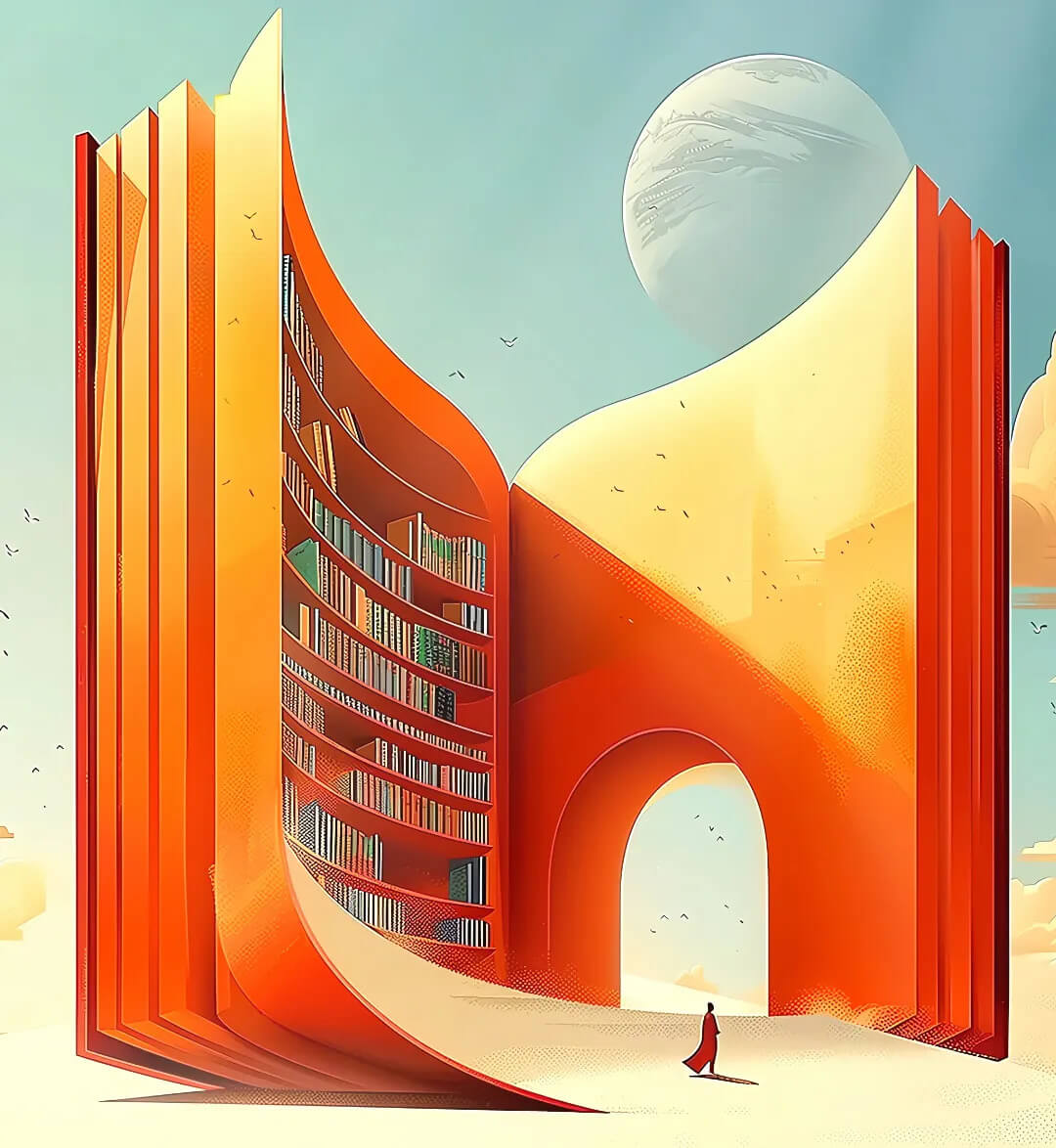
April 23 marks the 30th World Book Day. Across the long course of human history, books have stood like a steadfast beacon, casting the enduring light of wisdom over the journey of civilization. In the noise and restlessness of everyday life, they also offer a quiet refuge for the mind, building an inner world for us brick by brick through the power of language. Open a book gently, and each paragraph, each chapter, seems alive with sparks of thought. Beautiful writing flows like a clear stream, guiding us almost without our noticing toward deeper understanding.
The theme of World Book Day 2025 is “Reading: A Bridge to the Future.” It is a fitting reminder that reading is not only a way of looking back at what humanity has known and felt, but also a way of preparing ourselves for what lies ahead. With books as our vessel and words as our oars, we move through the vast sea of literature in search of truth, insight, and a freer life of the mind.
Three books worth revisiting
Rickshaw Boy
Keywords: life, hardship, pursuit, social reality
Lao She’s Rickshaw Boy tells the tragic story of Xiangzi, a rickshaw puller in old Beijing. Having come to the city from the countryside, he dreams of earning enough through honest labor to buy a rickshaw of his own. Through hard work, thrift, and persistence, he spends three years saving and finally reaches his goal, becoming an independent and capable driver. But fate repeatedly turns against him. Again and again, he gains what he has worked for only to lose it, and life never gives him the stability he seeks.
The novel brings to life unforgettable characters including Xiangzi, Huniu, Fourth Master Liu, Xiaofuzi, and Detective Sun, each of whom faces destiny in a different way and arrives at a different end. Through their lives, the story exposes the cruelty of the old society and expresses deep sympathy for working people. Lao She’s language is vivid and immediate, which makes the book especially accessible and emotionally powerful. It is a classic that not only draws readers into its story, but also invites reflection on history, social change, and the meaning of a human life.
Memorable lines:
Hope made him happy, fear made him panic. He wanted to sleep, but could not. His limbs felt as though they had fallen apart, laid out on a pile of dry grass. There was no sound at all—only the stars overhead keeping time with his heartbeat.
Rain falls on the rich and on the poor, on the just and on the unjust. Yet rain is not fair after all, because it falls upon a world that has no fairness.
The sun was slanting westward. The old willows by the river leaned crookedly, their tips touched with bits of golden light. There was not much water in the river, but plenty of green algae, like a long, greasy dark-green ribbon, narrow and stretched out, giving off a faint fishy dampness.
The Old Man and the Sea
Keywords: resilience, solitude, perseverance, the struggle between humanity and nature
This enduring classic tells, in prose that is spare yet deeply stirring, the story of the old fisherman Santiago and his solitary life-or-death struggle with a giant marlin and later with sharks on the open sea. Santiago’s toughness and refusal to surrender shine through the novel like a torch, illuminating the human capacity to resist suffering and keep going in the face of defeat.
Hemingway’s famous “iceberg theory” gives the book its unusual power. The language appears simple, but beneath that simplicity lies immense emotional force and philosophical depth. While reading, one can almost hear the crashing waves, see the old man’s unwavering eyes, and share in the tension of his ordeal. Its meditation on human nature, fate, and the natural world has never lost its force. No matter when it is read, the book continues to offer strength and insight, making it a literary treasure worth returning to again and again.
Memorable lines:
Every day is a new beginning. Luck is welcome, of course, but I would rather be exact. Then, when luck comes, I am ready.
A man can be destroyed but not defeated.
Now is no time to think of what you do not have. Think of what you can do with what there is.
Everything about him was old except his eyes, and they were the same color as the sea and were cheerful and undefeated.
Miracles of the Namiya General Store
Keywords: life, bonds, human nature, love
Set around a small general store, this novel unfolds through a series of stories that may seem separate at first, yet are gradually revealed to be deeply connected by the lives and choices of different people. As the characters’ inner worlds and emotional changes come into view, the story highlights the kindness and beauty that still exist in human nature.
In modern life, people are often surrounded by speed, pressure, and the endless pursuit of material gain, while the needs of the heart are easily neglected. The Namiya General Store is meaningful not because it provides goods, but because it offers something rarer: comfort, understanding, and a kind of healing for the spirit.
Human life is much the same. The countless people who pass through our lives may help us at times and hurt us at others, but each carries a particular significance. One can only hope that the world will meet every person with gentleness and, in time, with grace.
Memorable lines:
Sometimes we need the help of others to make it through the low points of life.
More than money or material things, affection and the companionship of family and friends give people warmth and strength.
Different people carry different life experiences and emotional worlds. Only by listening carefully and trying to understand can we truly help others.
Reading sayings worth remembering
“Read ten thousand books and travel ten thousand miles.” — Dong Qichang
“After reading ten thousand volumes, one’s writing flows as if inspired.” — Du Fu
“Diligence is the path up the mountain of books; hardship is the boat on the boundless sea of learning.” — Han Yu
“To read is good; to read good books is better; to love reading is best.” — Bing Xin
“Reading is like climbing a mountain: the higher you climb, the farther you can see. Reading is like farming: the more sweat you give, the richer the harvest.” — Zang Kejia
Shakespeare once said, “Without books, life is like a world without sunlight; without books, wisdom is like a bird without wings.” Through reading, we come to understand life more deeply and perceive the texture of human experience. Books refine the temperament, strengthen character, broaden horizons, and sharpen the mind.
That is why reading deserves to become a daily habit rather than an occasional activity. Through books, people can cultivate themselves, steady their ambitions, and build their abilities. The more a community encourages reading, the more naturally a culture of loving books, choosing worthwhile books, and reading with thought and care can take root.