Drive south from Lanzhou for less than half an hour and the road narrows into a valley. The town inside it is called Agan. Many people assume the name has something to do with dryness—gan in Chinese can suggest drought—but it doesn’t. More than 1,600 years ago, a pair of Xianbei brothers fell out. The elder went west; the younger regretted it and wrote a song called “Agan.” In Xianbei, agan meant older brother. The valley took the name, and the song has lasted as a farewell for more than sixteen centuries. There is no other town in China named after the word for elder brother.
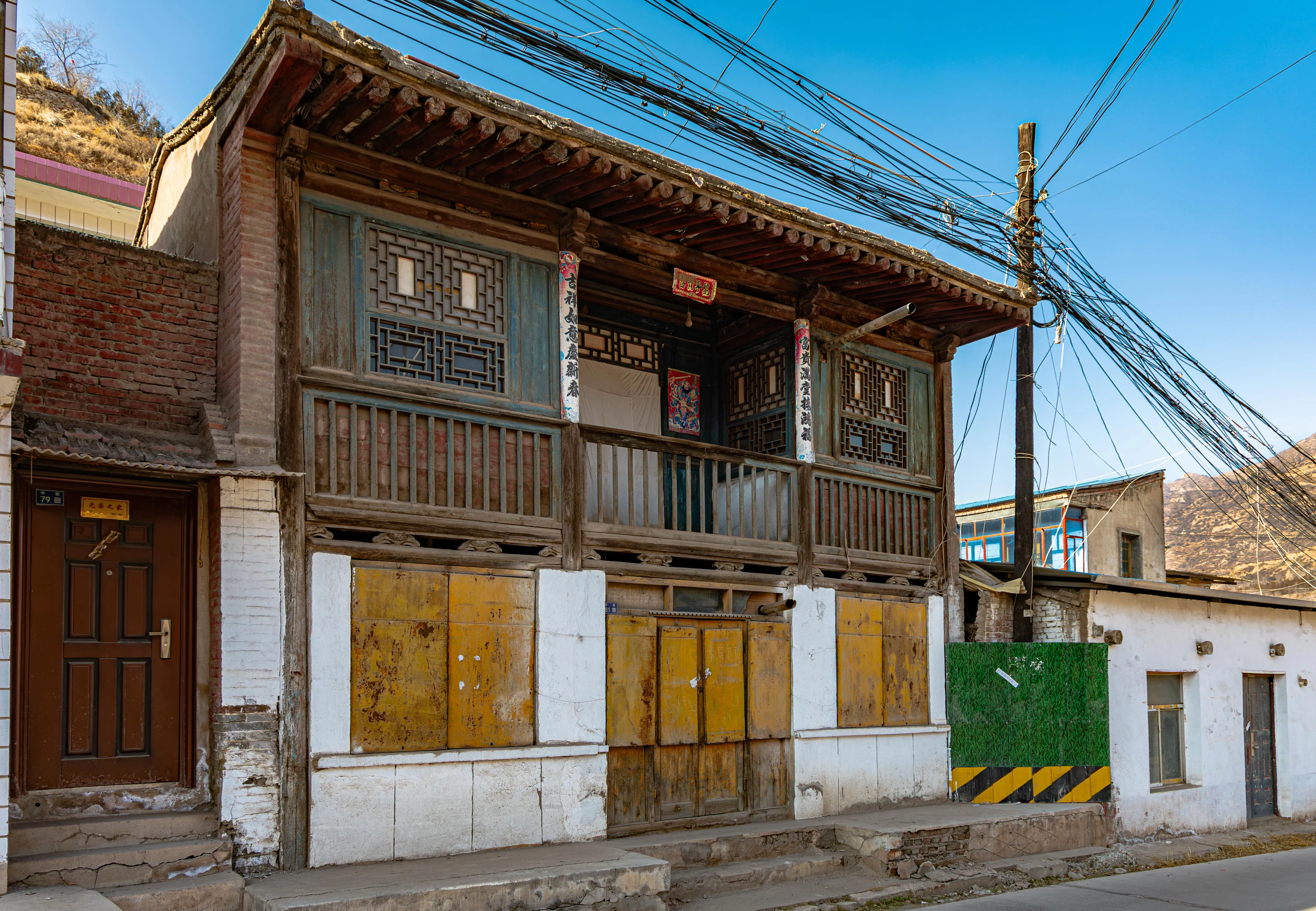
But what made Agan memorable in history was the black wealth under the ground. Coal was being dug here in the Song dynasty. By the Ming and Qing, twenty-four kilns were burning day and night, and camel caravans and horse carts carried the coal out in every direction. In 1842, Lin Zexu, on his way into exile in Xinjiang, passed through and noted in his diary: “Another ten li to Agan Town; many residents; coal produced, with coal kilns.” His tone is cool, almost offhand, but it cannot hide how busy Agan was. At its peak, the town’s coal supplied a large share of Lanzhou’s needs.
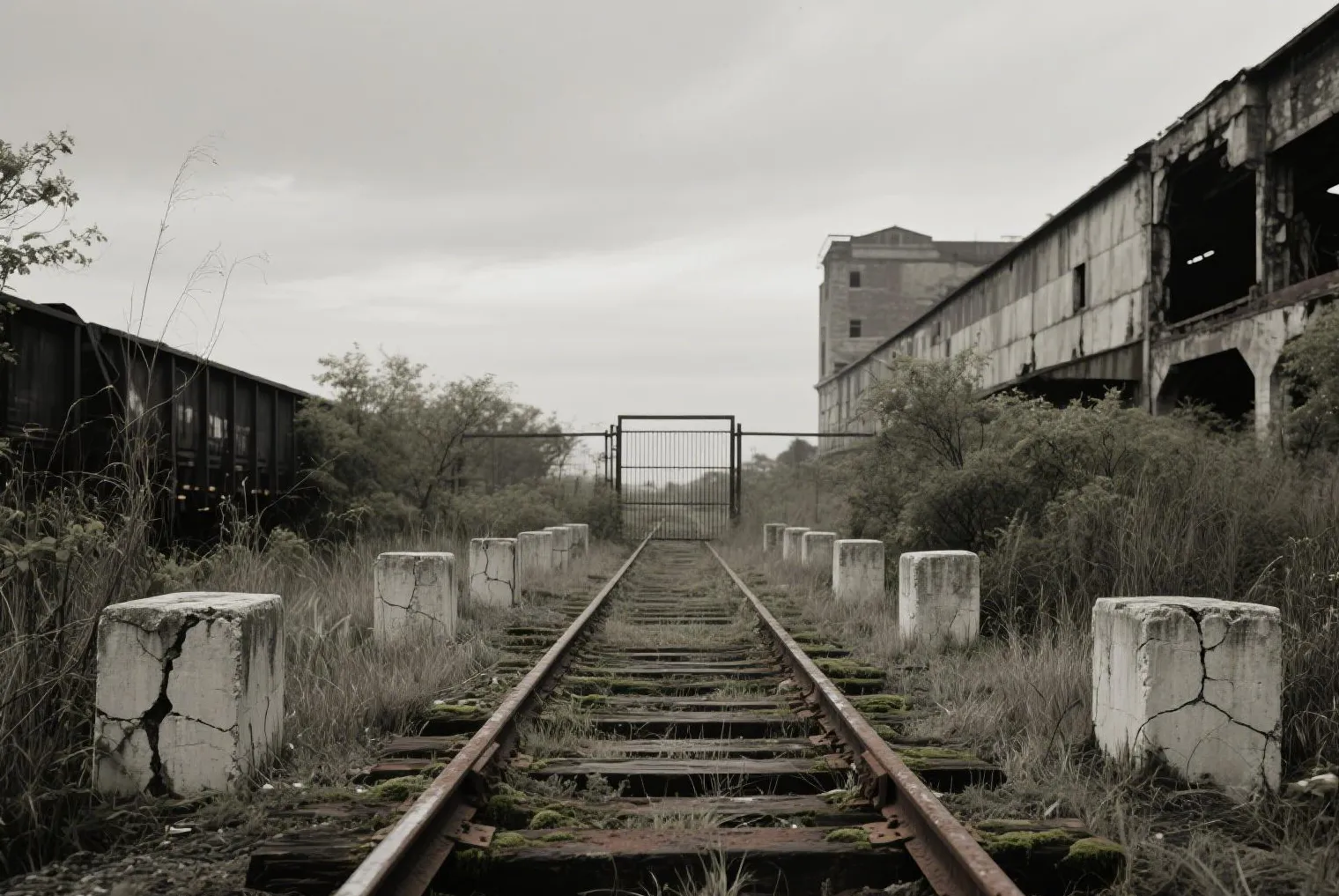
How did it get out? By rail. During the Republic of China period, a narrow-gauge line was laid with a track gauge of only 762 mm—nearly half the width of standard gauge. The little train that ran on it was known locally as the “gulüma.” It was small, loud, and rocked through the valley for more than forty years. If you thought all trains ran on standard tracks, Agan says otherwise.
There was something stranger still. Agan’s coal seams lie very close to the surface. When they catch fire underground, white smoke seeps from cracks in the hillside. At night, the slope is dotted with faint lights, like drifting will-o’-the-wisps. This is why locals say, “Agan’s coal laughs.” In fact the coal is smoldering. But if you had seen it, you might feel that the mountain itself was breathing.
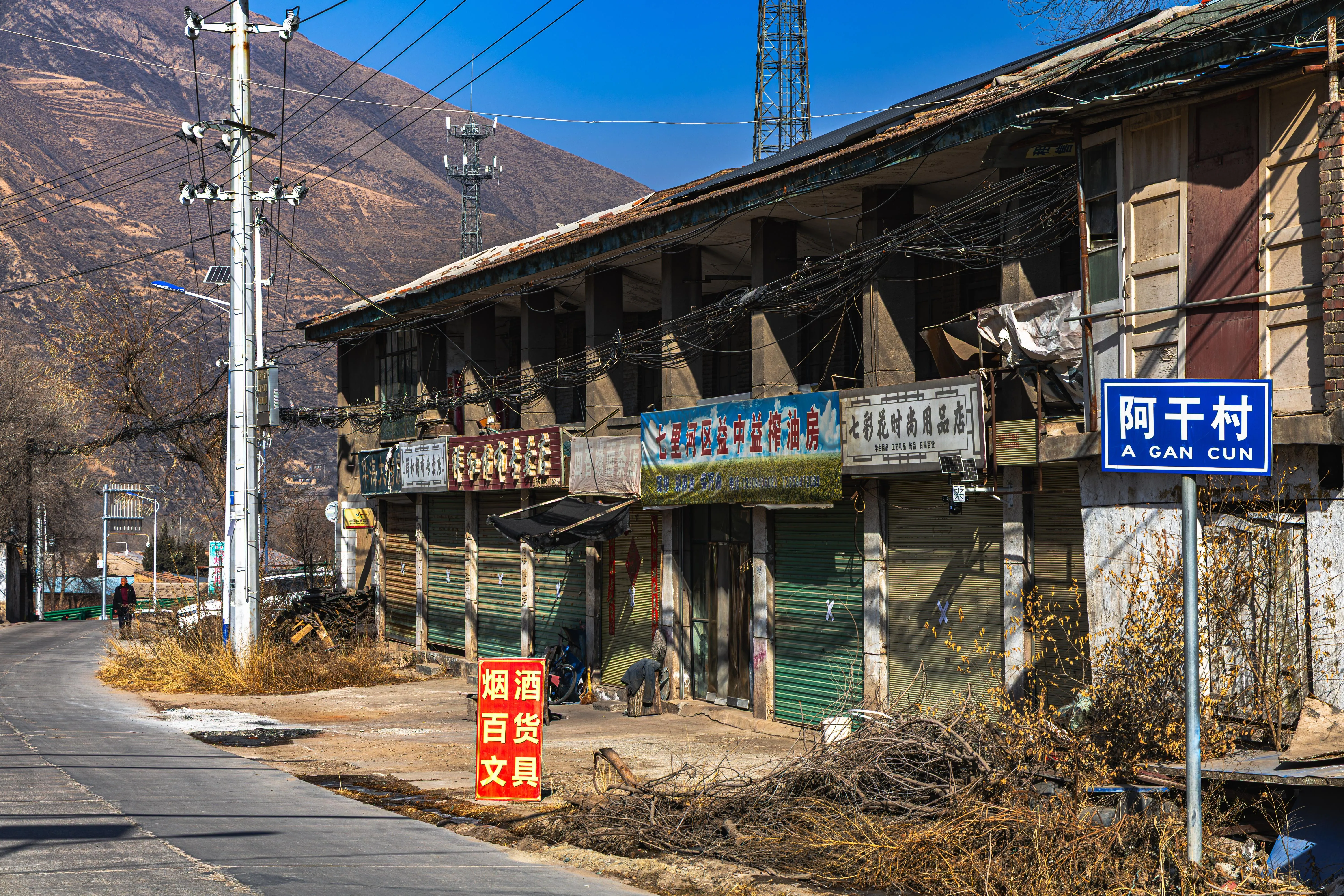
The earth here is unusual too. Agan’s clay contains kaolin, and the porcelain fired from it is black—glossy black, hard enough that a knock will not break it. From the Ming and Qing through the Republican era, most of the pickle jars, wine vessels, and water pots in ordinary households came from Agan. A Qing official passing through saw black pottery stacked along the foot of walls on the whole street and wrote a curious line: “At the foot of walls and along the ridges, all are coarse vessels.” Roofs, too, were piled with jars. The town was like an overturned, rough clay bowl.
Shifogou, the Stone Buddha Gully, sits at the edge of town. Several Yuan-dynasty stone Buddhas are carved into the cliff there—not large, but memorable. There is also a thousand-year-old elm whose trunk takes three people to embrace and whose crown opens like an umbrella. In the past, camel caravans passed through the gully, bells ringing, elm seeds falling. The scene is more interesting than any restored old town.
On the eve of Lanzhou’s liberation in 1949, miners in Agan quietly carried explosives and tools used for coal mining over the mountain to the People’s Liberation Army. No one put up a monument for them. But the story has stayed in the mouths of the town’s old people. Those men, whose faces were never fully clean of coal dust, gave the city one last push in the most plain and practical way they could.
Today Agan is quiet. The mines are closed, the little train has rusted, and young people have left. Yet on the old street there is still a stone temple to the kiln god. Every year on the twenty-third day of the sixth lunar month, townspeople still burn incense and make offerings to an upright official honored as “Dewei Zhaoying Hou.” When the firecrackers go off and the blue smoke rises, you cannot tell whether it is incense smoke or coal smoke that has never quite cleared after a hundred years.
One more detail: the old photo studio in Agan has been open for sixty years, and the wooden large-format camera inside still works. The owner says that on payday miners used to line up outside. Each wanted a photograph to send home, so his family could see that he was still alive beneath the coal mountain, still in good spirits.
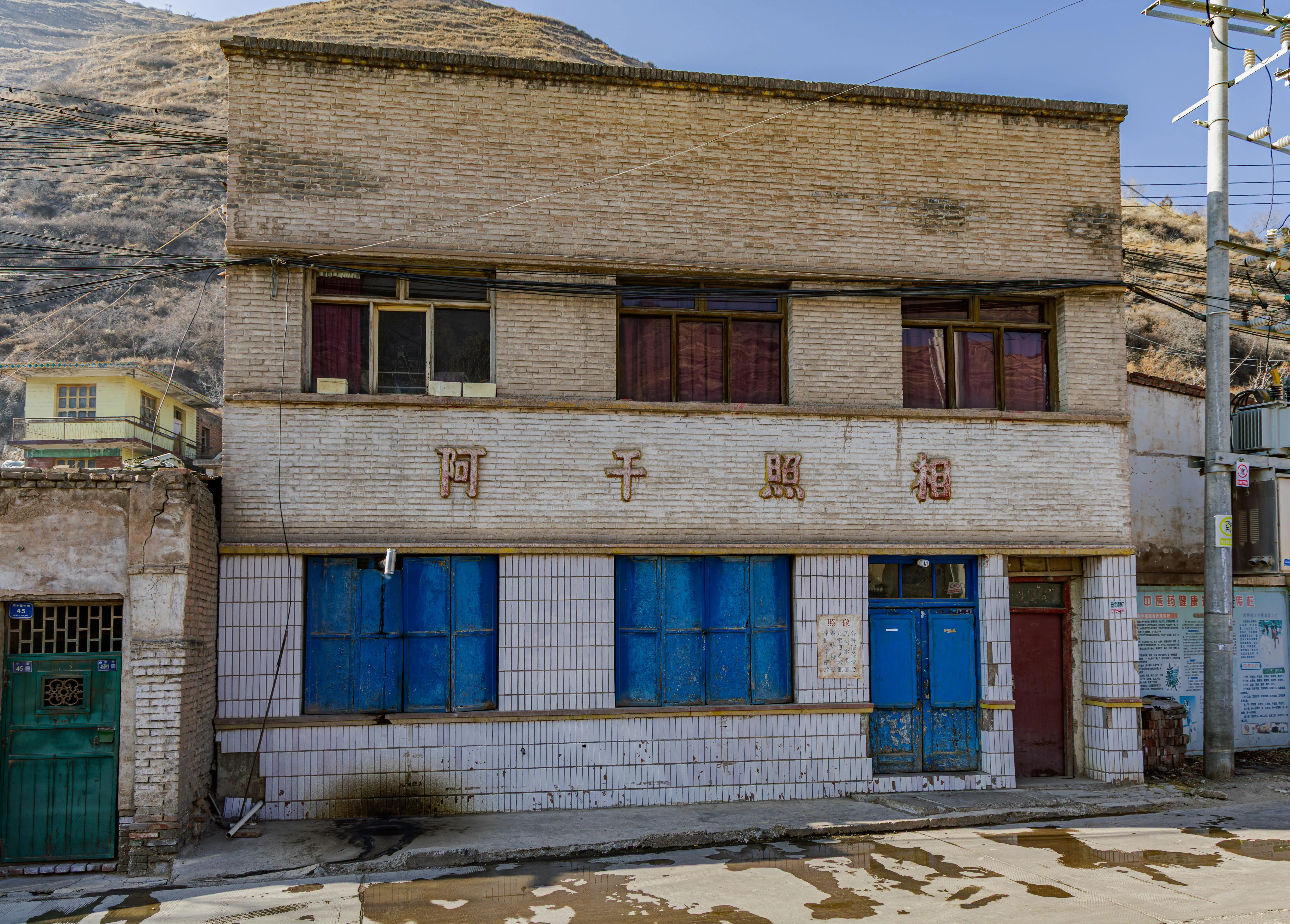
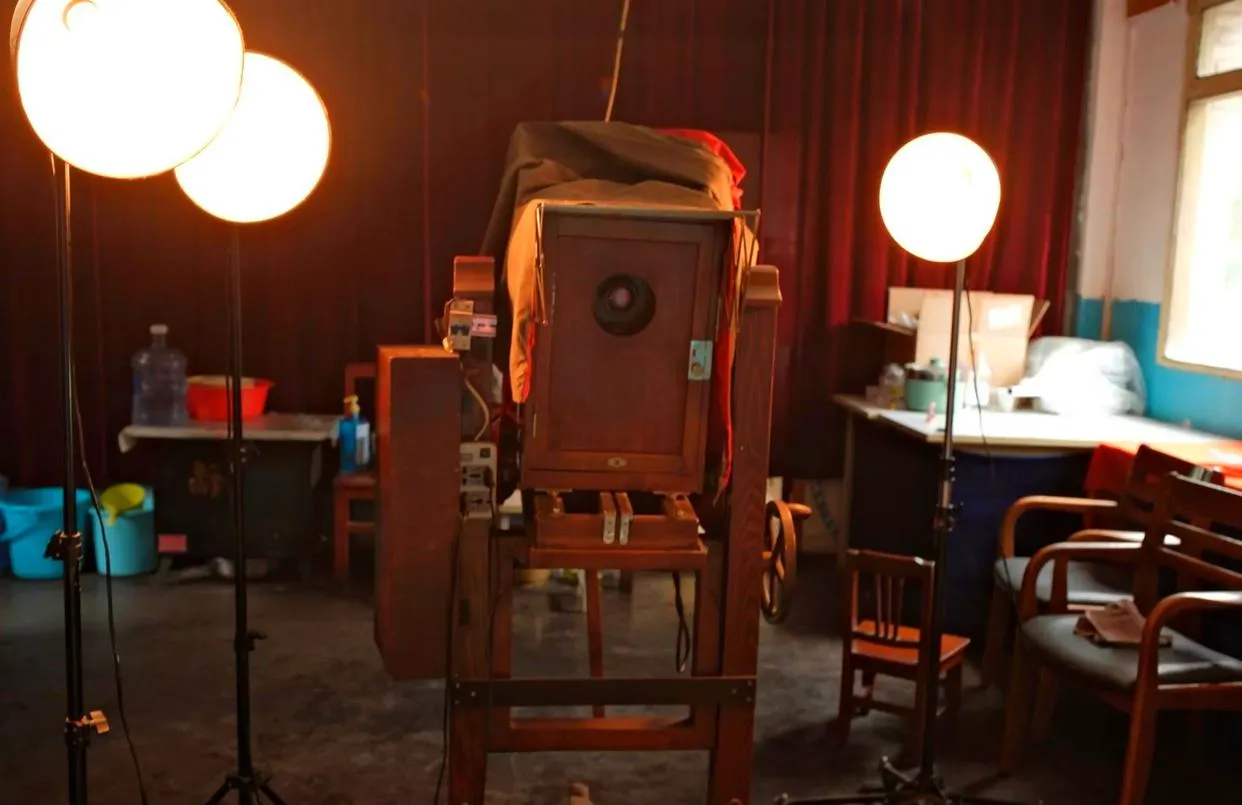
So next time you are in Lanzhou, do not look only at the Yellow River and the beef noodles. Go twenty minutes south and stand in Agan for a while. You do not need to do anything else—just softly say its name. What you speak is not merely a town but a call of “older brother” that has been carried for more than 1,600 years: Agan.